What boiler 'size' means
A boiler's size is its output in kilowatts – how much heat it can produce. Too little, and your home won't get warm on cold days or your hot water will struggle. Too much, and the boiler may switch on and off frequently, which can reduce efficiency and add wear.
Combis are sized for hot water
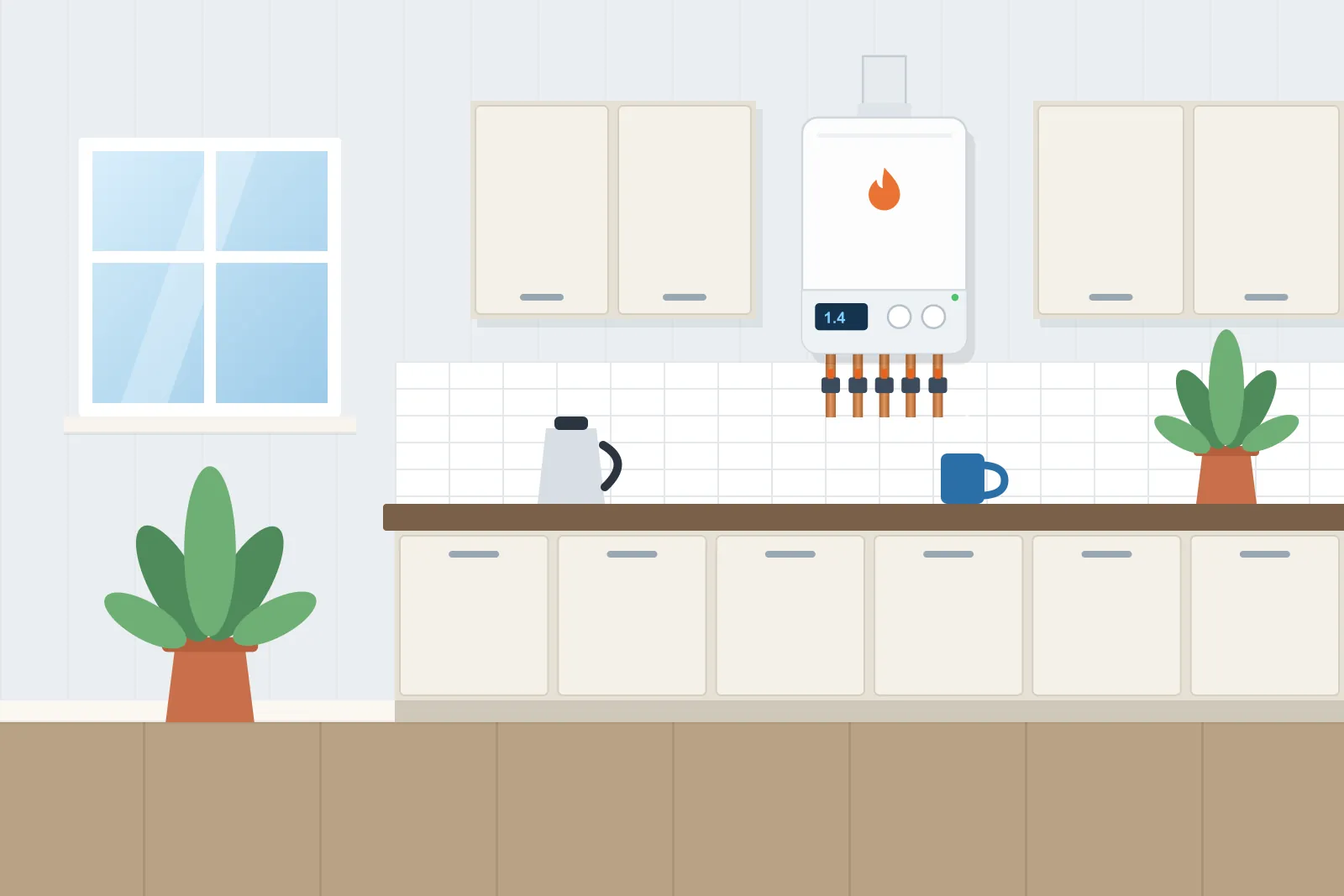
A combi heats water instantly, which takes more power than heating most homes. That's why combis tend to have higher outputs than system or regular boilers – commonly somewhere in the range of about 24 to 35 kW. The higher the output, the more hot water flow it can provide.
For heating, many modern combis can adjust their output down to suit the house, so the hot water rating doesn't mean the radiators get more heat than they need.
Need a heating engineer?
Describe the job and compare free quotes from local heating engineers near you.
- Free to use
- No obligation
- Compare local engineers
- Quick online form
You'll continue to our quotes partner, MyJobQuote, to describe your heating job.
System and regular boilers are sized for heating
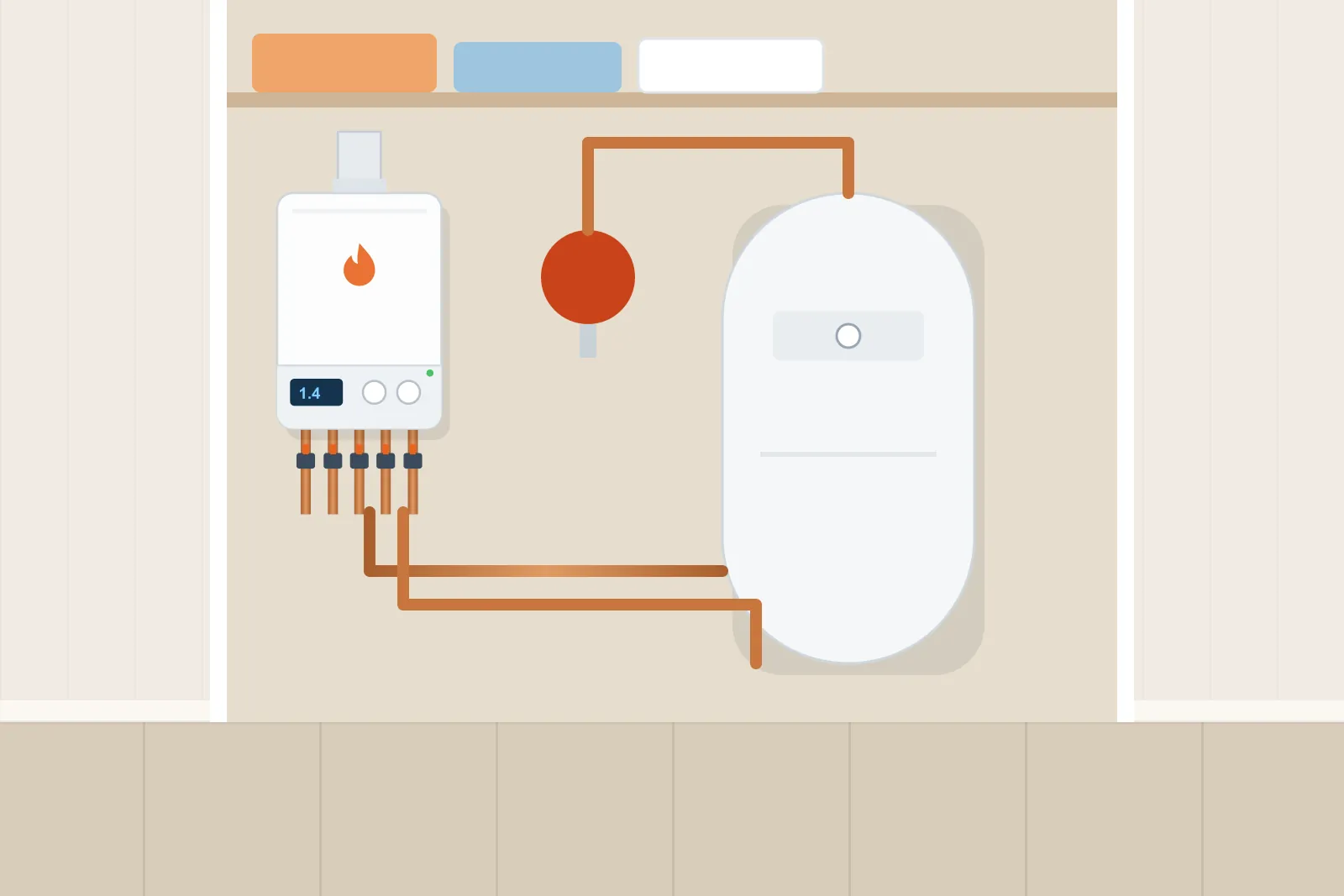
System and regular boilers heat a cylinder rather than supplying hot water instantly, so their output is mainly chosen to match the heat your home loses on a cold day, plus enough to reheat the cylinder.
Engineers work this out with a heat-loss calculation, which looks at each room's size, windows, walls, floors and insulation. It's more reliable than copying the output of the old boiler, which may have been oversized or chosen before the house was extended or insulated.
What affects the right size
These are the things an engineer will ask about or measure:
- The number of bedrooms and bathrooms
- How many people live there and how they use hot water
- The number and size of radiators
- Insulation, glazing and the type of walls
- Extensions or loft conversions
- Your mains water pressure and flow (for combis)