The three main types at a glance
All three types heat the water that flows through your radiators. Where they differ is how they provide hot water for your taps and showers – and that's what decides which suits your home.
| Type | Hot water | Cylinder or tanks? | Usually suits |
|---|---|---|---|
| Combi | Heated on demand from the mains | Neither | Flats and homes with one bathroom |
| System | Stored in a hot water cylinder | Cylinder, no loft tanks | Homes with two or more bathrooms |
| Regular (heat-only) | Stored in a cylinder fed from a loft tank | Cylinder and loft tanks | Older systems and low mains pressure |
How combi, system and regular boilers compare
Combi boilers
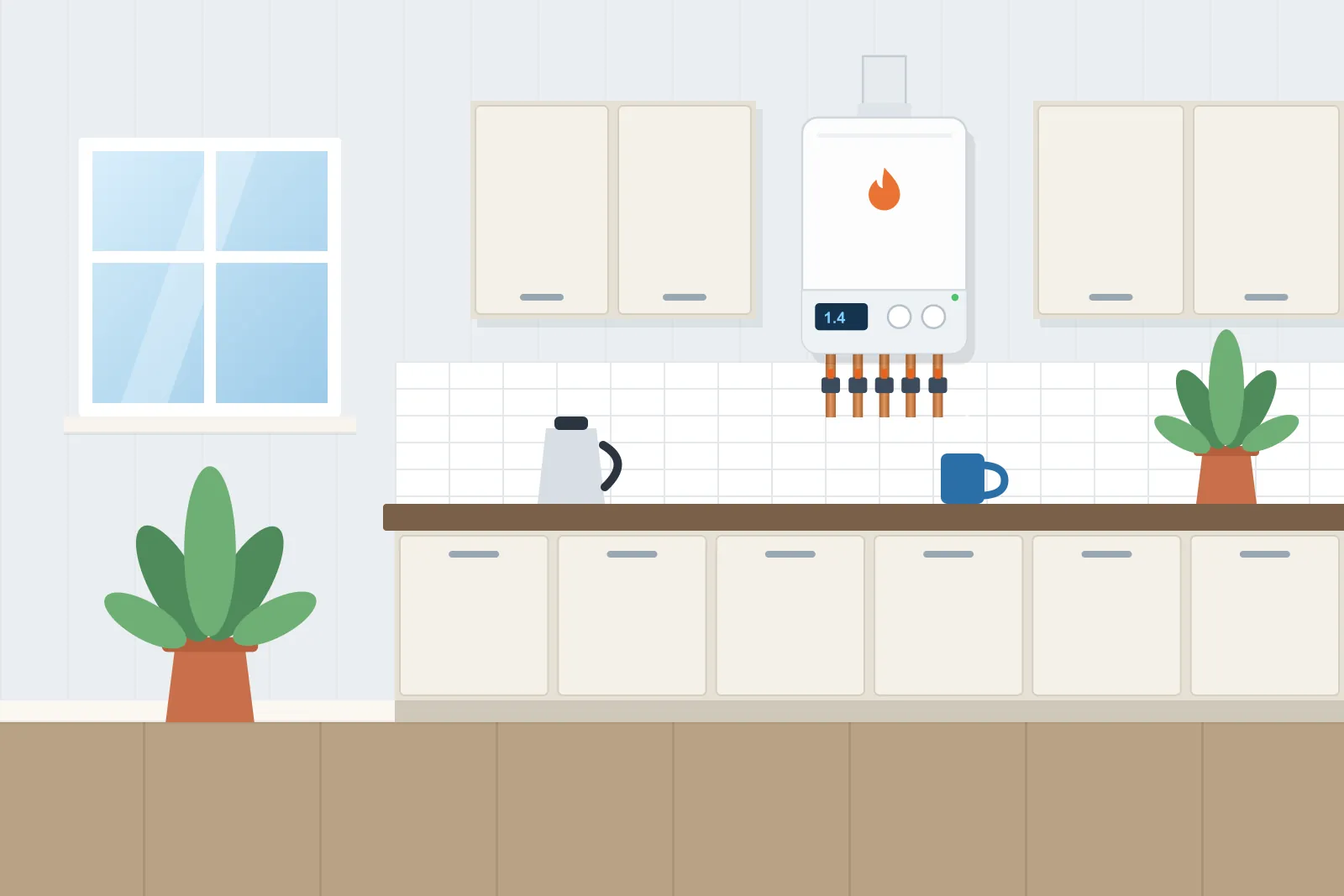
A combination boiler heats water instantly when you turn on a hot tap, so there's no hot water cylinder and no cold water tank in the loft. That saves space and means you never wait for a tank to reheat.
The limitation is flow. A combi heats water as it passes through, so if two showers run at once, both may lose pressure or temperature. Combis also depend on good mains water pressure and flow, which an engineer should check before recommending one.
- Compact – no cylinder or loft tanks
- Hot water on demand, without waiting for a tank to heat
- Best for one bathroom, or light simultaneous use
- Relies on your mains water pressure and flow
System boilers
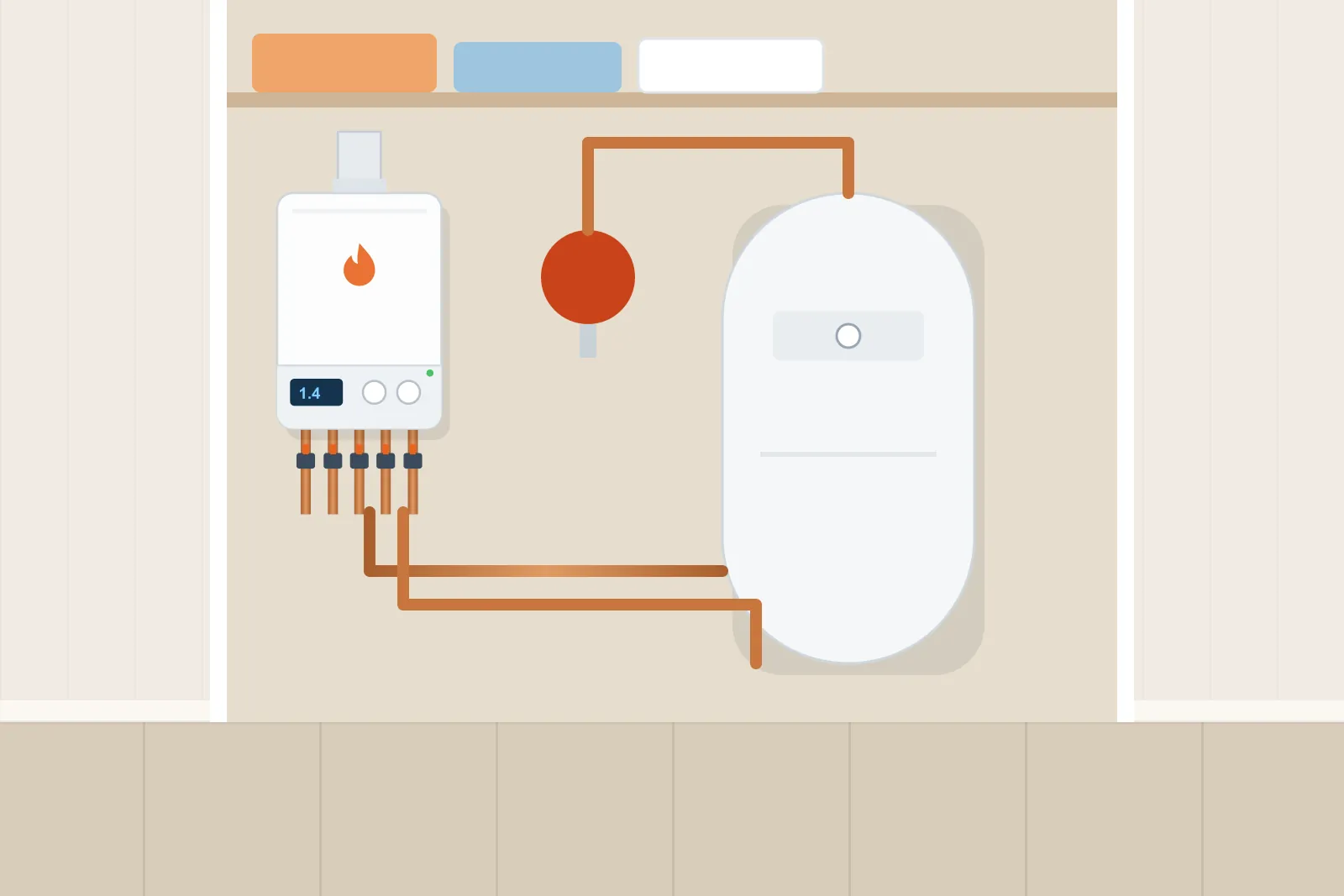
A system boiler heats your radiators directly and heats hot water stored in a cylinder, usually in an airing cupboard. Most modern installations use an unvented cylinder fed from the mains, giving strong pressure to every tap without loft tanks.
Because the hot water is stored, several taps and showers can run at once. The trade-off is space for the cylinder, and the stored water can run out if it's used faster than it reheats.
Need a heating engineer?
Describe the job and compare free quotes from local heating engineers near you.
- Free to use
- No obligation
- Compare local engineers
- Quick online form
You'll continue to our quotes partner, MyJobQuote, to describe your heating job.
Regular (heat-only) boilers
Regular boilers – also called conventional or heat-only boilers – work with a hot water cylinder and cold water and expansion tanks in the loft. They're common in older homes and can work where mains pressure is low.
When a regular boiler needs replacing, you can usually fit a new regular boiler and keep the existing layout, or convert to a system boiler or a combi. Each option has different costs and disruption, so it's worth asking for quotes on more than one.
Questions that help decide
A heating engineer will look at your home before recommending a boiler. It helps to have answers to these questions ready:
- How many bathrooms and showers do you have, and are they used at the same time?
- How many people live in the house?
- Is there space for a cylinder, and would you rather free it up?
- Do you have tanks in the loft?
- Is your mains water pressure good?
- Do you plan to add a bathroom or extend the house?