Gas Boiler Quotes: Installation, Replacement and Repairs
An old boiler on its last legs, a combi conversion or a service that's overdue – describe the job once and compare quotes from Gas Safe registered engineers who work near you.
- New boiler installation
- Boiler replacement
- Combi conversions
- Annual boiler servicing
- Breakdowns and repairs
- Landlord gas safety checks
Gas boilers heat the majority of homes in Great Britain, and sooner or later every one of them needs servicing, repairing or replacing. Because the work involves gas, it must by law be carried out by an engineer on the Gas Safe Register – which is exactly who you'll hear from when you request quotes here.
Most gas boiler jobs fall into one of three groups. Installation and replacement means a new boiler, sometimes in a new position or of a different type. Servicing is the yearly check that keeps a boiler running safely and efficiently. Repairs cover everything from a lost-pressure call-out to a failed fan or circuit board.
The more you can tell engineers up front – the make and age of your current boiler, where it is, how many bathrooms and radiators you have, and photos of the boiler and pipework – the more accurate and comparable your quotes will be.
Gas boiler jobs local engineers quote for
Like-for-like replacement
Swapping an old combi for a new one in the same place is the simplest and usually the least expensive boiler replacement.
Combi conversions
Replacing a regular or system boiler, hot water cylinder and loft tanks with a combi – freeing up cupboard space along the way.
System and regular boilers
New boilers for larger homes with more than one bathroom, where a hot water cylinder still makes sense.
Boiler relocation
Moving the boiler to a utility room, garage or loft, with new pipework, gas supply and flue route as needed.
Annual boiler service
An annual inspection, clean and safety check that most manufacturers require to keep the warranty valid.
Breakdowns and repairs
No heating or hot water, low pressure, fault codes, leaks and strange noises diagnosed and fixed.
Gas boiler installation: what's involved
Fitting a new gas boiler is more than hanging a box on the wall. The engineer has to make sure the gas supply is big enough for the new appliance, plan a flue route that meets the rules on distances from windows, doors and boundaries, run a condensate pipe to a suitable drain, and connect the boiler to your heating and hot water pipework.
Before the new boiler goes in, the existing system is usually drained and often cleaned, because sludge and debris in old pipes and radiators can shorten the life of a new boiler. Many installers fit a magnetic system filter and add an inhibitor to the water to protect the system going forward.
Once it's running, the engineer commissions the boiler, completes the Benchmark checklist and registers the work. In England and Wales a Gas Safe registered engineer can self-certify that the installation meets building regulations, and you should receive a compliance certificate afterwards. Keep it with the manual and warranty documents – you'll need it when you sell the house.
Combi, system or regular boiler?
The right type of boiler depends mainly on how many people live in the house, how many bathrooms you have and how much hot water you use at the same time. A heating engineer will look at your current set-up and your water pressure before recommending one.
- Combi boilers heat water on demand with no cylinder or loft tanks – ideal for flats and most homes with one bathroom
- System boilers work with an unvented hot water cylinder and suit homes with two or more bathrooms in use at once
- Regular (heat-only) boilers use a cylinder plus cold water and expansion tanks in the loft – common in older homes and where mains pressure is low
- Boiler output is measured in kilowatts; a good engineer sizes it to your home rather than simply fitting the biggest model
- Since the mid-2000s, new gas boilers fitted in the UK have generally had to be high-efficiency condensing boilers
- Manufacturer warranties vary in length and usually depend on annual servicing and registration of the boiler
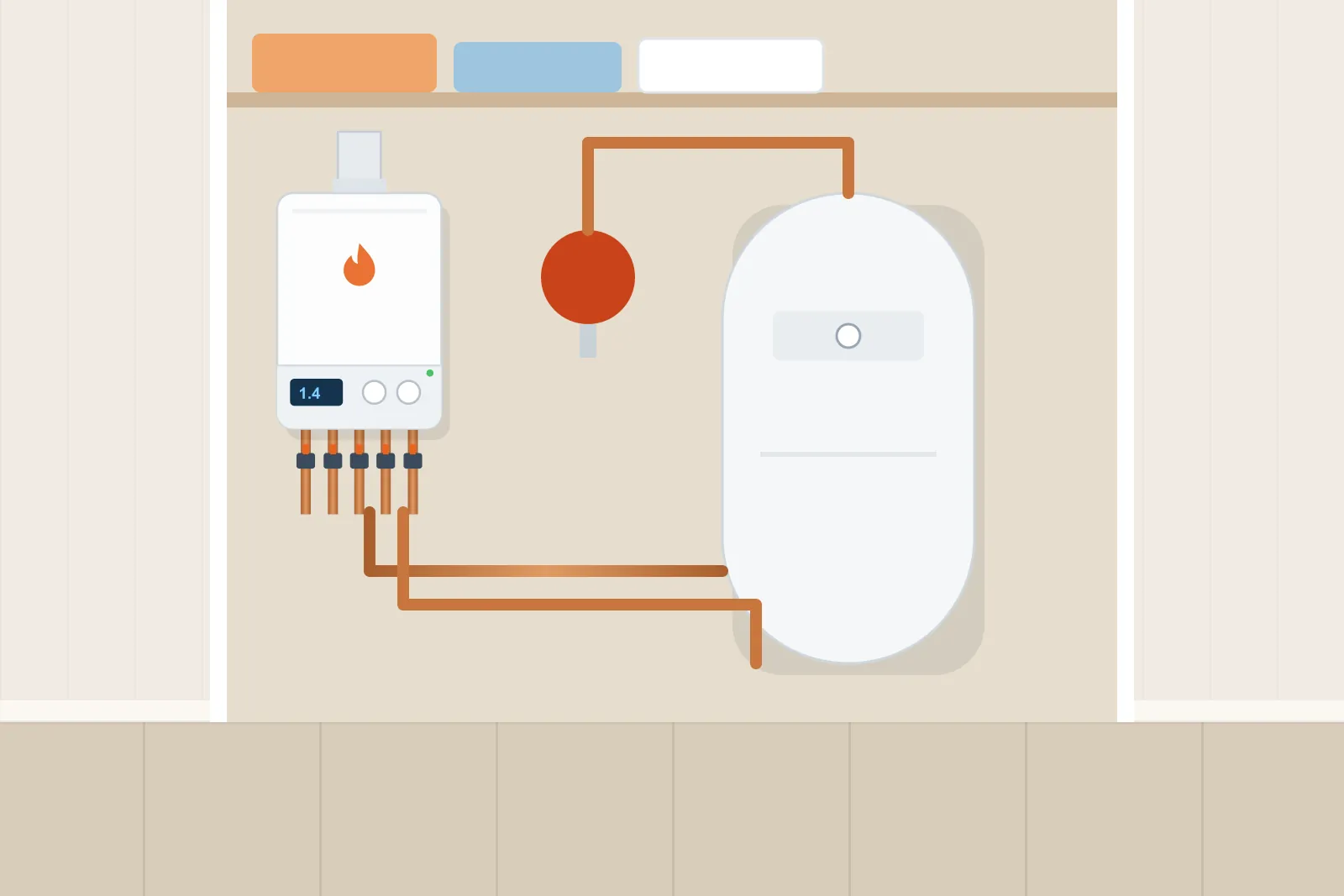
When to replace a gas boiler
There's no fixed age at which a boiler must be replaced, but many last somewhere around 10 to 15 years. After that, breakdowns tend to become more frequent, replacement parts get harder to find and an older, less efficient boiler may be costing you more in gas than it needs to.
Signs that it might be time for a new boiler include repeated breakdowns, a boiler that keeps losing pressure, radiators that take ages to warm up, rising gas bills, and an engineer telling you that parts are no longer available. If an engineer finds that a boiler is unsafe, they may have to disconnect it until it's repaired or replaced.
Replacing a boiler is also a good opportunity to fix other weaknesses in the system: upgrade the controls, add thermostatic radiator valves, power flush or chemically clean old pipework, or move the boiler somewhere more convenient.
Boiler servicing and maintenance
An annual service is the simplest way to keep a gas boiler safe, efficient and reliable. During a service, a Gas Safe registered engineer inspects the boiler, checks the flue and combustion, tests the safety devices and controls, and cleans or replaces components where needed.
Most manufacturers make annual servicing a condition of their warranty, so skipping it can leave you paying for repairs that would otherwise have been covered. Many homeowners book their service in late summer or early autumn, before the heating goes on and engineers get busy with breakdowns.
If you rent out a property, an annual gas safety check is a legal requirement for landlords, and tenants must be given a copy of the gas safety record. A safety check is not the same as a full service, although many engineers offer both in one visit.
Boiler repairs and breakdowns
Boilers rarely fail at a convenient time. The most common call-outs are loss of pressure, no hot water or heating, fault codes on the display, leaks, and noises such as banging or whistling. In very cold weather, a frozen condensate pipe is another frequent culprit.
When you request repair quotes, include the make and model of the boiler, any fault code shown and what happened before it stopped working. That helps engineers bring the right parts and gives you a better idea of the likely cost before they arrive.
Leave anything involving the gas supply, the casing or internal components to a Gas Safe registered engineer. If you smell gas, turn off the supply at the meter if it's safe to do so, open windows, don't use electrical switches and call the National Gas Emergency Service on 0800 111 999 (0800 002 001 in Northern Ireland).
When to book a gas engineer
Servicing and planned replacements are easiest to arrange in spring and summer, when engineers have more availability and you're not relying on the heating. Autumn and the first cold snap of winter are the busiest times of year, with breakdowns pushing everything else back.
If your boiler is old and has started to give trouble, it's worth getting replacement quotes before it fails completely. That way you can compare options calmly instead of accepting the first price because you have no heating or hot water.
Gas safety and regulations
- By law, anyone working on gas appliances in your home must be on the Gas Safe Register. Ask to see the engineer's ID card and check the back for the types of gas work they're qualified to do.
- You can confirm an engineer's registration on the Gas Safe Register website before they start.
- A new boiler installation must meet building regulations. In England and Wales, a registered engineer can self-certify the work and you'll receive a compliance certificate.
- Ask whether a carbon monoxide alarm will be fitted. It's often required when a new gas appliance is installed and is a sensible safety measure in any home with a boiler.
- Landlords must arrange an annual gas safety check and give tenants a copy of the record.
Typical gas boiler prices
Indicative UK prices for supply and fitting by a Gas Safe registered engineer, including VAT where the engineer is VAT-registered. They vary with the boiler brand and model, the type of conversion, the amount of new pipework and where you live.
| Job | Typical UK price |
|---|---|
| Like-for-like combi boiler replacement | £2,000–£3,500 |
| Combi replacement with the boiler moved | £2,500–£4,500 |
| Regular or system boiler converted to a combi | £3,000–£5,000 |
| System boiler replacement (existing cylinder kept) | £2,500–£4,000 |
| Annual boiler service | £70–£130 |
| Landlord gas safety check | £60–£110 |
| Repair call-out and first hour (parts extra) | £80–£150 |
| Common replacement part fitted (e.g. fan or diverter valve) | £150–£450 |
Prices are indicative only and include VAT where the engineer is VAT-registered. Always get written quotes for your specific job.
More examples, including servicing, repairs and full central heating systems, are in our boiler and heating cost guide.
What affects the price
- Type of boiler and conversion
- A like-for-like combi swap is the most straightforward job. Converting from a regular system or adding a cylinder takes longer.
- Boiler make and model
- Prices vary between brands and output ratings, and longer warranties often come with higher-priced models.
- Moving the boiler
- A new position means new gas and water pipework, a new flue route and a new condensate run.
- Condition of the system
- Sludge, old radiators or undersized pipework may need a flush, a filter or upgrades.
- Controls and extras
- Smart thermostats, thermostatic radiator valves and system filters add to the cost but can improve comfort and efficiency.
- Location and access
- Lofts, tight cupboards, flats with restricted flue routes and city-centre parking all add time.
Comparing gas boiler quotes
- The exact boiler make, model and output in kW
- The length of the manufacturer's warranty and what it requires
- Whether the system will be flushed or cleaned and a filter fitted
- Which controls are included – thermostat, programmer, radiator valves
- Removal and disposal of the old boiler and any tanks
- Building regulations certification and boiler registration
- The engineer's Gas Safe registration number
- Payment terms – avoid paying the full amount before work starts
Request gas boiler quotes
Describe the job, add your postcode and compare quotes from local heating engineers. It's free, and you're under no obligation to go ahead.
Get free gas boiler quotes
Describe your boiler or heating job once and compare quotes from local heating engineers who cover your area.
- Free to use
- No obligation
- Compare local engineers
- Quick online form
You'll continue to our quotes partner, MyJobQuote, to describe your heating job.
Gas Boilers near you
You can request gas boiler quotes anywhere in the UK. These cities have their own local gas boilers page:
Heating engineers in more towns and cities
Guides for gas boilers
- Combi, system or regular boiler?Three types of gas boiler heat most UK homes. Here's how each one works, which homes it suits and the questions that help a heating engineer recommend the right one.
- Signs you need a new boilerBoilers don't come with an expiry date, but there are clear signs that one is near the end of its working life. Spotting them early gives you time to compare quotes calmly.
- What size boiler do I need?Boiler size means output, measured in kilowatts (kW) – not physical dimensions. Here's how engineers work out the right output for your home, and why bigger isn't always better.
- Boiler servicing explainedAn annual boiler service keeps your heating safe, efficient and reliable – and often keeps the manufacturer's warranty valid. Here's what to expect.
- Common boiler problemsMost boiler breakdowns fall into a handful of familiar problems. Knowing what they usually mean helps you describe the fault – and know when to call a professional.
Gas Boilers: frequently asked questions
How much does a new gas boiler cost?
As a rough guide, a like-for-like combi replacement often costs somewhere between £2,000 and £3,500 fitted, while conversions and relocations cost more. The boiler model, the work involved and your location all make a difference, so compare written quotes for your own home.
How long does it take to fit a new boiler?
A straightforward like-for-like swap is often completed in a day. Converting from a regular system to a combi, or moving the boiler, commonly takes two or three days.
Does a gas boiler need servicing every year?
Manufacturers generally recommend an annual service, and most make it a condition of the warranty. A yearly service also gives a Gas Safe registered engineer the chance to spot problems before they become breakdowns.
Which type of gas boiler do I need?
Combi boilers suit most flats and homes with one bathroom. Homes with two or more bathrooms used at the same time often suit a system boiler with a hot water cylinder. Regular boilers are mainly used where an existing system relies on loft tanks or mains pressure is low. An engineer will recommend the right type after a survey.
Can I replace a boiler myself?
No. Work on gas appliances must be carried out by an engineer on the Gas Safe Register. Installing a gas boiler without being registered is illegal and can be extremely dangerous.
What should I do if my boiler stops working?
Check that the power is on, the thermostat is calling for heat and the timer is set correctly, and look at the pressure gauge and any fault code. Beyond those simple checks, call a Gas Safe registered engineer rather than opening the boiler casing.
Ready to get gas boiler quotes?
One short form, local heating engineers, no obligation.
Get Free Quotes