Find Local Heating Engineers
A new boiler, an annual service, a breakdown or radiators that won't warm up – describe the job once and compare quotes from heating engineers who work in your area.
- Boiler installation
- Boiler replacement
- Servicing and gas safety
- Repairs and breakdowns
- Radiators and valves
- Central heating systems
Get quotes from local heating engineers
Tell us what you need – boiler, radiators or central heating – and compare quotes from engineers who cover your postcode.
- Free to use
- No obligation
- Compare local engineers
- Quick online form
You'll continue to our quotes partner, MyJobQuote, to describe your heating job.
Quotes from professional heating engineers
Finding a heating engineer tends to happen at the worst possible moment: the boiler has stopped on a cold morning, or an engineer has just told you it isn't worth repairing. Good engineers are busy, prices vary a lot, and it's hard to know whether a quote is fair.
Heating Quotes makes that easier. You describe the job once – the boiler, the radiators, the problem – and add your postcode. Independent heating engineers who cover your area receive the request and come back to you with a quote or to arrange a survey. You compare them and decide who, if anyone, to hire.
This page explains what heating engineers do, the kinds of work they take on, what affects the price and how to compare quotes, so you can choose with confidence.
What does a heating engineer do?
- Install and replace
- Gas and electric boilers, hot water cylinders, radiators, pipework, flues and controls.
- Service and maintain
- Annual boiler services, gas safety checks, system cleaning, filters and inhibitor.
- Diagnose and repair
- Fault-finding on boilers, pumps, valves, controls and leaks, and replacing worn parts.
- Design and advise
- Heat-loss calculations, boiler and radiator sizing, and advice on the right system for your home.
Types of heating work
Most jobs fall into a few broad types. Many engineers do all of them; some specialise in installations, servicing and repairs, or particular fuels.
Boiler installation
A new gas boiler in a new home, an extension or a new position, with the flue, gas supply and controls to match.
Find out more →
Boiler replacement
Swapping an old or unreliable boiler for a new one – like for like, or converting to a combi or system boiler.
Find out more →Servicing and maintenance
Annual boiler services, landlord gas safety checks and keeping the whole system in good order.
Find out more →
Repairs and breakdowns
No heating or hot water, low pressure, leaks, noises and fault codes diagnosed and fixed.
Find out more →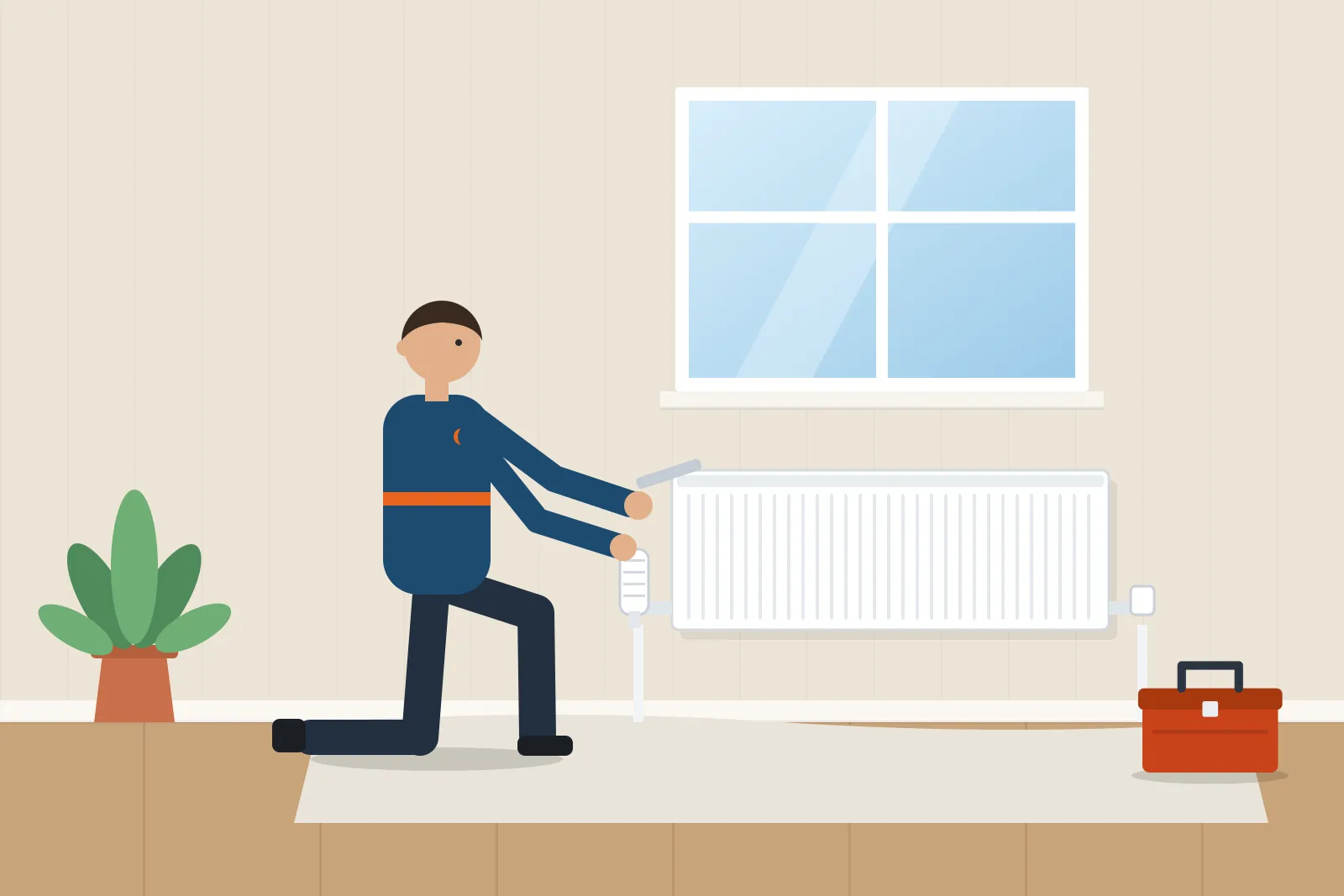
Radiators
New and replacement radiators, towel rails, valves, balancing and fixing cold or leaking radiators.
Find out more →
Electric boilers
Electric boiler installation and replacement for flats, off-grid homes and storage heater replacements.
Find out more →Boiler installation and replacement
Fitting a new boiler is the biggest job most heating engineers do. A good installation starts with a survey: the engineer checks your gas supply, water pressure, flue options, radiators and hot water needs, then recommends the type and output of boiler that suits your home.
A like-for-like replacement in the same position is the simplest option. Converting from a regular or system boiler to a combi, moving the boiler or adding a hot water cylinder takes longer and costs more, but can make a real difference to how the system works for you.
After installation, the engineer commissions the boiler, completes the paperwork and registers it for the warranty. In England and Wales, a Gas Safe registered engineer can self-certify that the work meets building regulations.
Servicing, maintenance, repairs and breakdowns
An annual boiler service keeps a boiler safe and efficient, and most manufacturers require it for the warranty. During a service the engineer checks combustion, the flue, safety devices and controls, and cleans or replaces parts as needed. Landlords also need an annual gas safety check by law.
When something goes wrong – no heating, no hot water, lost pressure, a fault code, a leak or strange noises – a heating engineer diagnoses the cause and fixes it. Giving them the boiler make, model and any fault code up front helps them arrive with the right parts.
If you smell gas, call the National Gas Emergency Service on 0800 111 999 (0800 002 001 in Northern Ireland) before anything else.
Radiators, central heating and system replacement
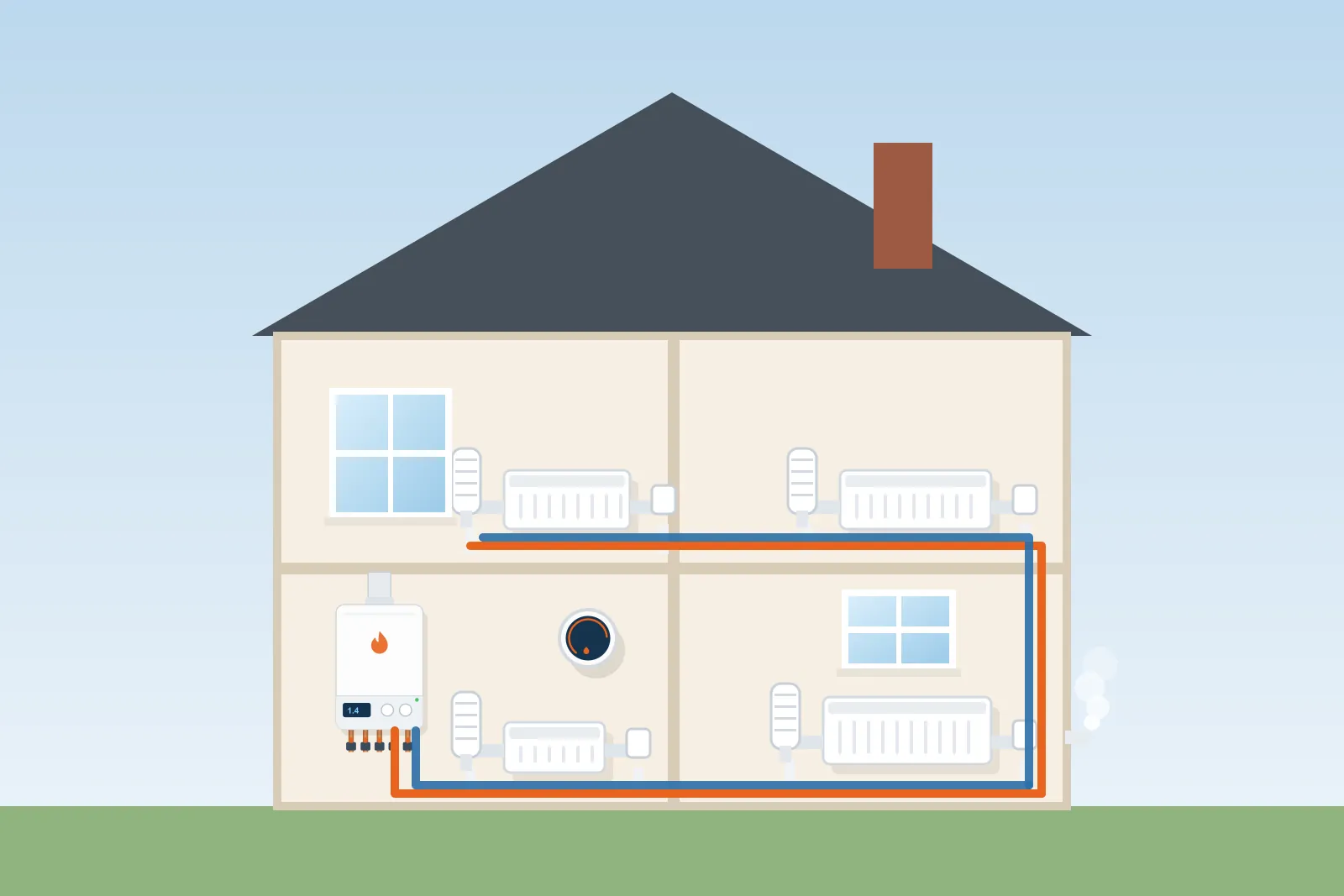
The boiler is only part of a central heating system. Radiators, pipework, valves and controls decide how evenly and efficiently your home heats up. Heating engineers replace and add radiators, fit thermostatic radiator valves, balance systems so every room warms properly and clean out sludge with a power flush or chemical clean.
Some homes need more than a new boiler. A full central heating installation – boiler, radiators, pipework and controls – is common in properties that have never had a wet system, in homes replacing storage heaters, and in older houses where the existing system is beyond economic repair. These jobs are designed around a room-by-room heat-loss calculation.
Gas Boilers
New and replacement gas boilers, combi conversions, annual servicing, breakdowns and repairs – carried out by Gas Safe registered engineers.
- New boiler installation
- Boiler replacement
- Combi conversions
- Annual boiler servicing
Electric Boilers
Electric boiler installation and replacement for flats, homes off the gas grid and properties moving away from gas or storage heaters.
- Electric boiler installation
- Electric boiler replacement
- Gas to electric swaps
- Storage heater replacement
Radiators
New and replacement radiators, column and designer radiators, towel rails, valves, power flushing and fixing cold or leaking radiators.
- Radiator replacement
- New radiators and pipework
- Column and designer radiators
- Heated towel rails
Heating engineers for homes
Most of the requests we see come from homeowners, landlords and tenants: boilers in houses and flats, radiators in extensions, and services and safety checks for rented homes. Domestic heating engineers are used to working around families, pets and furniture, and to planning installations so you're without heating or hot water for as little time as possible.
If you're a landlord, an engineer can carry out the annual gas safety check and boiler service in one visit, and provide the record you need to give your tenants.
Small commercial properties
Many heating engineers also look after small commercial premises – shops, offices, cafés, surgeries and holiday lets – where a domestic-sized boiler and radiators do the heating. Work is often scheduled outside opening hours to keep disruption down.
Larger commercial heating plant needs engineers with commercial gas qualifications. Describe the type of premises and the equipment when you request quotes, so you hear from engineers qualified for the job.
When to call a heating engineer
Some heating checks are simple enough to do yourself, like looking at the pressure gauge or bleeding a radiator. Call a professional when:
- Anything involving a gas boiler, gas fire or the gas supply – by law, this must be a Gas Safe registered engineer.
- Your boiler is old, breaking down regularly or showing a fault you can't clear.
- You're buying a home and want the heating checked, or you're letting a property and need a gas safety check.
- Rooms are cold, radiators heat unevenly or the system is noisy.
- You're extending, converting a loft or renovating and need heating in new rooms.
- You want better control of your heating with new thermostats or radiator valves.

What affects the price of a heating engineer
Heating engineers price each job on its own merits, usually after a survey or from photos. These are the main things that move a quote up or down:
- Type of job
- A service or simple repair costs far less than a new boiler or a full central heating installation.
- Boiler and system type
- Combi, system and regular boilers – and conversions between them – involve different amounts of work.
- Equipment chosen
- Boiler brand, output, warranty length, cylinders, radiators and controls all affect the price.
- Condition of the system
- Sludge, old pipework or undersized radiators may need cleaning, upgrading or replacing.
- Access and location
- Lofts, flats, tight cupboards, flue routes and parking all affect labour time.
- Timing
- Emergency winter call-outs cost more; planned work in spring and summer is easier to book.
Want example prices for a new boiler, a service or radiators?
See the boiler cost guideChoosing between heating engineer quotes
When the quotes come in, compare these points as well as the price. Our guides to comparing heating quotes and checking a Gas Safe engineer go into more detail.
- The engineer's Gas Safe registration number, and the categories on their ID card
- An itemised quote listing the boiler or radiators by make and model
- Warranty length and the conditions attached to it
- Whether system cleaning, a filter and inhibitor are included
- Which controls are included and how they'll be set up
- Removal of old equipment and making good
- Certification, commissioning and registration paperwork
- Start date, duration and payment terms in writing
Heating engineers near you
We have local pages for 92 towns and cities, each covering the homes, typical heating jobs and local factors in that area. Choose yours for local advice and quotes.
Heating engineers in England
- Ashford
- Aylesbury
- Basildon
- Basingstoke
- Bath
- Bedford
- Bexleyheath
- Birmingham
- Blackpool
- Bolton
- Bracknell
- Bradford
- Brighton
- Bristol
- Bromley
- Bury St Edmunds
- Cambridge
- Canterbury
- Chatham
- Chelmsford
- Chichester
- Colchester
- Coventry
- Crawley
- Croydon
- Derby
- Ealing
- Eastbourne
- Enfield
- Exeter
- Great Yarmouth
- Guildford
- Harlow
- Harrow
- Hastings
- Hemel Hempstead
- High Wycombe
- Horsham
- Hull
- Ilford
- Ipswich
- King's Lynn
- Kingston upon Thames
- Leeds
- Leicester
- Liverpool
- London
- Luton
- Maidstone
- Manchester
- Margate
- Milton Keynes
- Newcastle upon Tyne
- Northampton
- Norwich
- Nottingham
- Oxford
- Peterborough
- Plymouth
- Portsmouth
- Preston
- Reading
- Romford
- Salford
- Sheffield
- Slough
- Southampton
- Southend-on-Sea
- St Albans
- Stevenage
- Stockport
- Stoke-on-Trent
- Sunderland
- Sutton
- Tunbridge Wells
- Twickenham
- Uxbridge
- Walthamstow
- Watford
- Wigan
- Winchester
- Woking
- Wolverhampton
- Worthing
- York
Heating engineers in Northern Ireland
Heating engineers: FAQs
What does a heating engineer do?
A heating engineer installs, services and repairs heating and hot water systems – boilers, radiators, cylinders, pipework and controls. Engineers who work on gas appliances must be on the Gas Safe Register.
Is a heating engineer the same as a plumber?
There's a lot of overlap, and many tradespeople do both. Plumbers often focus on water supply, drainage and bathrooms, while heating engineers specialise in boilers and central heating. Only Gas Safe registered engineers can work on gas appliances.
How do I find a good local heating engineer?
Get two or three quotes, check each engineer's Gas Safe registration and the work they're registered for, and compare what's included. Requesting quotes through Heating Quotes means you describe the job once and local engineers get in touch.
How much do heating engineers charge?
It depends on the job. As a rough guide, a boiler service often costs around £70–£130, and a like-for-like combi replacement around £2,000–£3,500 fitted. Our boiler and heating cost guide has more examples, but always compare written quotes for your own home.
Do heating engineers work on commercial properties?
Some do, particularly on small commercial premises such as shops, offices and holiday lets. Larger commercial systems usually need engineers with commercial gas qualifications. Mention the type of property when you request quotes.
How quickly can a heating engineer come out?
For breakdowns, many engineers can attend within a day or two, though winter is busy. Planned work, such as a boiler replacement, is often booked a week or more ahead.
Is Heating Quotes free to use?
Yes. Requesting quotes is free and there's no obligation to accept any of them. Heating Quotes introduces you to independent local heating engineers; we don't carry out heating or gas work ourselves.
Get quotes from local heating engineers
Describe your job once and hear from heating engineers near you. Get Free Quotes – there's no obligation.
Get Free Quotes