The short answer
If you're swapping an existing wired room thermostat for a smart one, the wiring matches and you're comfortable working safely with the power isolated, you may well be able to do it yourself. Plenty of smart thermostats sold in the UK come with DIY instructions, and some manufacturers will happily talk you through it.
You should bring in a professional when the job involves new cables, a new mains connection, moving the thermostat to a different wall, electric heating such as underfloor heating or electric radiators, or anything you're unsure about. In those cases an electrician is often the right choice. But for most gas boiler homes, the person best placed to fit a smart thermostat is actually a heating engineer, because the tricky part is usually understanding the boiler and the heating controls rather than the electrics.
In short: it's less about which trade you call and more about what the installation involves. The rest of this guide helps you work that out.
How a smart thermostat connects to your heating
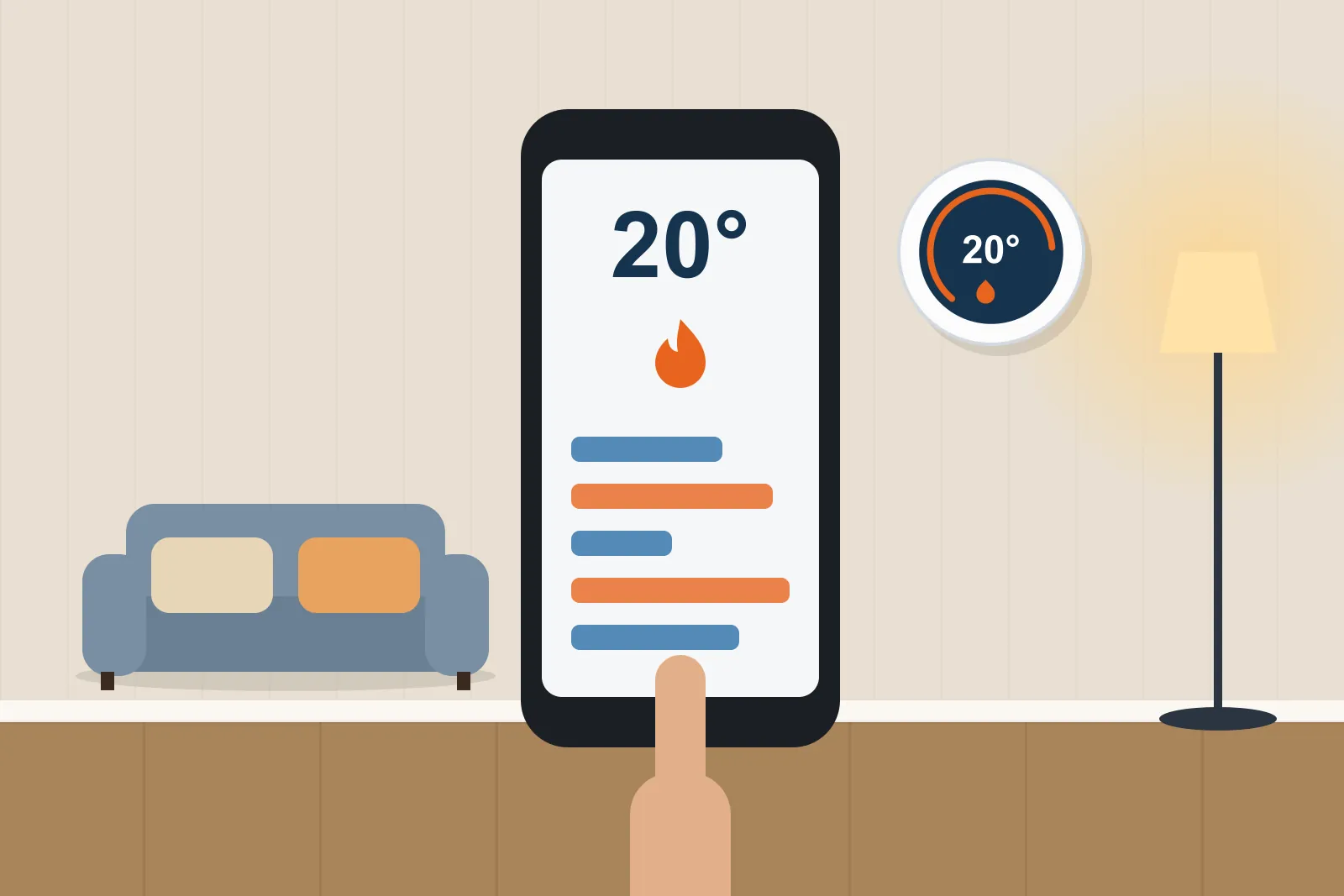
It helps to know what's going on behind the wall. A room thermostat is essentially a switch that tells the boiler – or a valve, on some systems – when to provide heat. A smart thermostat does the same job, but adds Wi-Fi, an app, schedules and clever features such as noticing when you've gone out.
Most smart thermostats come in two parts. There's the thermostat you see on the wall or stand on a shelf, and there's a receiver, hub or 'heat link' that connects to the heating system. That receiver is usually wired in where your old programmer or thermostat was, often at mains voltage, and it switches the boiler on and off. Some systems also have a small plug-in hub that sits by your broadband router.
Some boilers support a low-voltage communication method, often called OpenTherm or a manufacturer's own system, that lets the thermostat adjust how hard the boiler works rather than simply switching it on and off. That can improve comfort and efficiency, but it depends on your boiler model, so it's worth checking before you buy.
When you can fit one yourself
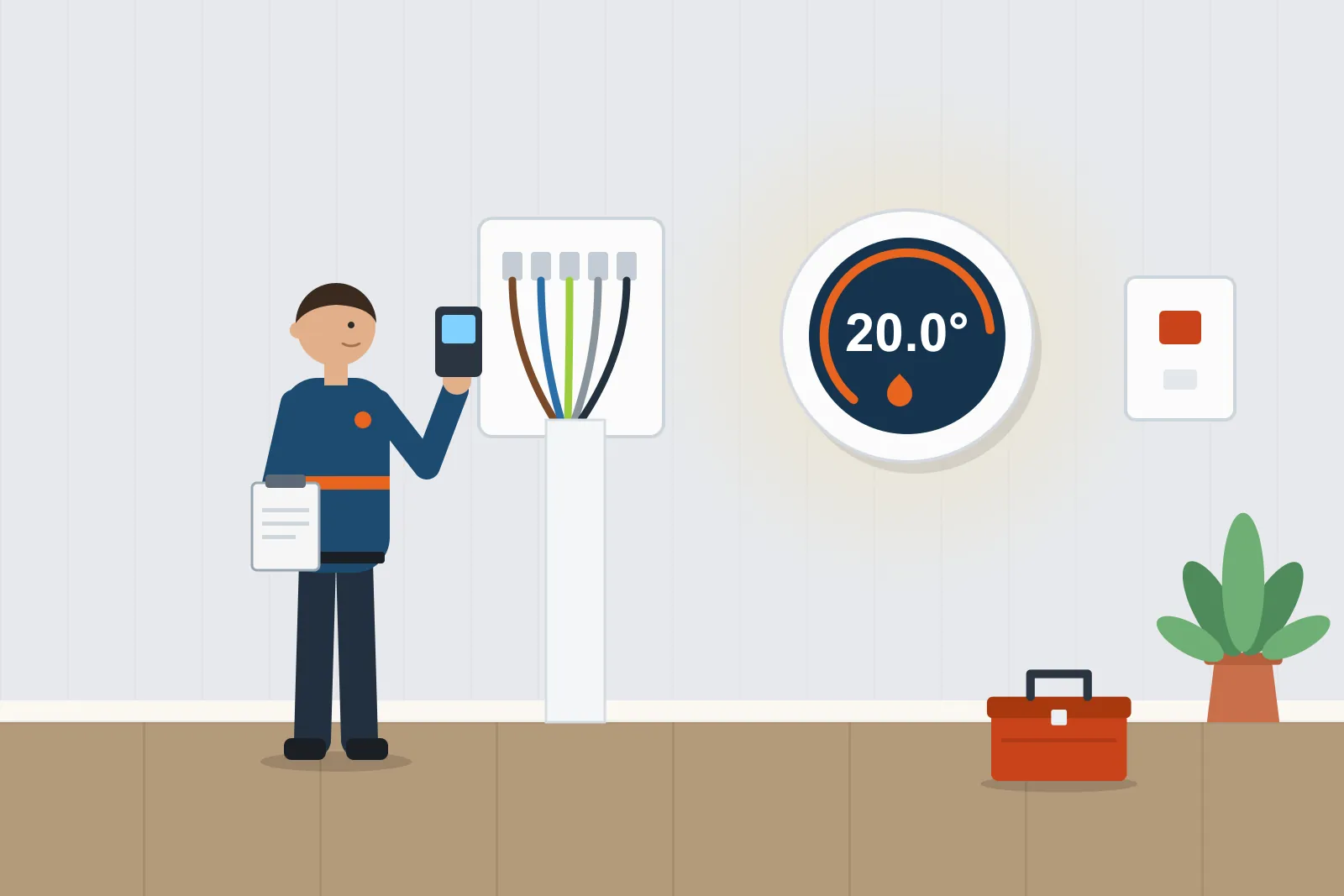
A DIY installation is most realistic when the new thermostat is a direct replacement for something that's already there. If you've got a wired thermostat or programmer with the same connections the new one needs, and the instructions confirm your boiler is compatible, the job is mostly about care and patience.
The golden rules are simple. Isolate the power to the heating system properly – usually at the fused spur next to the boiler or the heating controls, not just by switching the thermostat off – and check it's dead before touching any wires. Photograph the existing wiring before you disconnect anything. Never work on mains wiring if you're not confident you understand it.
- Good fit for DIY: like-for-like replacement of an existing wired thermostat or programmer
- Good fit for DIY: battery-powered thermostats paired with a plug-in hub
- Good fit for DIY: smart radiator valve heads that screw onto existing thermostatic valves
- Not for DIY: new circuits, new cable runs or anything involving the consumer unit
- Not for DIY: opening the sealed case of a gas boiler
When an electrician is the right call
Electricians come into their own when the job is more about wiring than heating. If the thermostat needs to move to a better spot – away from a sunny window or a draughty hallway – a new cable has to be run and the wall made good. If there's no suitable power supply for the receiver, a new fused spur may be needed. And if your existing wiring is old, damaged or a bit of a mystery, an electrician can make it safe and test it properly.
One common snag catches lots of people out: the neutral wire. Many older mechanical thermostats only use a live and a switched live, but some wired smart thermostats need a permanent neutral to stay powered. If it isn't there, the options are a battery or wireless model, a different receiver location or new wiring. Our sister site explains this problem well in its guide to smart switches and the neutral wire – the same principle applies to thermostats.
An electrician is also the obvious choice when your smart thermostat controls electric heating, which we cover below.
- Moving the thermostat to a new position with a new cable run
- Adding a fused spur or power supply for a receiver or hub
- Missing neutral wire, or old and unlabelled wiring
- Smart controls for electric underfloor heating or electric radiators
- Any work at the consumer unit or on a new circuit
When you need a heating engineer instead
For most homes with a gas boiler, a heating engineer is the natural choice – and many fit smart thermostats every week. They'll know whether your boiler can talk to the thermostat over a low-voltage connection, how your hot water is controlled and how the heating zones are set up.
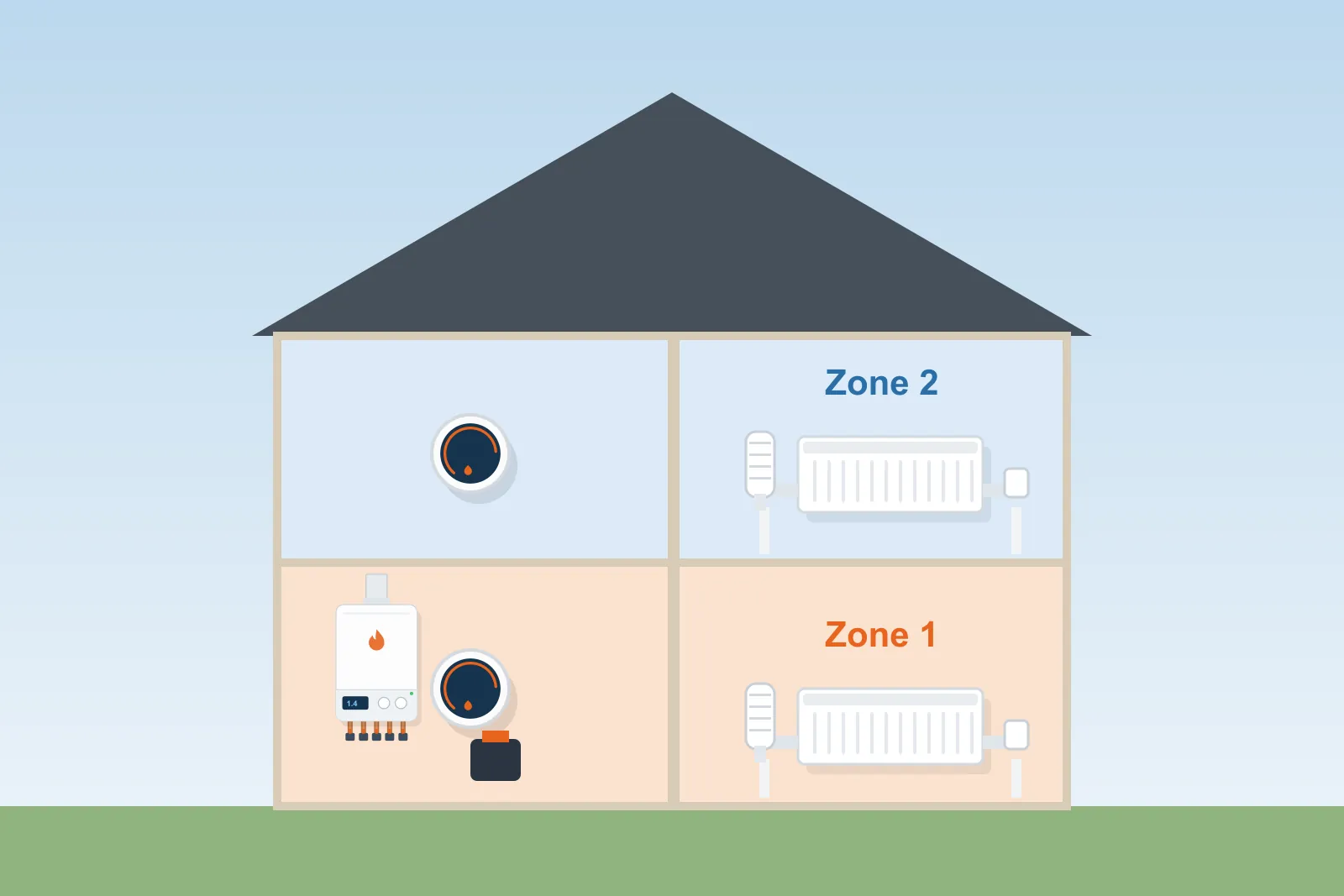
That matters more than you might think. Homes with a hot water cylinder often have motorised valves and a wiring centre, sometimes described as an S-plan or Y-plan system. Getting a smart thermostat to control the heating and hot water properly on those systems needs someone who understands how the valves, the cylinder thermostat and the boiler work together. Our guide to heating controls explains the different parts.
There's also a gas safety line that mustn't be crossed. On many boilers, the electrical connections are behind a separate panel that can be removed safely. But if connecting the thermostat means opening the boiler's sealed combustion case, that's gas work and must be done by a Gas Safe registered engineer. If in doubt, leave the boiler casing alone.
Need a heating engineer?
Describe the job and compare free quotes from local heating engineers near you.
Free and no obligation. Quote requests are handled by our partner, Bark.
What the rules say: Part P and building regulations
In England and Wales, electrical work in homes is covered by Part P of the Building Regulations. Only certain jobs are 'notifiable' – meaning they must be signed off by building control or done by a registered competent person who self-certifies. These are mainly new circuits, replacing a consumer unit and some work in bathrooms close to the bath or shower. Replacing a thermostat on an existing circuit is generally classed as minor work and isn't notifiable.
Not notifiable doesn't mean anything goes. The work still has to be done safely and to the wiring regulations, and if anything goes wrong it's the person who did the work who's responsible. If a new circuit is needed, for example to power electric underfloor heating, the job becomes notifiable and should be done by a registered electrician who can certify it. Our sister site's guide to Part P building regulations sets out which jobs are notifiable and what paperwork you should expect.
The rules work differently in Scotland and Northern Ireland, and they do change from time to time. If you're planning anything beyond a straight swap, ask your installer to confirm what applies where you live.
Electric heating is a different story
Not every smart thermostat controls a gas boiler. If yours is going to run electric underfloor heating, electric radiators or an electric boiler, the thermostat is often switching a much bigger electrical load directly. That's firmly electrician territory.
Electric underfloor heating in a bathroom is a good example. The thermostat may be wired into a dedicated circuit with RCD protection, and work in bathrooms has extra rules about where electrical equipment can go. An electrician will make sure the thermostat is rated for the load, protected properly and installed in the right place.
Heat pumps are different again. Most come with their own controller, and a third-party smart thermostat may not be compatible without careful setup. Talk to your heat pump installer before buying anything.
How much does installation cost?
A smart thermostat supplied and fitted by a professional typically costs around £150–£350 in the UK, depending on the model and how straightforward the wiring is. If you already own the thermostat, a simple fitting is usually charged as an hour or two of labour. Prices climb when cables need running, walls need making good or a wiring centre needs reworking.
| Job | Typical cost |
|---|---|
| Smart thermostat supplied and fitted | £150–£350 |
| Fitting only, straightforward like-for-like swap | £60–£150 |
| Moving the thermostat with a new cable run | £100–£300 extra |
| Smart thermostat with hot water and wiring centre changes | £250–£500 |
| Smart radiator valve heads (each, self-fitted) | £40–£80 |
Indicative UK prices. Your quote depends on the thermostat, your heating system and the wiring needed.
Questions to ask before anyone picks up a screwdriver
Whether you hire an electrician or a heating engineer, a few questions up front will save time and avoid surprises:
- Is this thermostat compatible with my boiler, and can it use a low-voltage connection?
- Will it control my hot water as well as my heating?
- Does the existing wiring have everything the new thermostat needs, including a neutral?
- Is the current thermostat in a sensible place, or should it move?
- Will the boiler casing need to be opened – and if so, are you Gas Safe registered?
- Will you set up the app, schedules and features such as weather compensation before you leave?
- Is the work notifiable, and what paperwork will I get?
So, who should you call?
If it's a straight swap and you're confident, you might not need anyone. If the job is mainly about wiring – new cables, a new power supply, electric heating or a missing neutral – an electrician is a good choice. If it's mainly about your boiler, hot water and heating zones, a heating engineer will usually do the best job, and they're the only option if the boiler casing has to be opened.
Whichever route you take, a smart thermostat is only as good as its setup. Ask the installer to set sensible schedules, check the ideal thermostat temperature for your household and show you how the app works. Our guide to smart thermostats covers whether they're worth it in the first place.
When you're ready, you can describe the job once and get free, no-obligation quotes from local heating engineers who fit smart controls regularly.