What causes sludge?
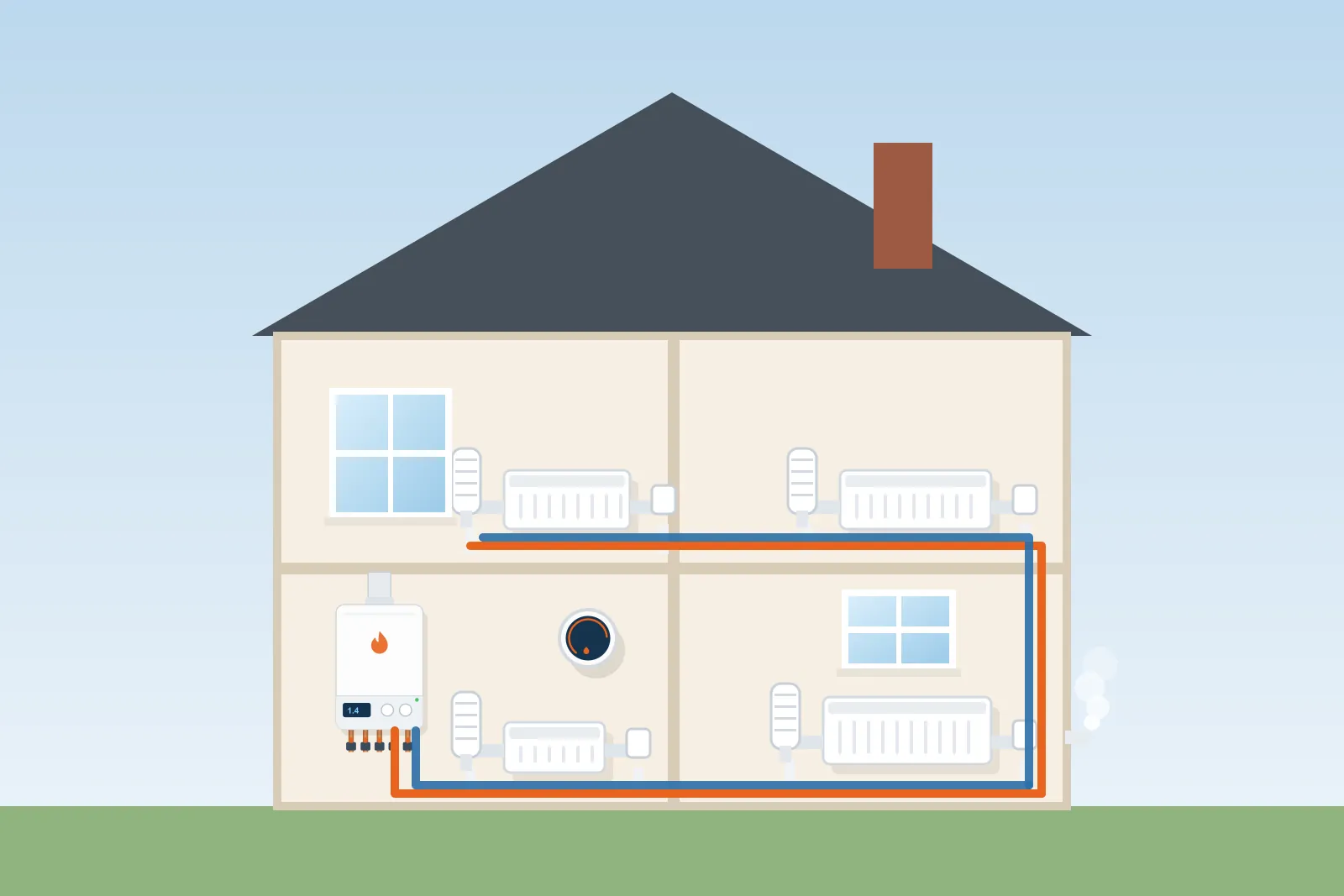
Central heating water slowly corrodes the inside of steel radiators and pipework, producing a dark sludge, mainly iron oxide. Over the years it settles in radiators, blocks narrow passages and can damage the boiler's pump and heat exchanger.
Signs your system needs cleaning
Look out for:
- Radiators that are cold at the bottom or in the middle
- Radiators that need bleeding often
- Dark, dirty water when bleeding a radiator
- A noisy boiler or pump
- Slow warm-up times
- Repeated boiler breakdowns
Need a heating engineer?
Describe the job and compare free quotes from local heating engineers near you.
- Free to use
- No obligation
- Compare local engineers
- Quick online form
You'll continue to our quotes partner, MyJobQuote, to describe your heating job.
How a power flush works
A power flushing machine is connected to the system, usually at the pump or a radiator. It pumps water and cleaning chemicals around the system at high flow, while the engineer works through the radiators one by one to dislodge debris. Dirty water is dumped and replaced until the system runs clear.
A typical power flush takes most of a day, depending on the size of the system. Afterwards, the system is refilled with inhibitor to slow future corrosion.
Costs and keeping it clean
Indicative UK prices for a power flush on a typical home are around £400–£750, depending on the number of radiators and the condition of the system.
To keep the system clean afterwards, engineers usually recommend a magnetic system filter, the correct level of inhibitor in the system water and an annual check during the boiler service.