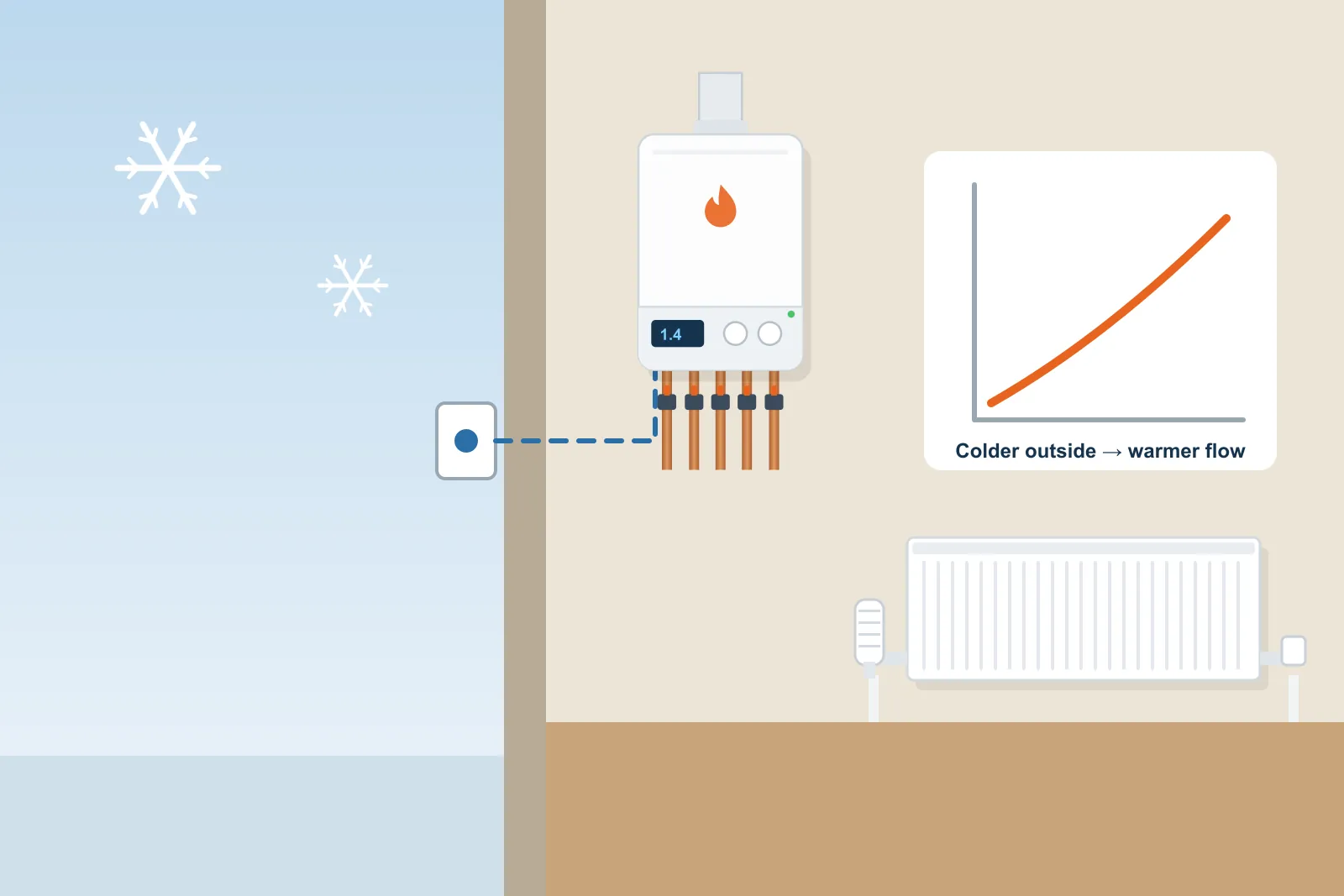
The idea in plain terms
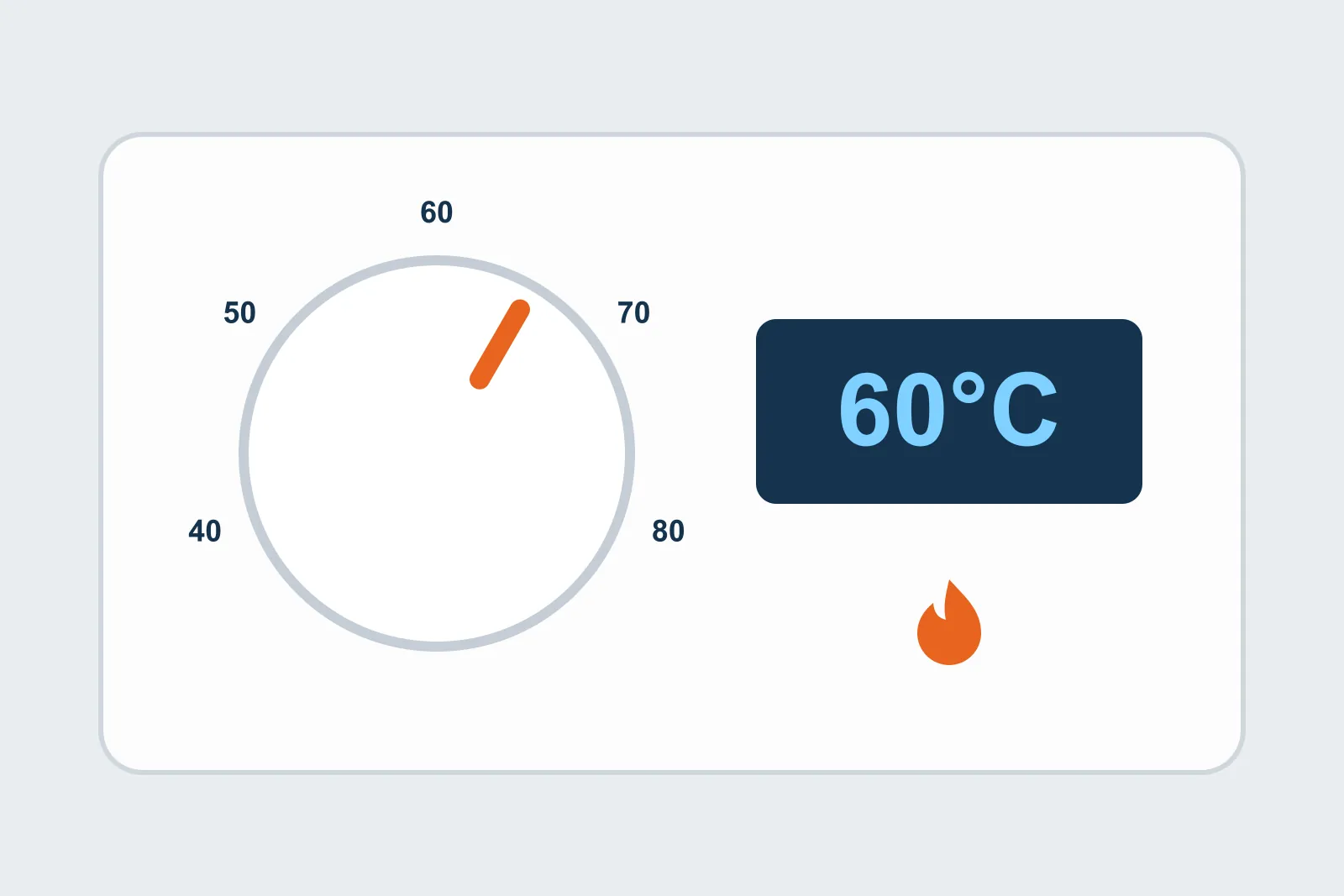
A traditional boiler heats water to a fixed temperature – often 70–80°C – and switches on and off to keep the house warm. On a mild day, that's far hotter than needed, so the boiler cycles on and off and runs less efficiently. Weather compensation uses an outdoor temperature sensor to set the flow temperature according to the weather: lower when it's mild, higher when it's cold.
The result is gentler, more continuous heating, fewer temperature swings in the house and better efficiency, because condensing boilers and heat pumps both work better at lower flow temperatures. See boiler flow temperature explained.
Weather compensation vs load compensation
In England, new boiler installations must include at least one energy-saving control such as weather compensation or load compensation, alongside a time and temperature control. See heating controls explained.
| Type | How it works | Needs |
|---|---|---|
| Weather compensation | Adjusts flow temperature to outdoor temperature | Outdoor sensor on a north-facing wall |
| Load compensation | Adjusts flow temperature based on how close the room is to target | Compatible room thermostat |
| Enhanced load compensation | Room thermostat communicates with boiler (e.g. OpenTherm) | Compatible boiler and thermostat |
| Both combined | Uses outdoor and indoor readings | Sensor and compatible controls |
Types of boiler compensation
How much can it save?
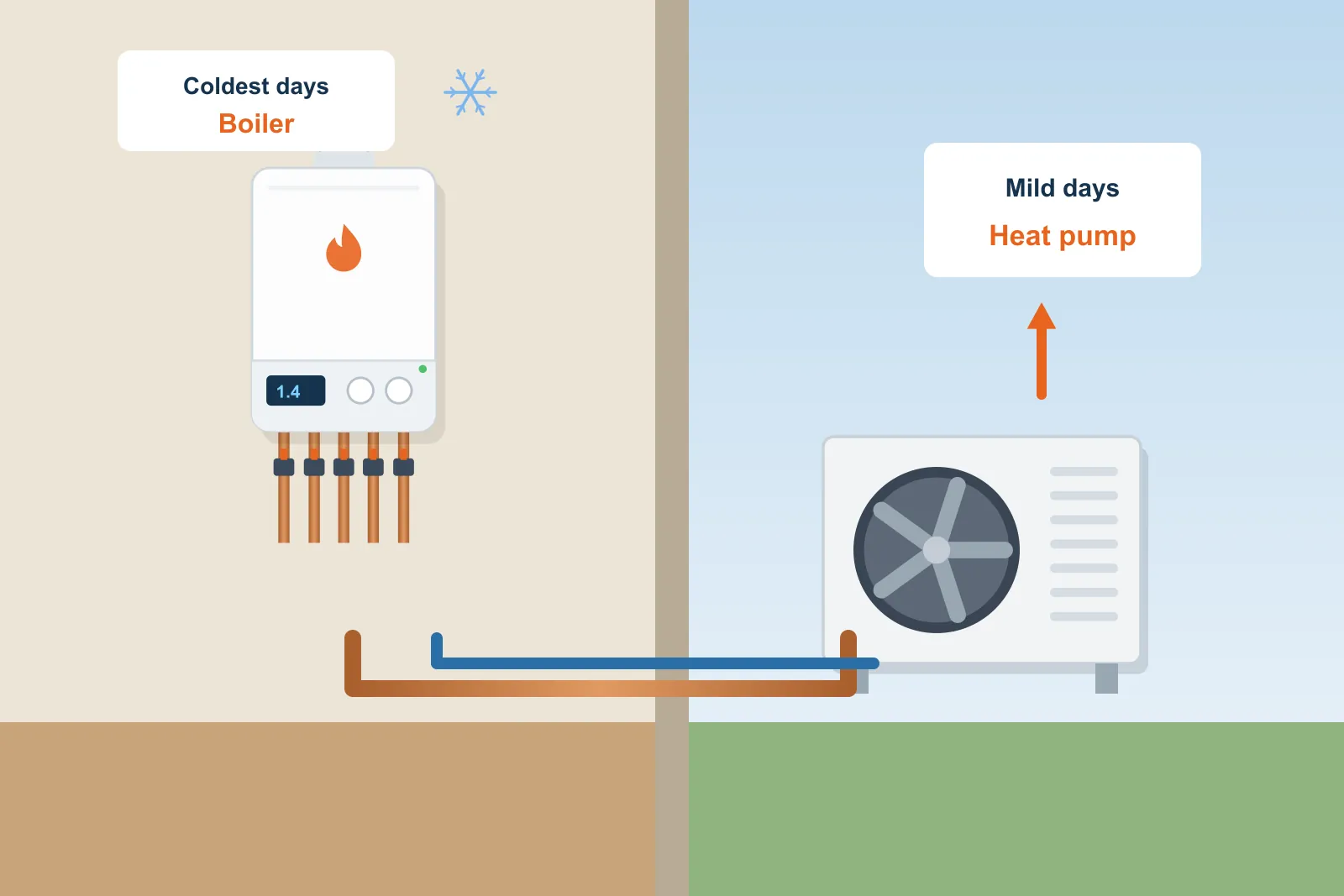
Savings depend on the home and how the heating was set up before. Estimates commonly range from a few per cent to around 10–15% on gas use when compensation is properly configured, with bigger benefits on heat pumps, which rely on low flow temperatures to be efficient. The comfort benefit – steadier temperatures without the boiler blasting on and off – is noticeable too.
Need a heating engineer?
Describe the job and compare free quotes from local heating engineers near you.
Free and no obligation. Quote requests are handled by our partner, Bark.
Setting it up
Many households find weather compensation works best with heating schedules that are smoother than they're used to – for example, a modest set-back overnight rather than switching off completely.
- Fit the outdoor sensor on a north or north-east wall, away from direct sun, flues and windows
- Choose the heating curve – the relationship between outdoor and flow temperature
- Start with a moderate curve and adjust over a few weeks of real weather
- Make sure radiators are balanced and TRVs aren't fighting the system
- Leave heating on for longer periods at lower temperatures rather than short blasts
Costs and compatibility
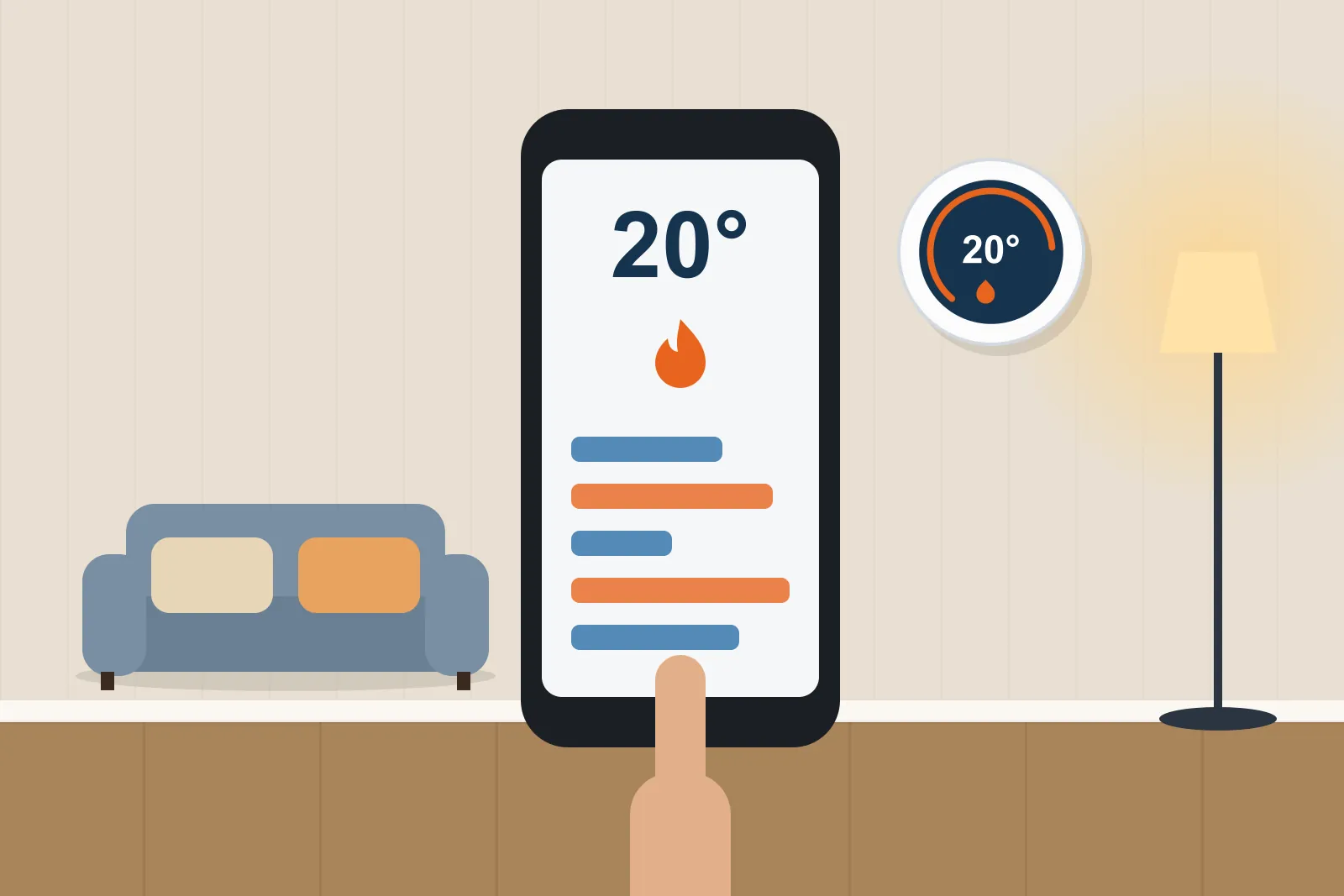
Most modern boilers support a manufacturer's outdoor sensor; some smart thermostats provide weather compensation using online weather data instead. Ask a heating engineer to check what your boiler supports, and see smart thermostats explained.
| Item | Typical cost |
|---|---|
| Manufacturer outdoor sensor (part) | £25 – £80 |
| Sensor fitted and boiler configured | £100 – £250 |
| OpenTherm-compatible smart thermostat | £120 – £280 |
| Included with most heat pump installations | Standard |
Indicative costs (2026)