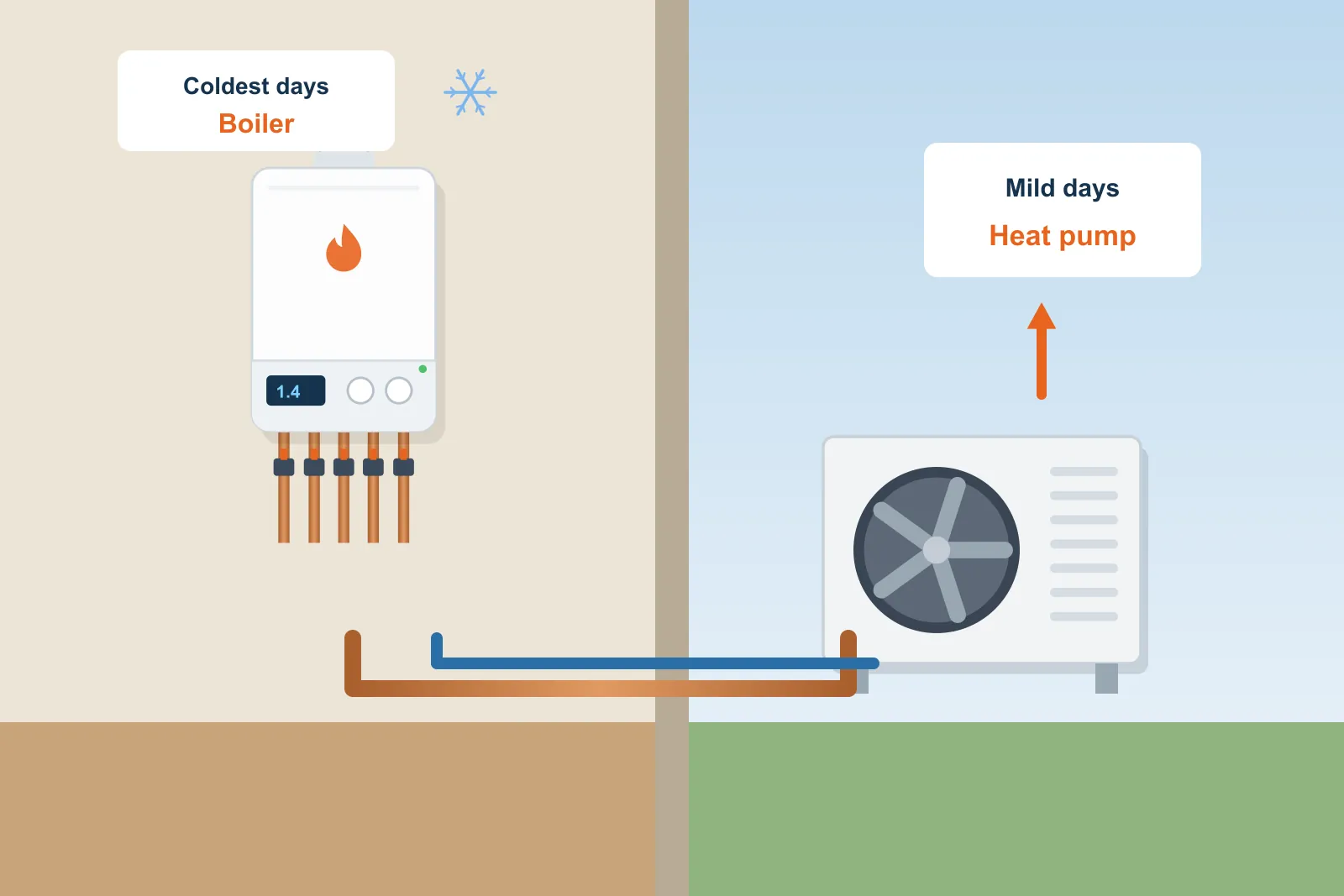
How a hybrid system works
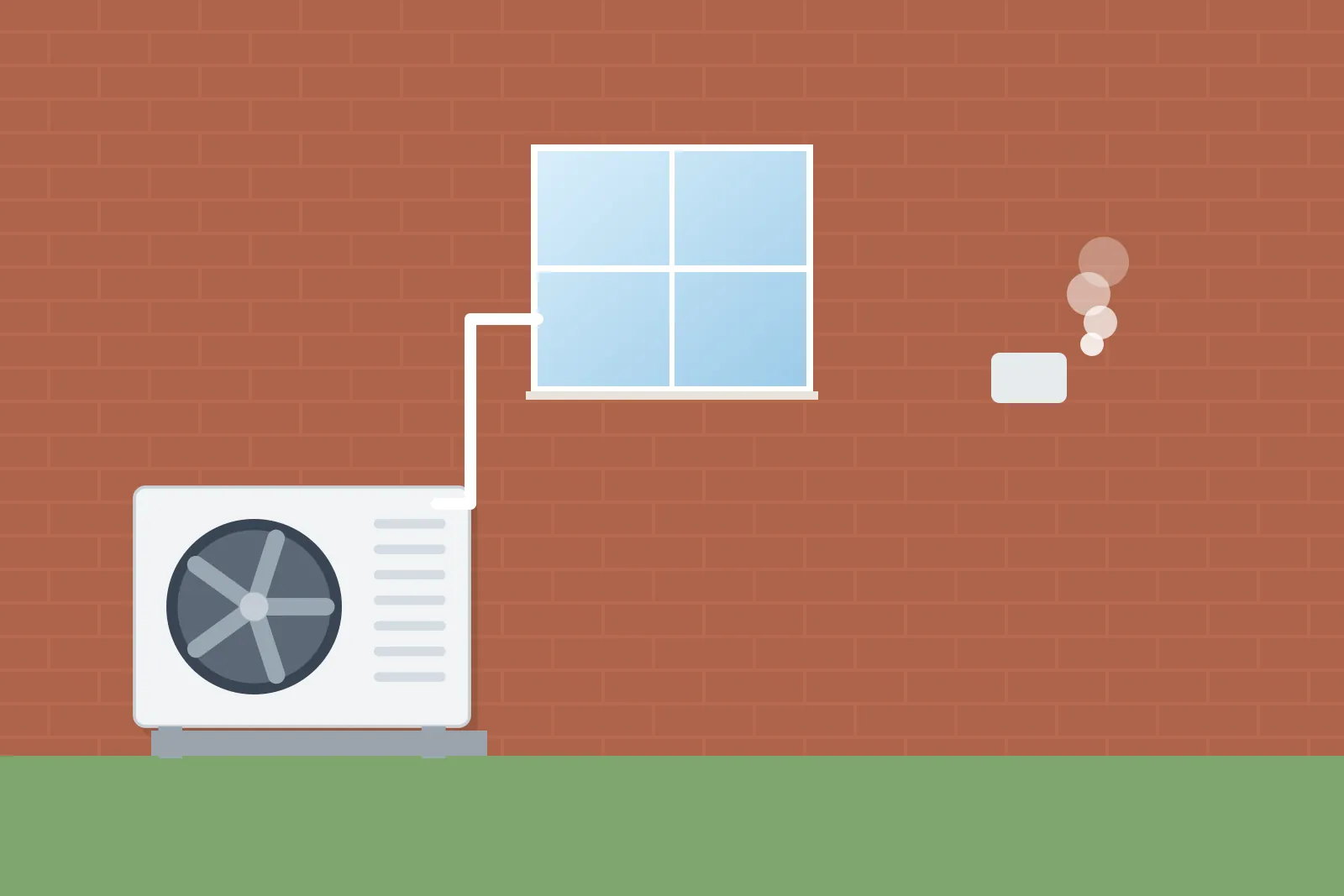
A hybrid heat pump system has two heat sources connected to the same radiators. An outdoor air source heat pump provides heating most of the time, because it's more efficient in mild weather. A gas boiler – either your existing one or a new one – takes over when it's very cold, when the heat pump can't keep up, or when hot water is needed quickly.
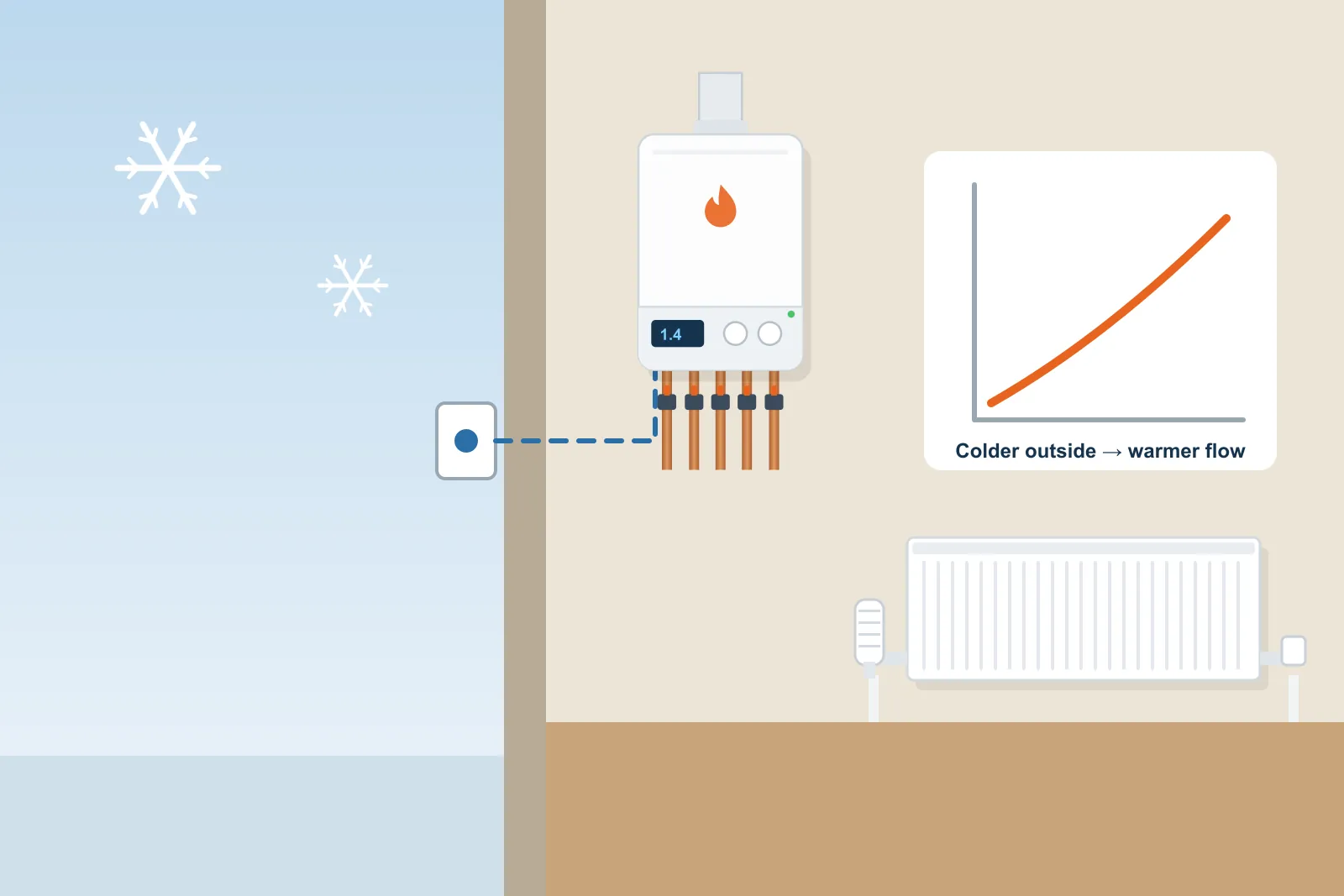
A controller decides which heat source to use, based on outdoor temperature, energy prices or carbon. Some systems run both together at times. The result is lower gas use, without needing to upsize every radiator in the house as a full heat pump installation might.
Who hybrids suit
If your home is well insulated and you're replacing the boiler anyway, a full heat pump is often the better long-term option. If your boiler is fairly new and the house is harder to heat, a hybrid can make more sense.
- Homes with a relatively new gas boiler that isn't due for replacement
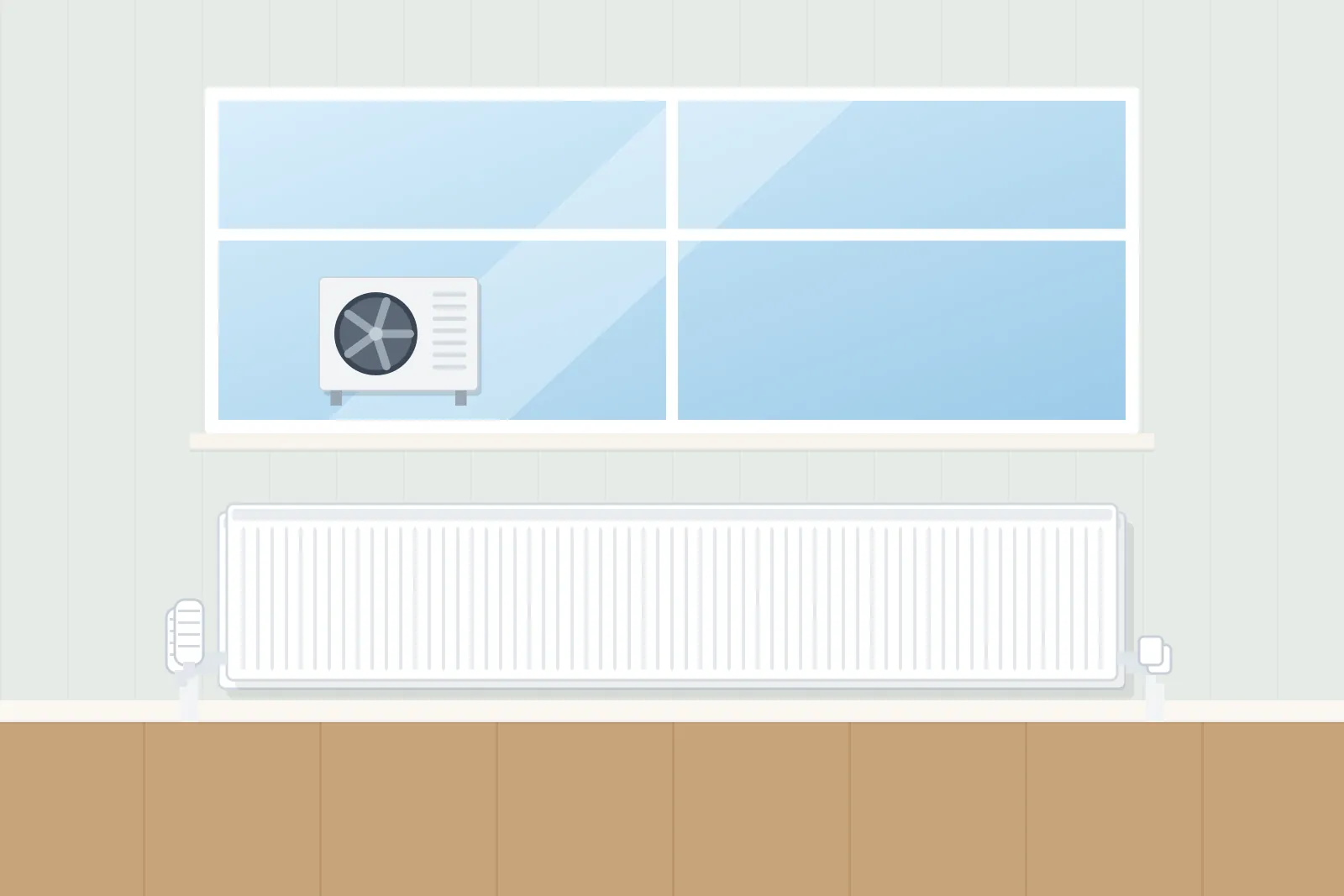
- Larger or older homes where a full heat pump would need major radiator upgrades
- Homes where insulation can't easily be improved
- Households wanting to cut gas use without fully leaving gas
- Homes with a combi boiler that can keep providing instant hot water
Pros and cons
| Pros | Cons |
|---|---|
| Cuts gas use, often by half or more | You still pay the gas standing charge and need boiler servicing |
| Fewer radiator changes than a full heat pump | Two systems to maintain |
| Boiler covers very cold days and hot water | Savings depend on gas and electricity prices |
| Can use an existing boiler | Grants for hybrids are more limited than for full heat pumps |
| Smaller outdoor unit often possible | Still needs space outside for the heat pump |
Hybrid heat pump systems at a glance
Need a heating engineer?
Describe the job and compare free quotes from local heating engineers near you.
Free and no obligation. Quote requests are handled by our partner, Bark.
Running costs
How much a hybrid saves depends on the efficiency of the heat pump (its seasonal performance), the electricity tariff, the gas price and how the controller balances the two. On a heat pump-friendly tariff, running the heat pump most of the year usually costs less than gas. Smart controllers can switch to the boiler when electricity is expensive or during very cold spells when heat pump efficiency drops.
Lowering your boiler's flow temperature and balancing your radiators helps a hybrid system too. See boiler flow temperature explained and balancing radiators.
Installation and costs
Installation involves fitting the outdoor unit, connecting it to the heating circuit alongside the boiler, adding a buffer or low-loss header where needed, and fitting the controller. It typically takes two to four days.
| Job | Typical cost |
|---|---|
| Add a hybrid heat pump to an existing boiler | £5,000 – £9,000 |
| New boiler and hybrid heat pump package | £7,500 – £12,000 |
| Full air source heat pump (for comparison) | £8,000 – £14,000 before grants |
Indicative hybrid heat pump costs (2026)
Grants and next steps
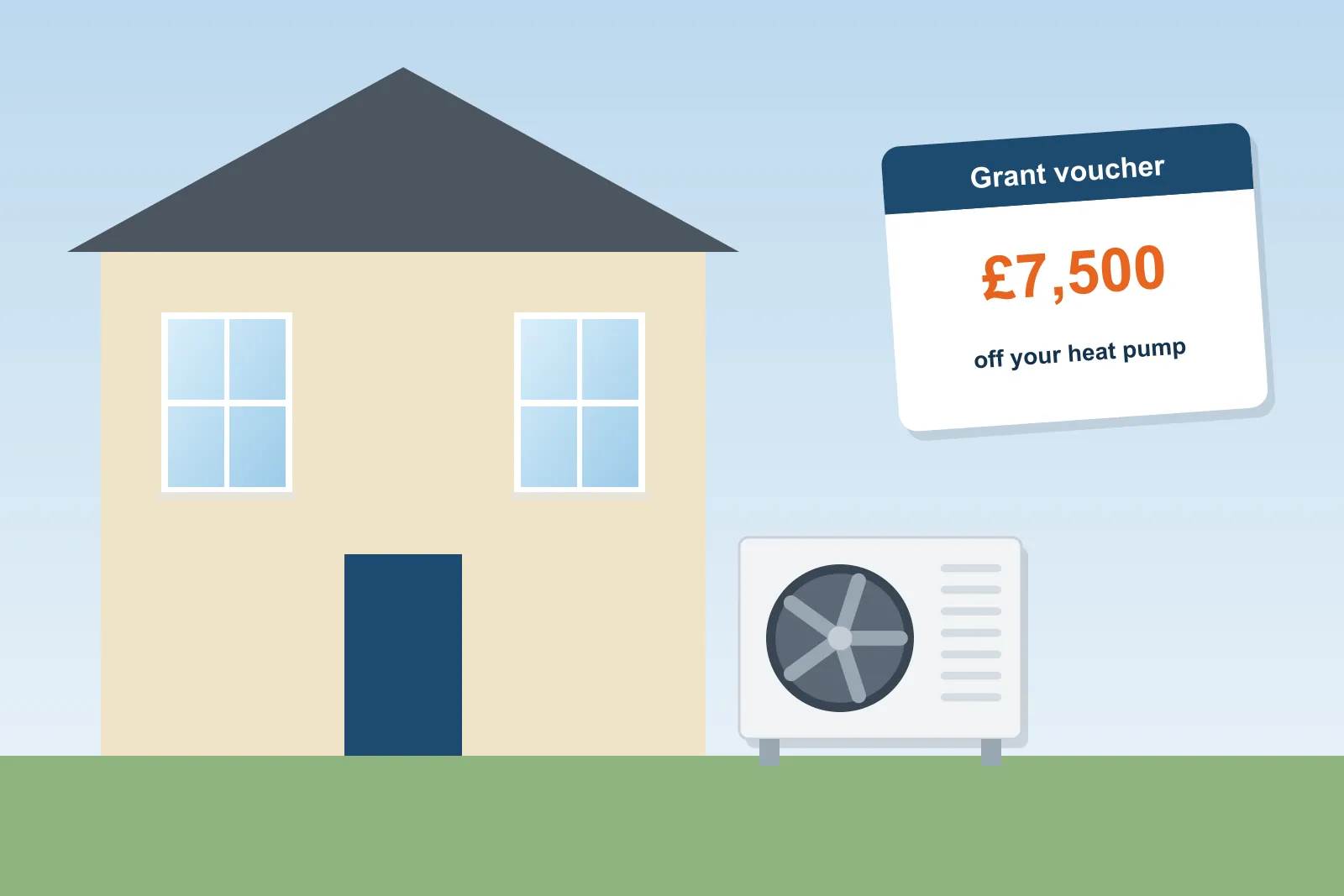
The main UK grant for heat pumps in England and Wales, the Boiler Upgrade Scheme, is for systems that fully replace fossil fuel heating, so hybrids don't usually qualify. Other local or energy company schemes may help. See the Boiler Upgrade Scheme explained.
If you're weighing up a hybrid against a full heat pump or a new boiler, get quotes for both from MCS-certified installers and heating engineers. Our guides to heat pumps vs gas boilers and radiators for heat pumps explain the trade-offs.