Typical costs
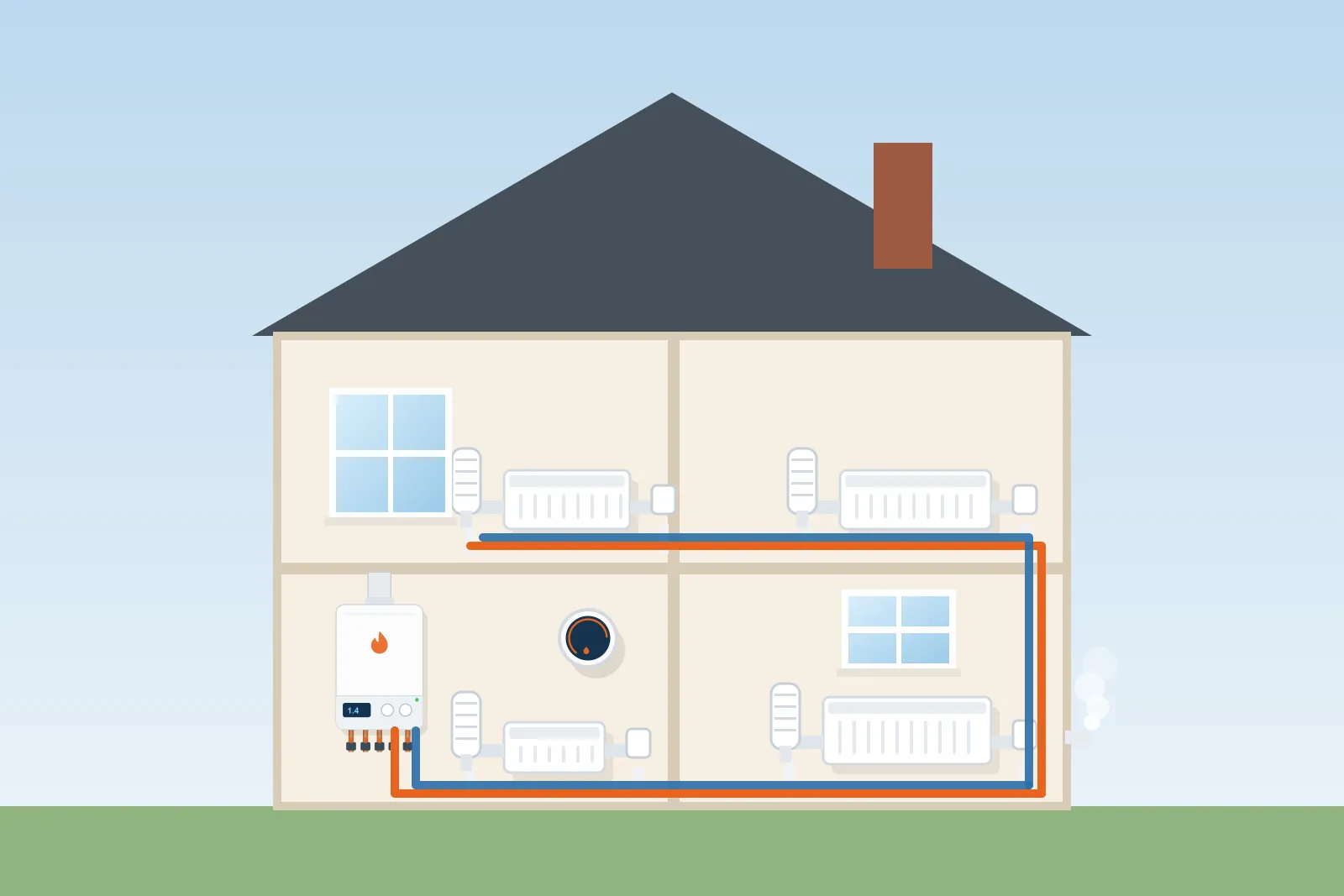
The cost depends mostly on how much pipe needs replacing and how hard it is to get to. A short run under a lifted floorboard is a small job. Replacing all the pipework in a three-bedroom house means lifting floors throughout and is a major job.
| Job | Typical cost |
|---|---|
| Repair a leaking section | £150 – £400 |
| Replace a single pipe run to one radiator | £200 – £500 |
| Replace microbore pipework to several radiators | £800 – £2,000 |
| Full repipe, 2–3 bed house | £2,500 – £5,000 |
| Full repipe, 4–5 bed house | £4,000 – £7,500 |
| Making good (flooring, plaster) | Extra |
Indicative costs to replace central heating pipes (2026)
When do heating pipes need replacing?
Most copper heating pipes last for decades. Common reasons to replace them include:
- Repeated leaks or corrosion
- Microbore pipes blocked with sludge
- Undersized pipes that can't carry enough heat – often an issue with heat pumps
- Renovations or extensions that change the layout
- Old steel or poorly installed pipework
- Upgrading a boiler system that needs larger pipes
Microbore pipes
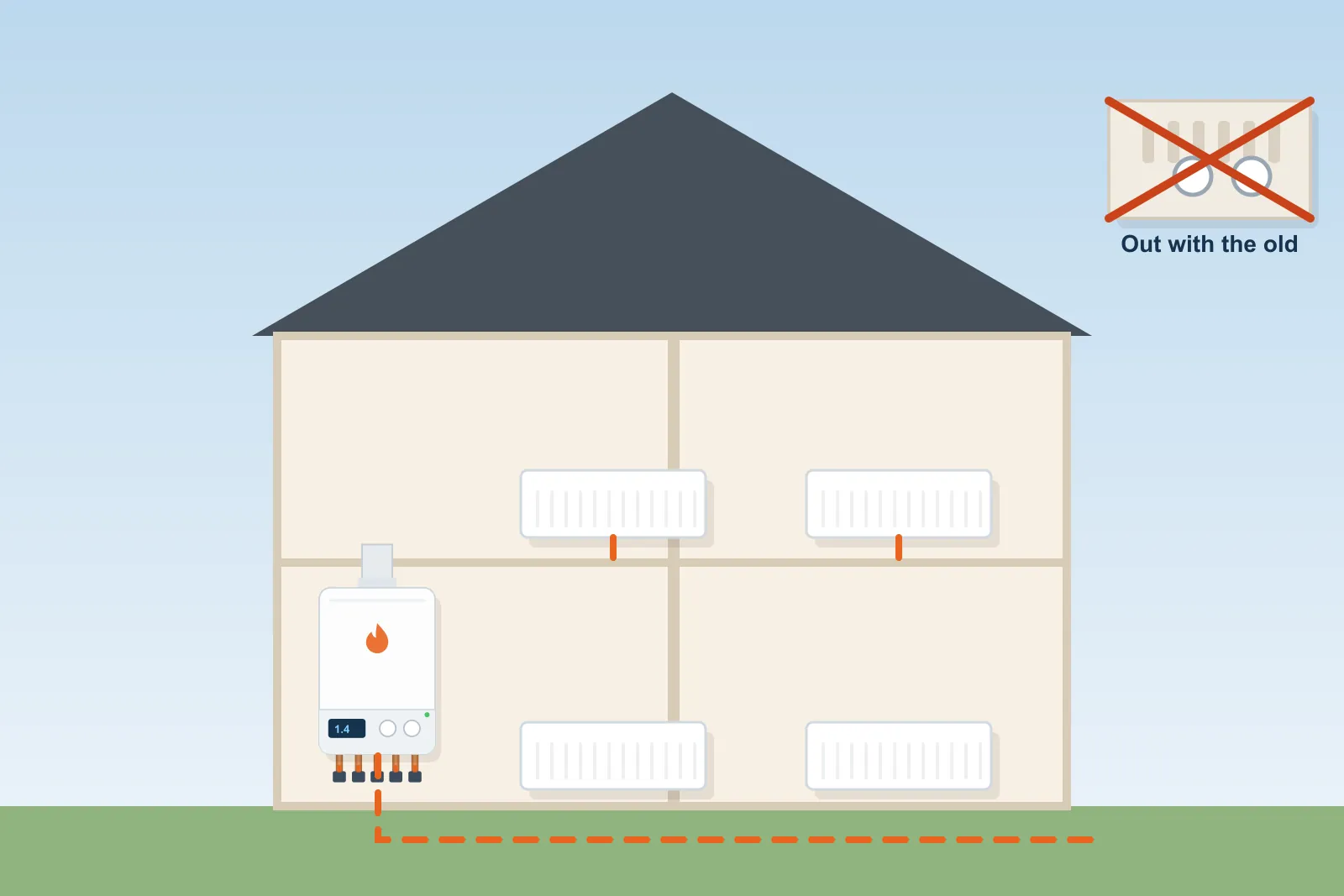
Microbore pipework (8mm or 10mm) was popular in the 1970s and 1980s. It's easy to install but can block with sludge, leading to cold radiators. Power flushing doesn't always clear it. Replacing microbore with standard 15mm pipe often improves heating performance. See power flushing explained.
Need a heating engineer?
Describe the job and compare free quotes from local heating engineers near you.
Free and no obligation. Quote requests are handled by our partner, Bark.
Copper or plastic?
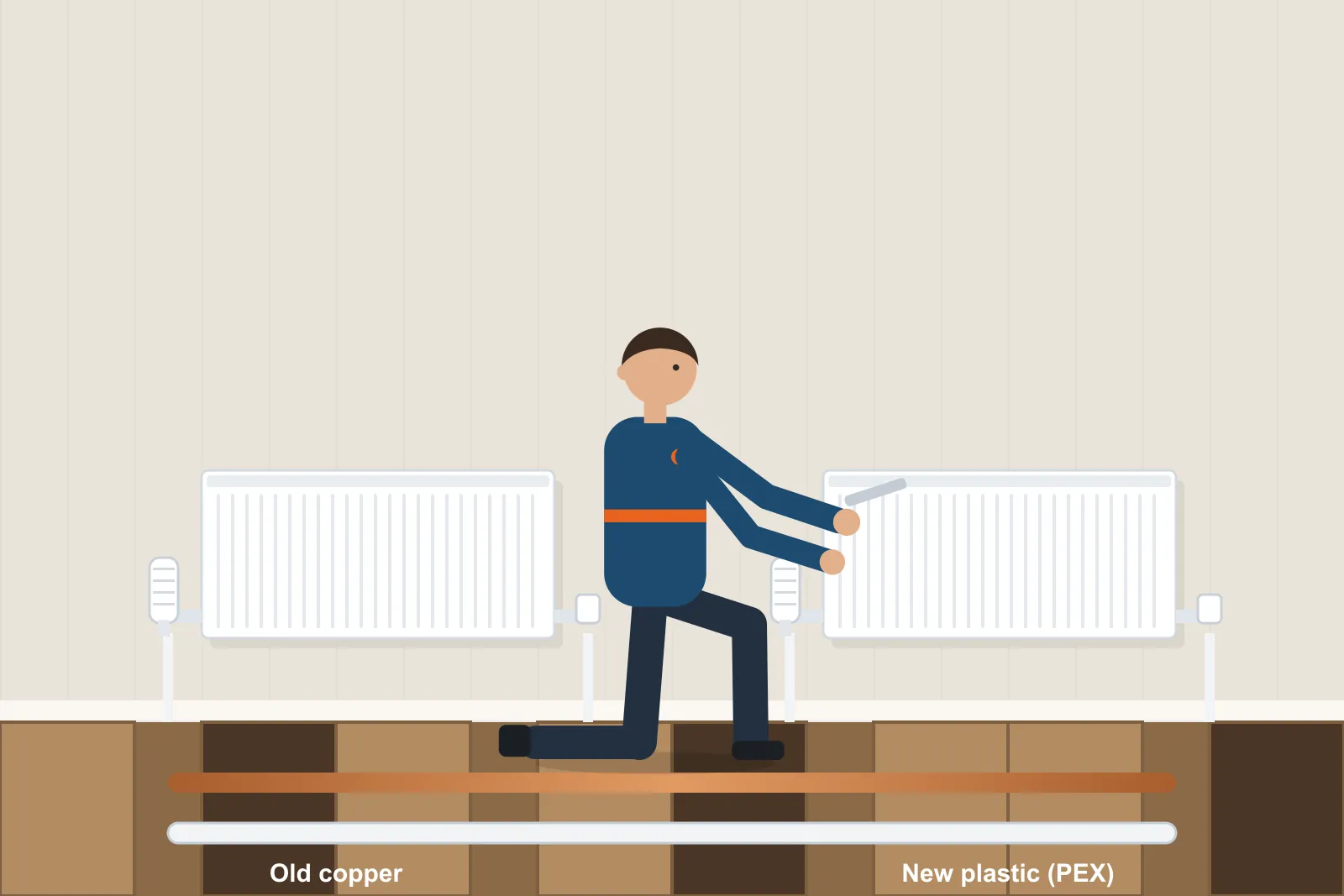
Plastic (PEX) pipe is flexible, quicker to install and can be threaded through joists with fewer joints, which reduces labour. Copper is rigid, durable and preferred where pipes are visible. Most modern installations use a mix: copper near the boiler and on show, plastic under floors.
Disruption
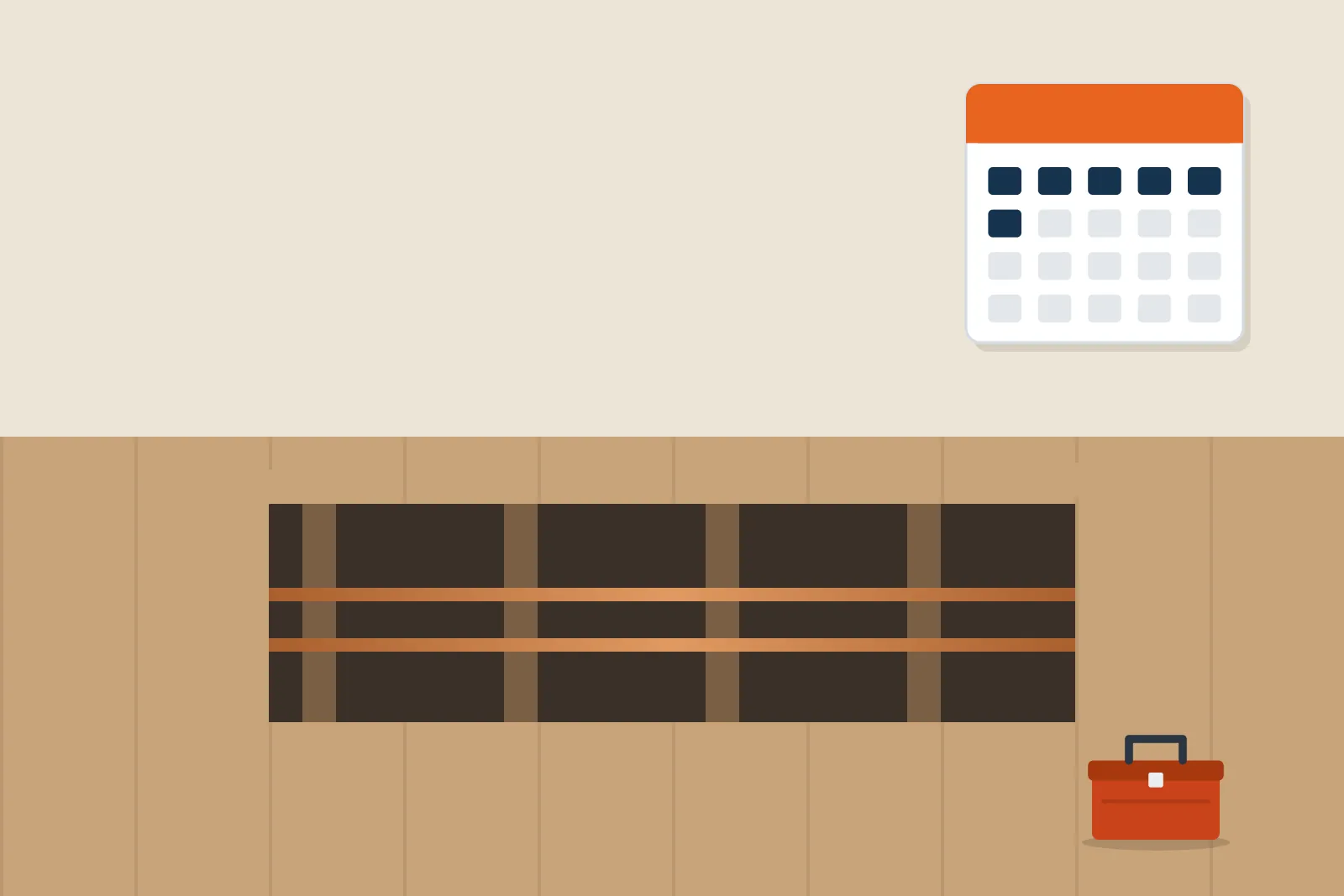
Replacing pipes means lifting floorboards and sometimes cutting into walls or ceilings. Carpets, laminate and tiled floors add time and cost. It's often best to combine repiping with other work – a new boiler, rewiring or new flooring – to minimise disruption.
Getting quotes
A heating engineer will need to see the property to quote accurately. Ask what pipe material they'll use, whether making good is included, and how long the work will take. Get quotes from local heating engineers, and see how long it takes to install central heating.