How electric boilers work
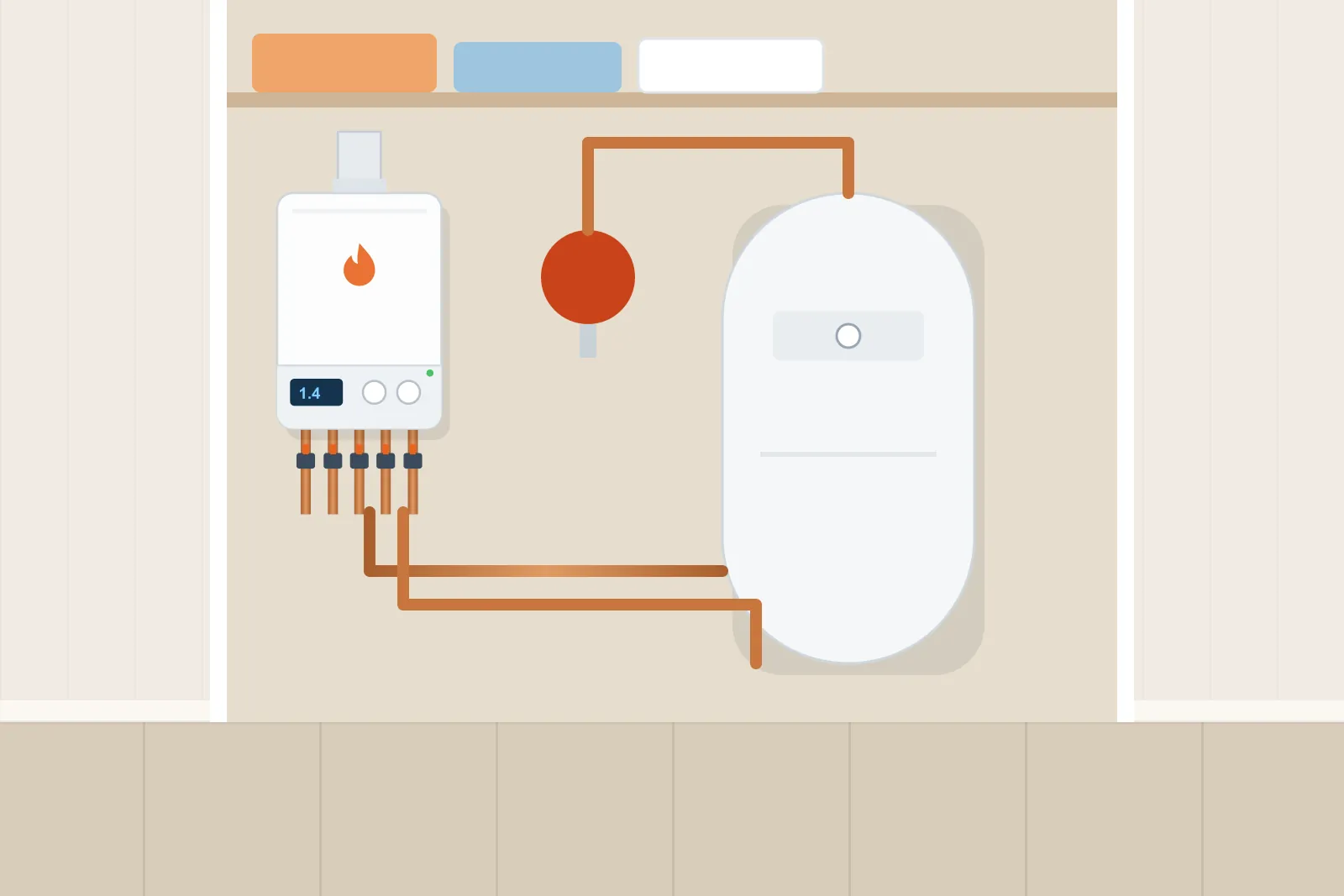
An electric boiler uses heating elements to warm the water that circulates through your radiators. There's no combustion, so there's no flue, no gas connection and no carbon monoxide. Some models also heat hot water directly; others work with a hot water cylinder.
The advantages
Electric boilers have some clear benefits:
- No flue, so they can go almost anywhere with a suitable electrical supply
- No gas supply needed – useful in flats and off-grid homes
- Quiet and compact
- No combustion, so no carbon monoxide from the boiler
- Usually simpler to install than a gas boiler
The drawbacks
The main drawback is running cost. Electricity typically costs more per unit than mains gas, so heating a large or poorly insulated home with an electric boiler can be expensive.
Electric boilers also draw a lot of power. Many need a dedicated circuit, and larger outputs may need a supply upgrade that not every home can easily get. Direct electric combis can have limited hot water flow.
Need a heating engineer?
Describe the job and compare free quotes from local heating engineers near you.
- Free to use
- No obligation
- Compare local engineers
- Quick online form
You'll continue to our quotes partner, MyJobQuote, to describe your heating job.
Homes that suit an electric boiler
Electric boilers tend to work best in flats, smaller and well-insulated homes, properties off the gas grid, and homes replacing storage heaters with a radiator system. They can also make sense where home-generated electricity or a time-of-use tariff makes electricity cheaper at certain times.
Questions to ask an installer
Before you choose, ask each installer:
- Have you checked my electrical supply and consumer unit?
- Who will carry out and certify the electrical work?
- How will hot water be provided, and at what flow rate?
- What controls are included?
- What are the warranty and maintenance requirements?