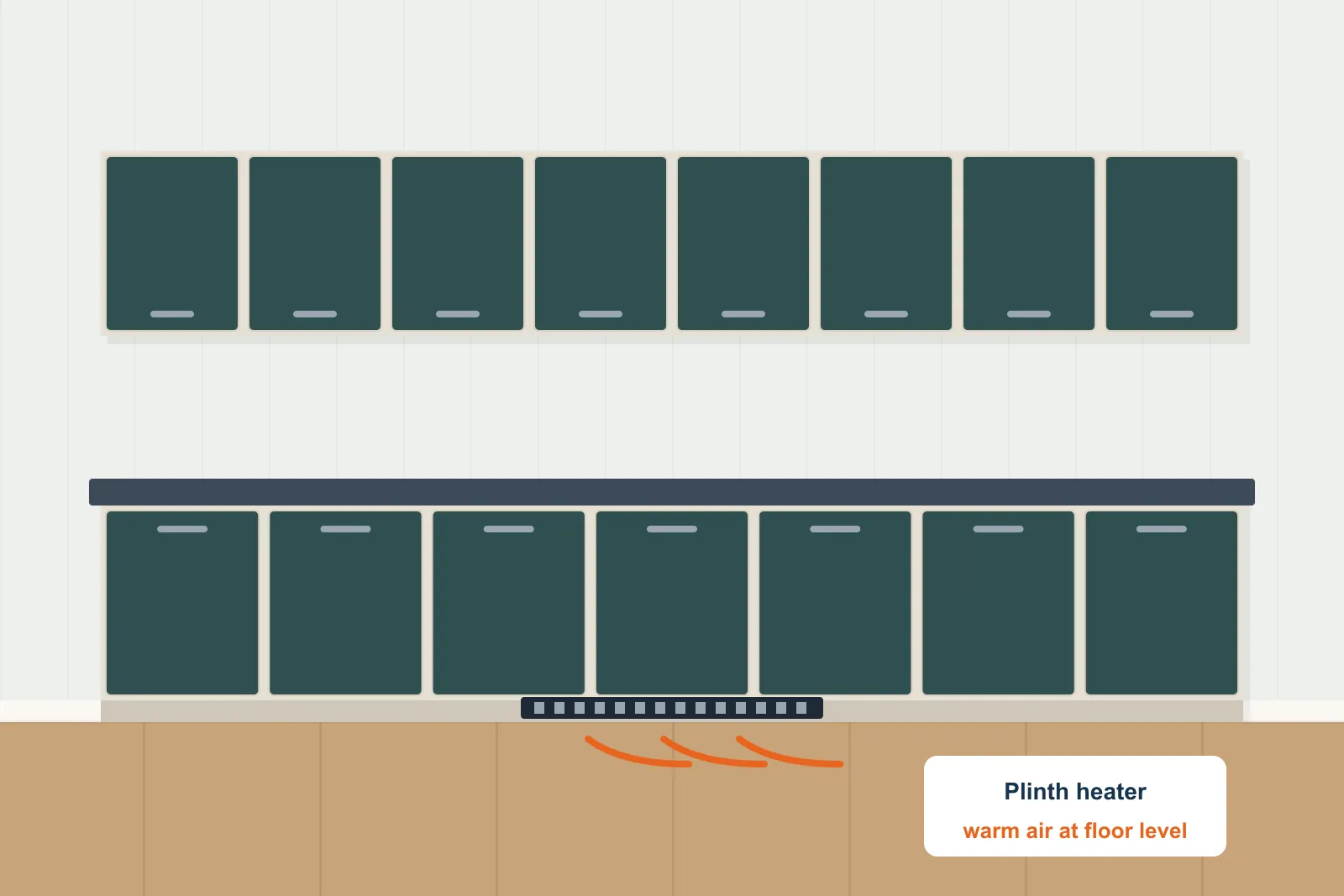
How plinth heaters work
A plinth heater is a compact unit that fits in the void behind the kickboard at the base of your kitchen units. A small fan draws in cool air and blows it out over a heat exchanger and through a grille in the plinth, warming the room from floor level.
There are two main types. Hydronic (wet) plinth heaters connect to your central heating pipework, so they run on your boiler or heat pump. Electric plinth heaters have their own heating element and just need an electrical supply.
| Hydronic | Electric | |
|---|---|---|
| Heat source | Central heating | Electric element |
| Running cost | Similar to a radiator | Higher – full-price electricity |
| Installation | Pipework plus electrical supply for the fan | Electrical supply only |
| Typical output | 1–3kW (depends on flow temperature) | 1–2kW |
| Best for | Main kitchen heating | Small kitchens, top-up heat |
Hydronic vs electric plinth heaters
Pros and cons
- Frees up wall space for units and appliances
- Heats the floor area where you stand
- Quick to warm a room
- Fan can be noisy on cheaper models
- Needs a kickboard height of around 100mm or more
- Grilles need regular cleaning – kitchen dust and crumbs collect
Sizing matters
A common mistake is relying on a single small plinth heater for a large open-plan kitchen-diner. Output depends heavily on the water temperature for hydronic models, and it falls significantly with lower flow temperatures, such as a heat pump or a boiler set to run efficiently. Your engineer should calculate the room's heat loss and choose models that deliver enough heat at your system's flow temperature. Larger rooms may need two plinth heaters or a combination with underfloor heating or a vertical radiator.
See radiator output: BTU and watts and boiler flow temperature explained.
Need a heating engineer?
Describe the job and compare free quotes from local heating engineers near you.
Free and no obligation. Quote requests are handled by our partner, Bark.
Alternatives
If a plinth heater won't deliver enough heat, consider wet underfloor heating, a slim vertical radiator on a narrow wall, or a kitchen island with a radiator built into the end panel. See underfloor heating vs radiators and vertical radiators explained.
Typical costs
Ask local heating engineers to size the heater properly, or browse radiator options for your kitchen.
| Item | Typical cost |
|---|---|
| Electric plinth heater (unit) | £120 – £300 |
| Hydronic plinth heater (unit) | £200 – £450 |
| Install hydronic plinth heater during kitchen fit | £200 – £450 labour |
| Retrofit into an existing kitchen | £350 – £800 total |
Indicative plinth heater prices (2026)