How wet underfloor heating works
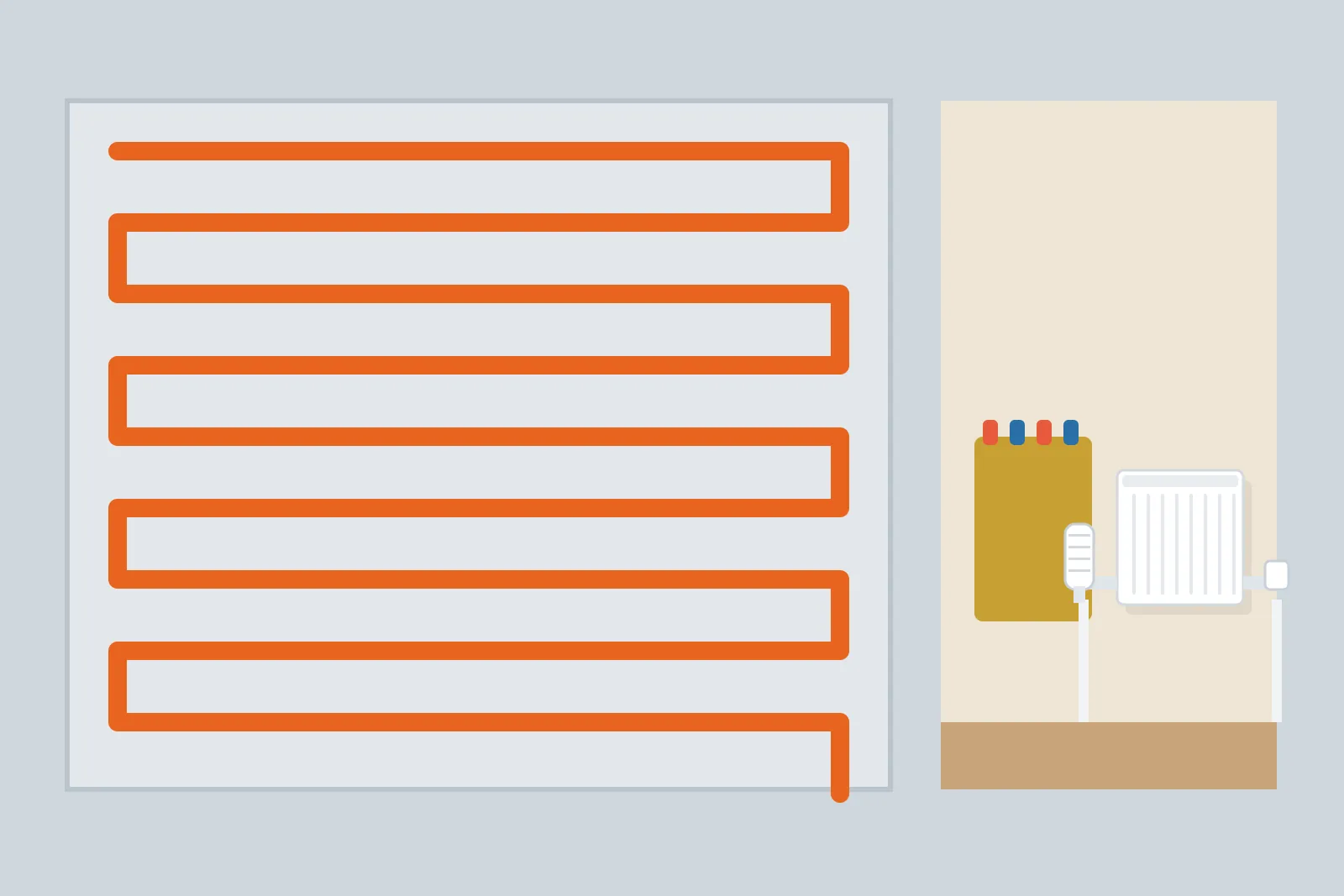
Wet underfloor heating uses loops of pipe laid in or beneath the floor, carrying warm water from a boiler or heat pump. A manifold splits the flow between the loops, and a mixing valve or controls keep the water at a lower temperature than radiators use.
Pros and cons
Each has its strengths:
| Underfloor heating | Radiators | |
|---|---|---|
| Comfort | Even warmth across the room | Warmer near the radiator |
| Warm-up time | Slower, especially in screed floors | Quicker |
| Wall space | Frees up walls | Uses wall space |
| Installation | Best during building work | Easy to add or replace |
| Cost to fit | Usually higher | Usually lower |
Underfloor heating and radiators compared
Need a heating engineer?
Describe the job and compare free quotes from local heating engineers near you.
- Free to use
- No obligation
- Compare local engineers
- Quick online form
You'll continue to our quotes partner, MyJobQuote, to describe your heating job.
Floor coverings and planning
Tiles and stone pass heat well; thick carpets and underlay reduce output. Underfloor heating is easiest to fit during an extension or renovation, when floors are up anyway. Many homes combine it on the ground floor with radiators upstairs.