How they compare
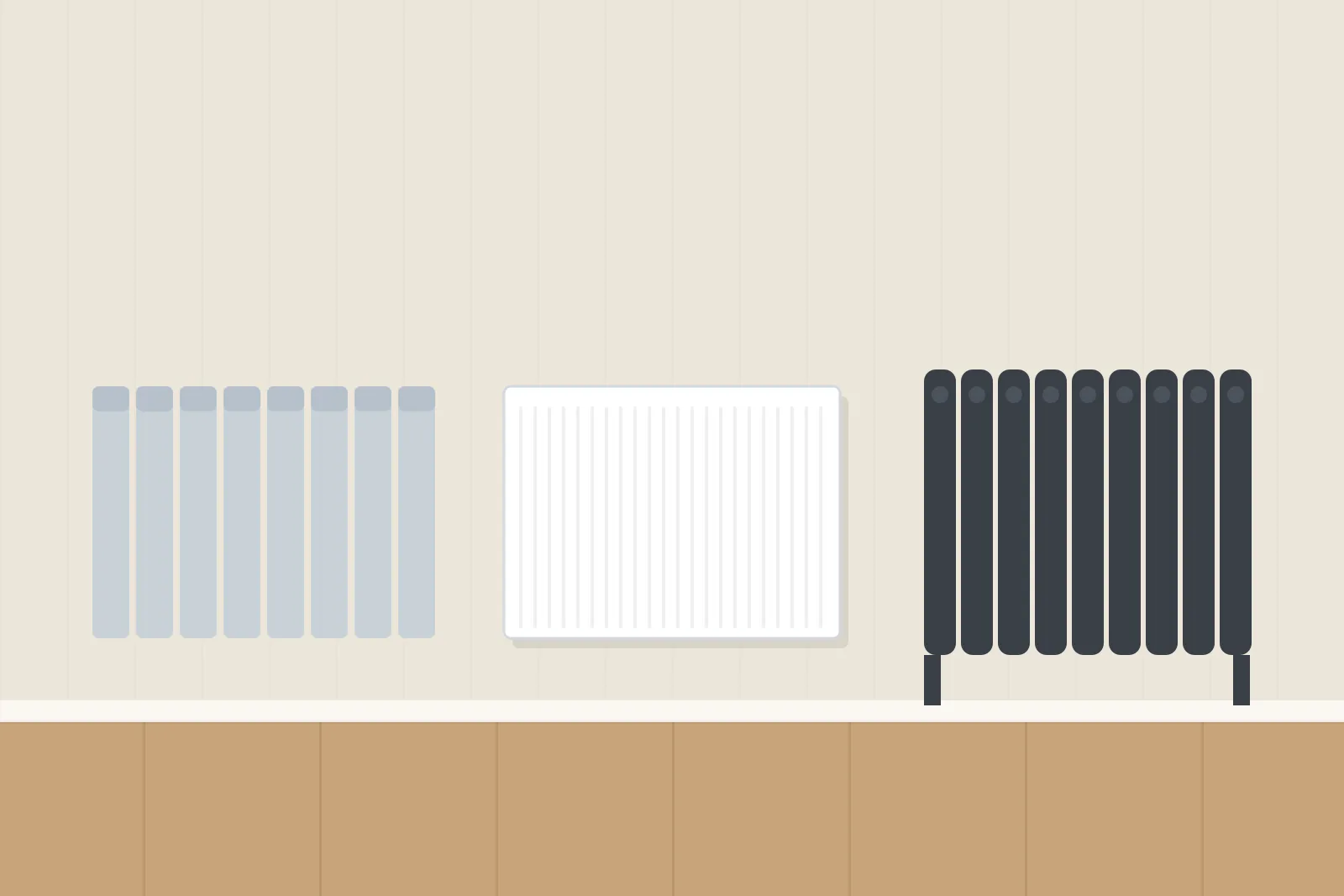
Each material behaves differently:
| Material | Heats up | Holds heat | Weight | Typical use |
|---|---|---|---|---|
| Steel | Fairly quickly | Moderately | Medium | Most homes |
| Aluminium | Very quickly | Briefly | Light | Responsive heating, upstairs rooms |
| Cast iron | Slowly | For a long time | Very heavy | Period homes, large rooms |
Radiator materials compared
Which to choose
Steel panel radiators are the affordable standard. Aluminium radiators respond fast, which suits rooms you heat for short periods. Cast iron gives long-lasting, gentle warmth and a traditional look but needs strong walls or floors.
Need a heating engineer?
Describe the job and compare free quotes from local heating engineers near you.
- Free to use
- No obligation
- Compare local engineers
- Quick online form
You'll continue to our quotes partner, MyJobQuote, to describe your heating job.
System compatibility
Mixing materials in one system is common, but some combinations need the right inhibitor to protect against corrosion. Tell your engineer if you're adding aluminium radiators to an older steel system.