Typical costs
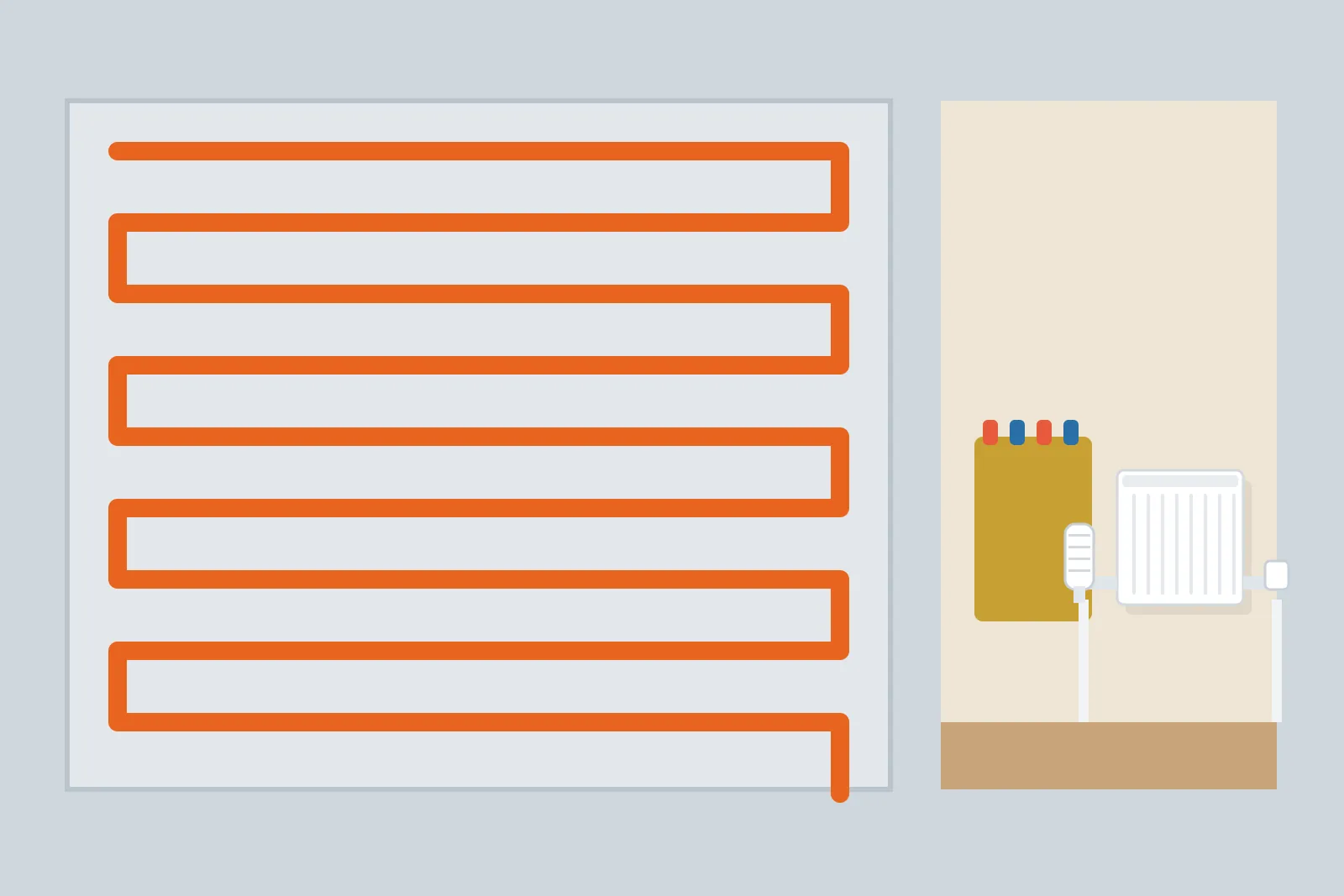
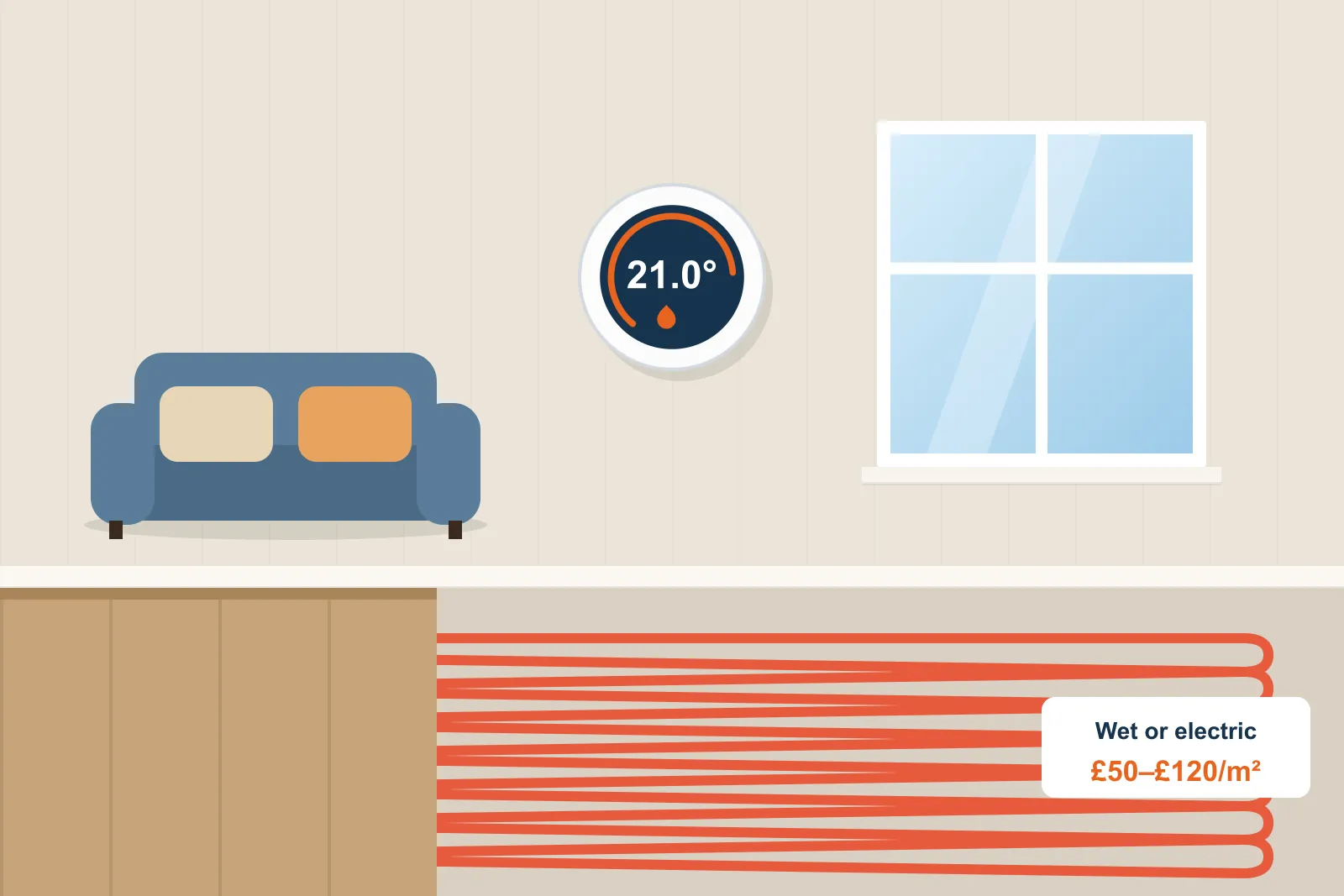
There are two main types. Electric underfloor heating uses heating mats or cables and is cheap to install but more expensive to run. Wet (water-based) systems use pipes connected to your boiler or heat pump and cost more to install but are cheaper to run over large areas.
| System | Supplied and installed | Notes |
|---|---|---|
| Electric mat, bathroom (4–6 m²) | £500 – £1,200 | Plus floor finish |
| Electric, per m² | £50 – £90 | Best for small rooms |
| Wet system, new build / screed, per m² | £50 – £90 | Cheapest per m² in large areas |
| Wet system, retrofit low-profile, per m² | £80 – £140 | Raises floor height slightly |
| Wet system, typical extension (25 m²) | £2,500 – £4,500 | Including manifold and controls |
Indicative underfloor heating costs (2026)
Wet or electric?
Electric systems are best for small rooms – bathrooms, en suites, small kitchens – where installation is simple and the area is small enough that running costs stay manageable. Wet systems are better for larger areas and whole floors, especially in new builds and extensions where the screed is being laid anyway.
New builds and extensions
Underfloor heating is easiest and cheapest to install when floors are being laid. In an extension, a wet system can be laid in the screed and connected to your existing boiler with a manifold and mixing valve. This is often a good choice for open-plan kitchen-diners.
Need a heating engineer?
Describe the job and compare free quotes from local heating engineers near you.
Free and no obligation. Quote requests are handled by our partner, Bark.
Retrofitting
Retrofitting into an existing floor is more complex. Low-profile wet systems or electric mats can be laid over existing floors, but they raise the floor height and may affect doors and thresholds. Insulation beneath the system is important – without it, heat goes down rather than up.
Running costs
Wet underfloor heating runs at lower temperatures than radiators, which makes boilers and especially heat pumps more efficient. Electric systems are more expensive to run per kWh, so they're best used in small areas or with smart controls.
Get quotes from local heating engineers, and see heat pumps vs gas boilers.