Contain the leak
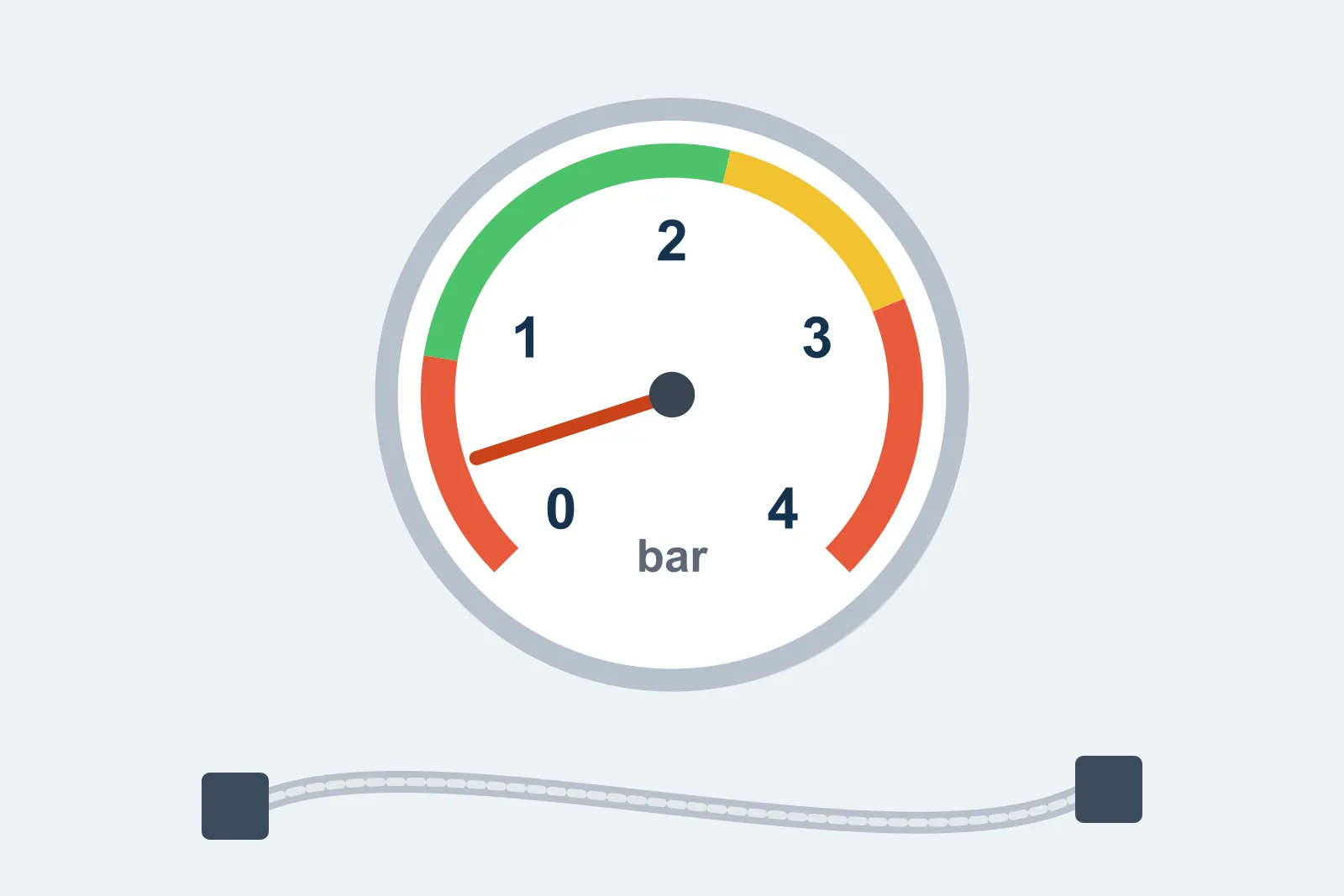
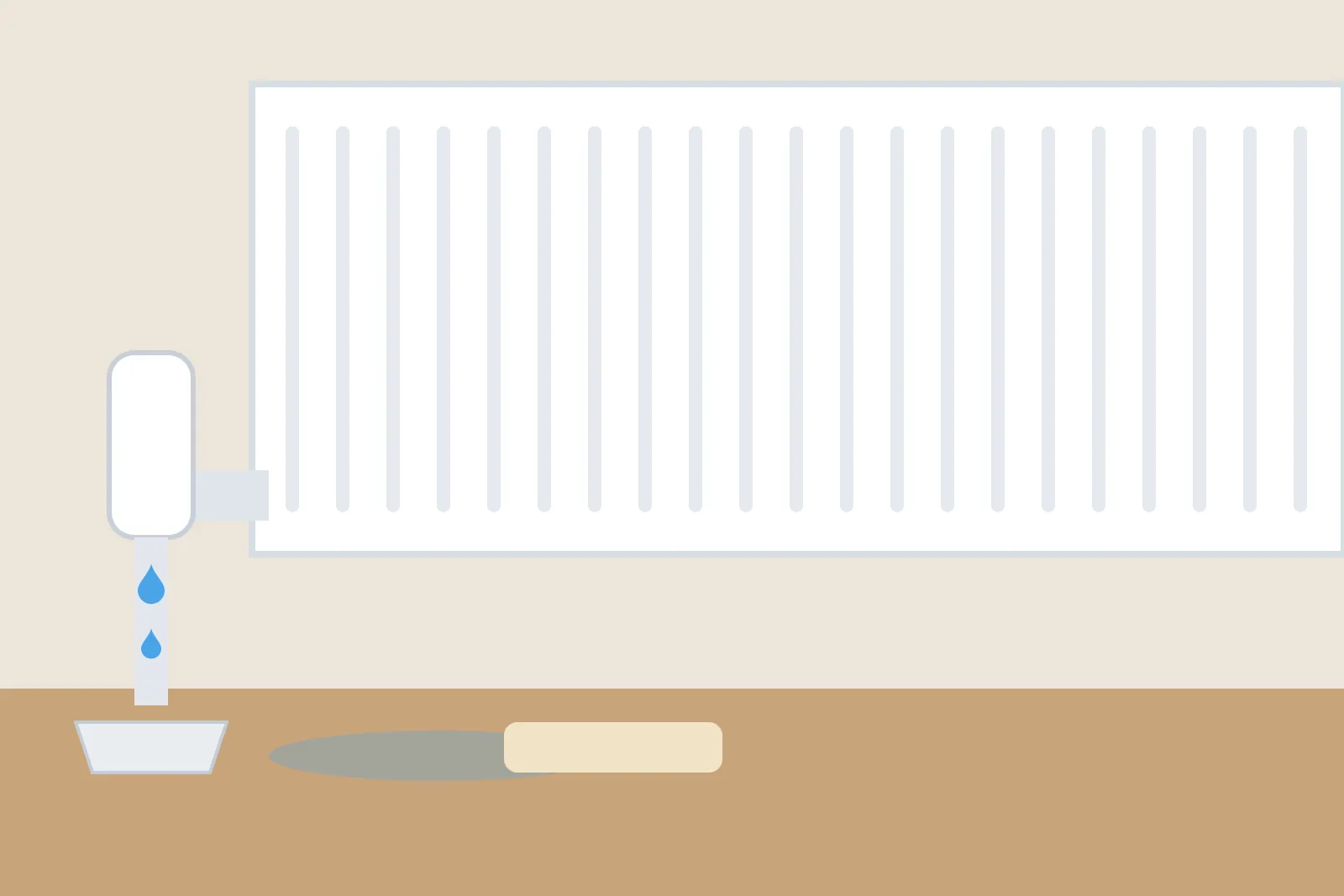
Put a bowl and towels under the drip. If the leak is from a valve, turning both valves off can isolate the radiator. For larger leaks, turn off the heating and, on a sealed system, watch the boiler pressure – it will fall as water escapes.
Find the source
Leaks usually come from one of these places:
- The valve spindle, under the valve head
- The valve tail, where the valve joins the radiator
- The joint between the valve and the pipe
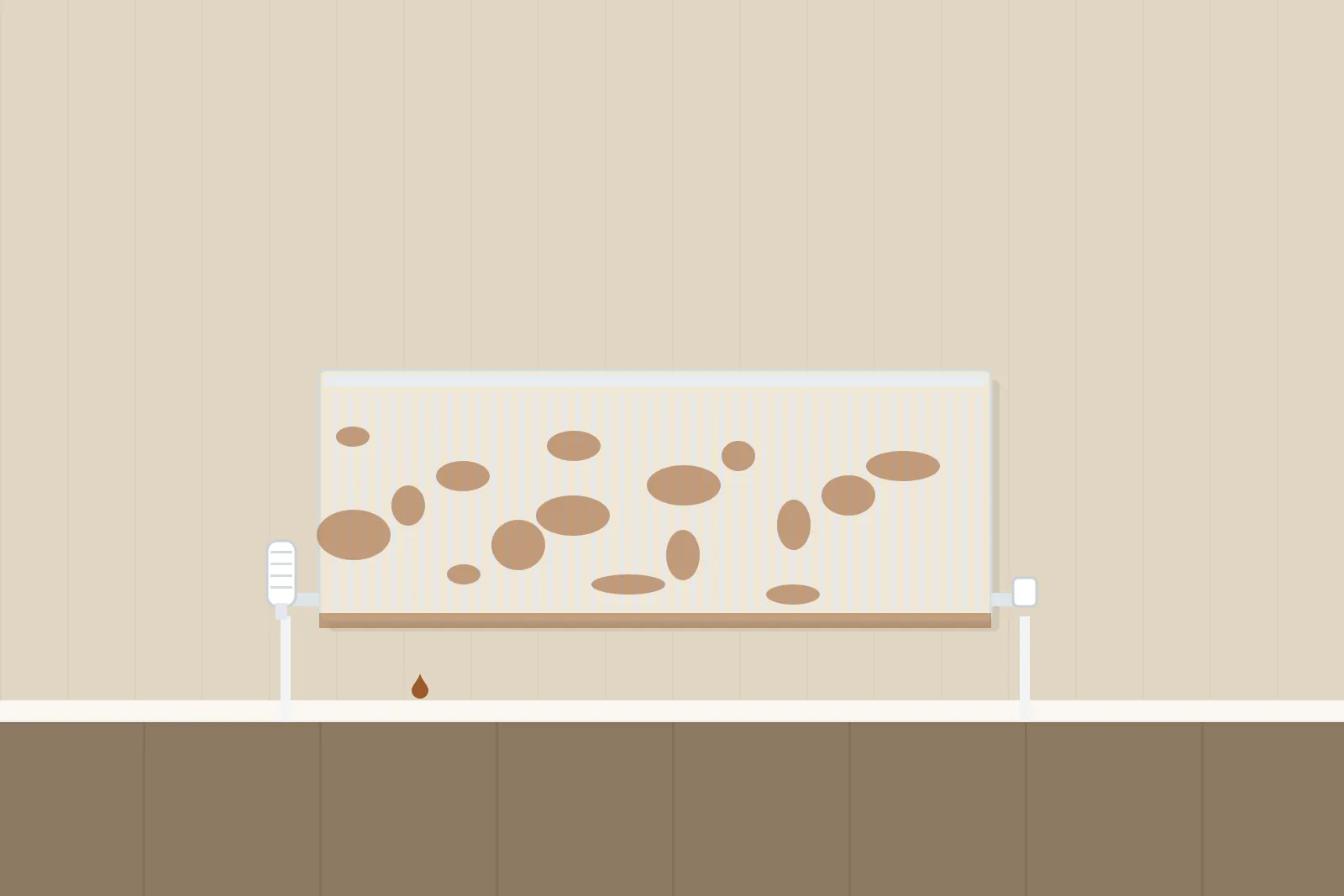
- The radiator itself, through pinholes caused by corrosion
Need a heating engineer?
Describe the job and compare free quotes from local heating engineers near you.
- Free to use
- No obligation
- Compare local engineers
- Quick online form
You'll continue to our quotes partner, MyJobQuote, to describe your heating job.
The likely fix
Spindle and joint leaks can often be fixed by tightening or replacing seals or the valve. A radiator leaking through its body is usually corroded from the inside and needs replacing – and it's worth checking the system water, as corrosion may be affecting other radiators.