The short answer
If you're freshening up a room in the same colour, you can usually leave the wall behind the radiator alone. The gap is narrow, the radiator hides most of it, and nobody looks down the back. If you're changing colour, especially from light to dark or the other way round, you'll want to paint at least the visible strip above, beside and just behind the radiator, because the old colour will show through the gaps between panels and around the edges.
For a complete change of scheme, stripping wallpaper or repairing damaged plaster behind the radiator, the best result comes from taking the radiator off the wall. That's a bigger job, but it's the only way to reach the whole surface properly.
How much of the wall actually shows?
It depends on the radiator. A double panel convector with a top grille hides most of the wall behind it, and you'll see little more than a shadow at the edges. A single panel radiator sits closer to the wall but leaves gaps above and below where the old colour is easy to spot. Column radiators are the most revealing: you can see straight through between the columns, so the wall behind needs to be finished just as well as the rest of the room.
The simplest test is to look at the radiator from where you normally sit and from the doorway. If you can see wall between or around it from either spot, it needs painting.
Three ways to reach the wall behind a radiator
There are three realistic approaches, and the right one depends on how much of the wall you need to cover and whether the radiator needs attention anyway.
A slim radiator roller or brush
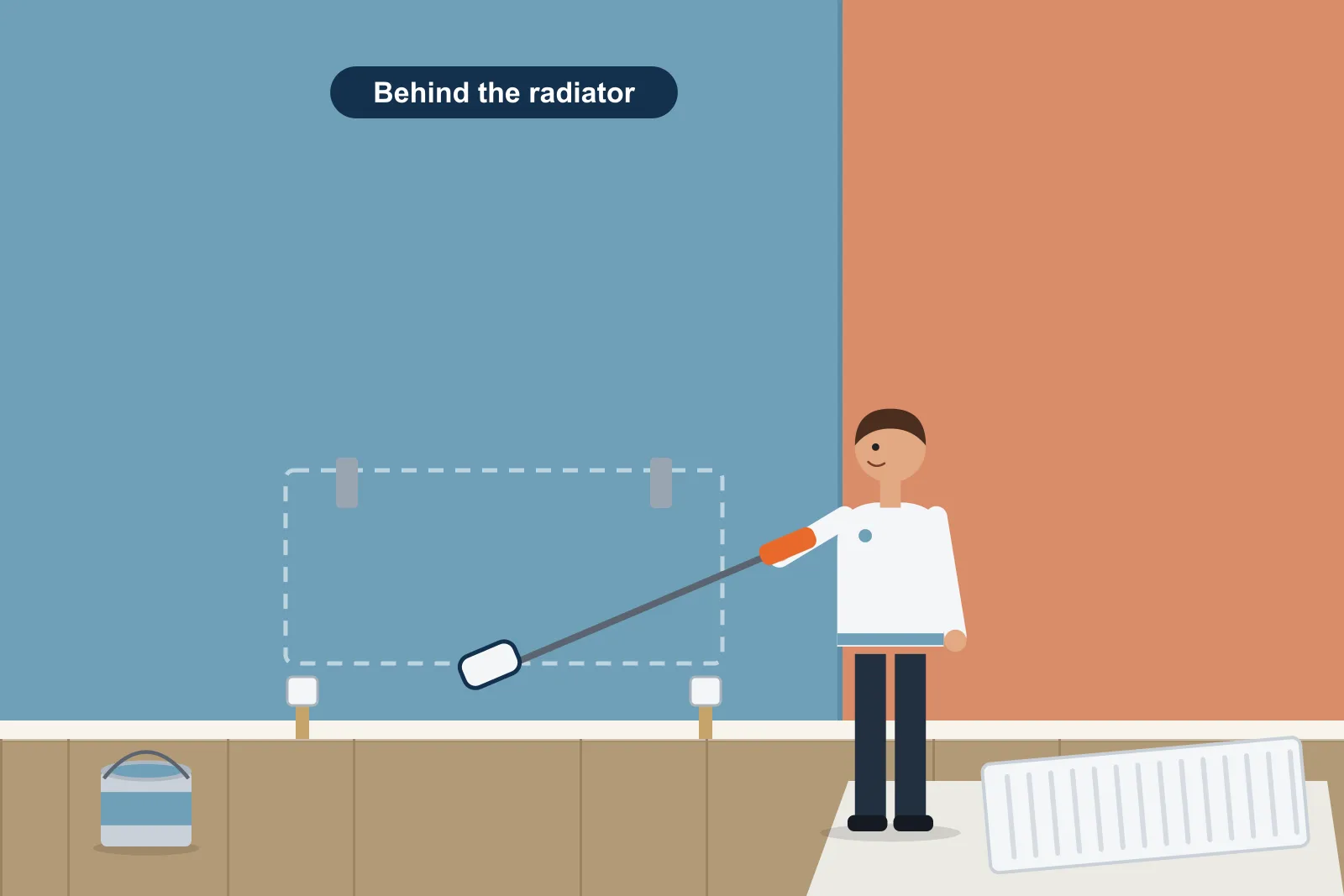
Long-handled mini rollers and angled radiator brushes are made for exactly this job. They'll reach 30 to 40 centimetres down behind a standard panel radiator, which is enough to cover what's visible from above. Turn the heating off and let the radiator cool completely first, because paint applied to a warm wall dries too fast and leaves lap marks. Tuck a dust sheet down behind the radiator to protect it and the floor.
Lifting the radiator forward on its pipes
On some installations, a heating engineer can lift the radiator off its brackets and lay it forward on the floor while it's still connected, without draining anything. It gives much better access, but it depends on the pipework having enough movement, and it puts strain on older valves and joints. It's a judgement call best left to someone who can assess the pipes.
Taking the radiator off completely
Removing the radiator gives full access. The valves are closed, the radiator is drained and disconnected, then lifted away and refitted once the paint is dry. It's bled when it goes back on, and on a sealed system the boiler pressure will need topping up afterwards.
Is removing a radiator a DIY job?
Plenty of confident DIYers take radiators off for decorating, but the job is easy to underestimate. A radiator holds more water than you'd expect, and it's usually black, sludgy water that stains carpets for good. Old valves can refuse to close fully or start weeping when they're disturbed, and a valve that hasn't been turned in years may not reseal. On a combi or system boiler, you'll need to repressurise the system once the radiator is back on.
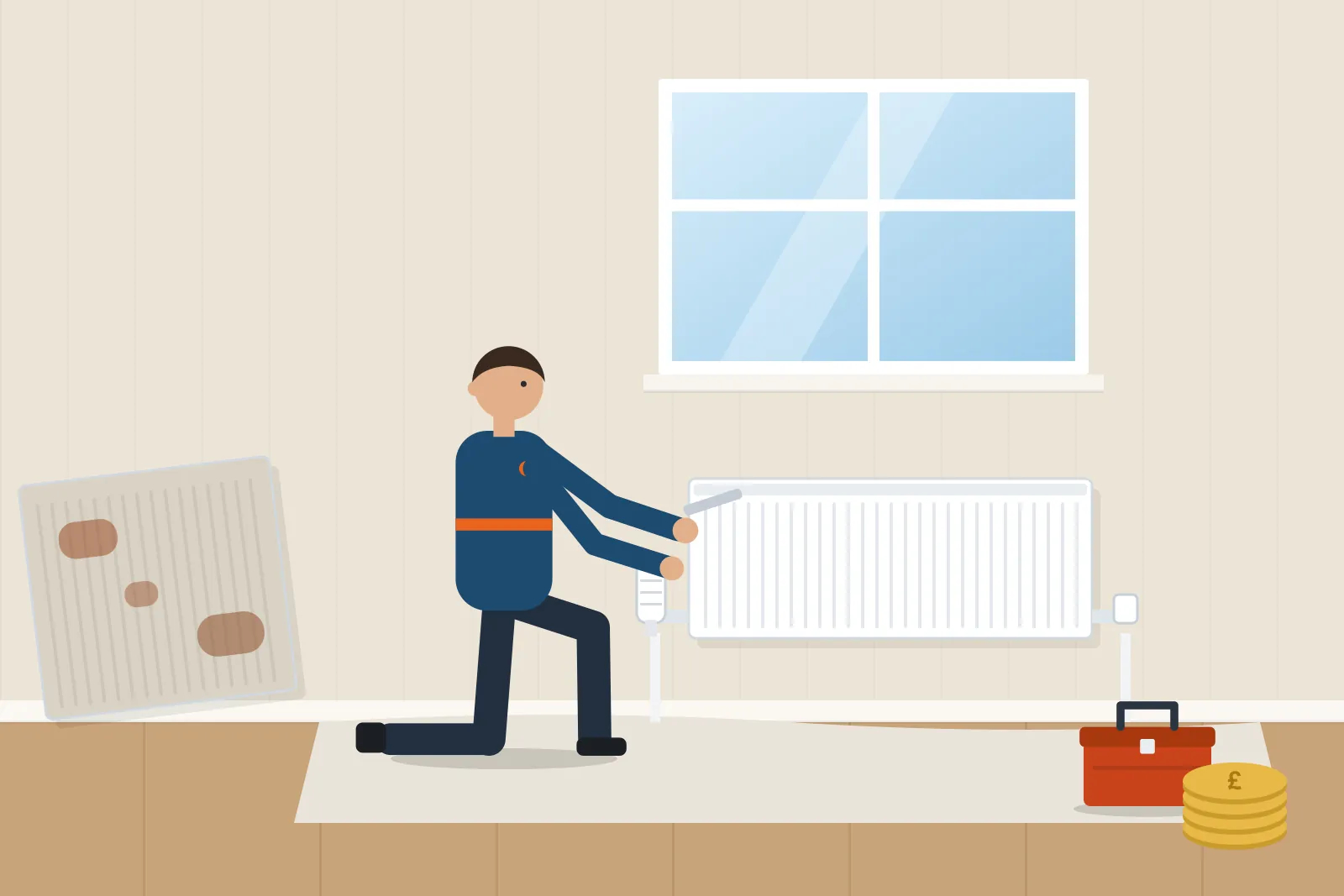
If you're not comfortable with any of that, a heating engineer can remove and refit radiators for you, usually in well under an hour each. It's a modest cost compared with a ruined carpet or a leaking valve, and they'll spot anything that needs attention while they're there.
Need a heating engineer?
Describe the job and compare free quotes from local heating engineers near you.
Free and no obligation. Quote requests are handled by our partner, Bark.
Good reasons to take the radiator off
Removing a radiator is worth the effort in a handful of situations. It's usually the right call when:
- You're changing colour and have a column or single panel radiator
- There's old wallpaper behind the radiator that needs stripping
- The wall behind is cracked, stained or has loose plaster
- You're replacing the radiator anyway, or fitting new valves
- The radiator is rusty, leaking or due a flush, and you'd like it dealt with at the same time
Practical points when decorating around radiators
Whichever method you choose, a few details make the difference between a neat finish and one that shows its shortcuts.
Heat and drying
Ordinary emulsion is fine on a wall behind a radiator. Normal heating temperatures won't harm it once it has cured, but it does need time to dry. Leave the heating off in that room until the paint is touch dry, then bring the temperature up gently over the first day or two.
Painting the radiator itself
If you're repainting the radiator too, use a paint made for radiators or heated metal and only apply it when the radiator is cold. Standard wall paint will yellow and flake on a hot surface. A white radiator against a new dark wall can look stark, and some people choose to paint the radiator to match the wall instead.
Dust shadows
Dark marks on the wall above a radiator are usually dust carried upwards by warm air, not damp. Wash the area thoroughly with sugar soap before painting, or the new colour will look patchy within weeks.
Pipes and valves
Visible copper pipes and valve bodies can be painted to match the skirting once they're cold, but keep paint off the moving parts of valves and the numbers on a thermostatic valve head, or you'll struggle to adjust them later.
Combine the job with radiator upgrades
Redecorating is a good moment to think about the radiators themselves. If one is old, slow to warm up or too small for the room, replacing it while the wall is bare saves taking it off twice. New thermostatic valves can be fitted at the same time for better control of the room temperature, and if the system is full of sludge, a flush before the radiators go back on will help them heat evenly.
If you haven't found a decorator yet, compare quotes for interior painting and decorating and mention the radiators when you ask, so the quotes make clear whether the walls behind them are included and who will take them off. Most experienced decorators are used to working alongside a heating engineer and can fit the two visits around each other.
The bottom line
You don't always need to paint behind a radiator. For a refresh in the same colour, a careful job around the edges is usually enough. For a change of colour, a column radiator or a wall in poor condition, take the radiator off, or have it taken off, and treat that strip of wall like the rest of the room. Turn the heating off before you start, let everything cool, and give the paint time to dry before the radiator goes back on and warms up.