The short answer
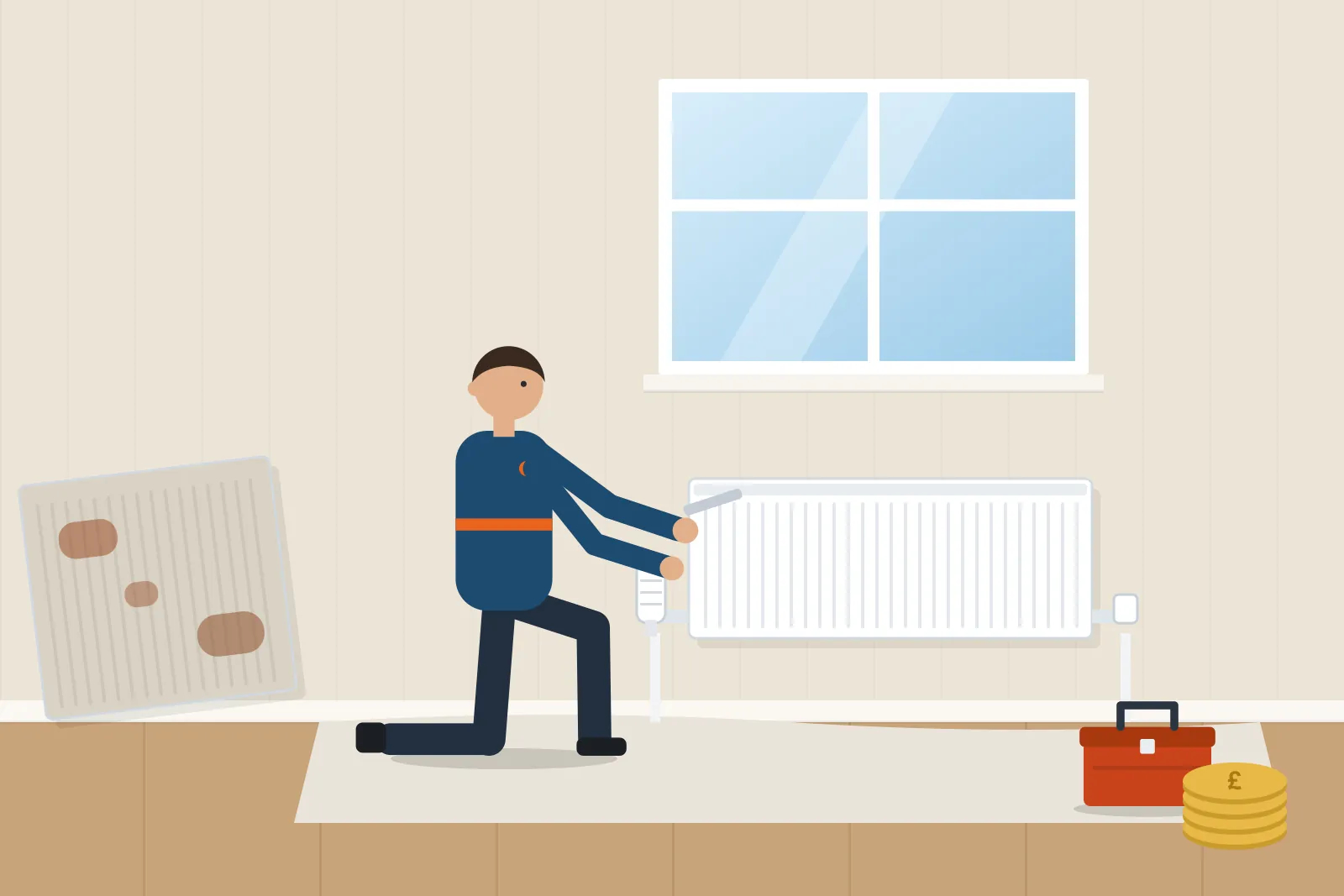
If you're replacing a tired old panel radiator with a new one of the same size, in the same spot, you can expect to pay roughly £200–£450 for the radiator and the fitting combined. That's the bread-and-butter job heating engineers and plumbers do every week, and it's usually finished in a morning.
Prices climb once the job stops being a straight swap. A different size of radiator often means altering the pipework, a column or designer radiator costs more to buy, and moving a radiator to another wall is a small project in its own right. The table below gives a feel for the most common jobs. They're indicative ranges for most of the UK – London and the South East tend to sit at the top end, and some rural areas at the bottom.
| Job | Typical cost |
|---|---|
| Like-for-like standard panel radiator | £200–£450 |
| New radiator with altered or new pipework | £300–£650 |
| Column or designer radiator | £400–£1,200 |
| Heated towel rail | £200–£550 |
| Moving a radiator to a new position | £200–£500 on top of the radiator |
| New thermostatic valves (per radiator, with other work) | £40–£100 |
Indicative UK prices, supplied and fitted, including VAT. Your own quote depends on the radiator, the pipework and your area.
What you're actually paying for
A radiator quote is really three or four smaller costs bundled together, and it helps to know what they are before you start comparing prices.
First, there's the radiator itself. A basic white panel radiator from a plumbing merchant can be surprisingly cheap, while a cast-iron column radiator can cost more than the rest of the job put together. Second, there's labour – the time it takes to isolate or drain the system, take the old radiator off the wall, fit the new brackets, connect everything up, refill, bleed and check for leaks. Third come the valves and fittings. Many engineers will recommend new valves rather than reusing 20-year-old ones that might seize or weep, and that's often sensible advice.
Finally, there are the bits nobody thinks about: inhibitor to protect the system once it's been refilled, new brackets, wall plugs, sometimes a short length of copper pipe, and taking the old radiator away. Good engineers include all of this in a written quote. If a price looks unusually low, ask what's left out.
- The radiator – from under £100 to well over £1,000
- Labour – usually one to three hours for a straightforward swap
- Valves – thermostatic valve and lockshield, if they're being replaced
- Sundries – inhibitor, brackets, fittings and disposal of the old radiator
Radiator prices: the part you get to choose
This is where your budget has the most room to move. Two radiators with almost identical heat output can differ in price by several hundred pounds simply because of how they look and what they're made of.
Standard steel panel radiators are the workhorses of British central heating. Single-panel models suit small rooms and tight spaces; double-panel, double-convector radiators – often called 'type 22' – give much more heat from the same wall space and are the go-to choice for living rooms and bedrooms. Column radiators bring a traditional look, vertical radiators make use of narrow walls, and cast iron is in a class of its own for period homes.
| Radiator type | Typical price (radiator only) | Good for |
|---|---|---|
| Single-panel steel | £40–£120 | Small rooms, hallways, tight budgets |
| Double-panel convector (type 22) | £70–£250 | Most living rooms and bedrooms |
| Steel column | £200–£700 | Period style, larger rooms |
| Vertical or designer | £200–£800 | Narrow walls, kitchens, statement pieces |
| Cast iron | £400–£1,500+ | Period homes, long-lasting heat |
| Heated towel rail | £60–£400 | Bathrooms and en-suites |
Rough prices for the radiator only, before fitting. Sizes and brands vary widely.
Labour: how long the job really takes
A like-for-like swap on a modern sealed system usually takes an engineer between one and three hours. Where the old and new radiators have the same 'pipe centres' – the distance between the two valve connections – the new one can often go straight onto the existing pipes with little more than a change of valve tails.
Most heating engineers and plumbers charge somewhere around £45–£80 an hour, or £250–£400 for a full day, with London rates higher. Many quote a fixed price per radiator instead, which is easier to compare. Some have a minimum charge, so having one small radiator swapped can feel expensive compared with having three done in the same visit.
Draining the whole system adds time. Sometimes it can be avoided by closing both valves and removing the radiator on its own, but if the valves are being replaced, or the old ones won't shut off properly, the system needs at least partly draining and refilling – and then bleeding and re-pressurising afterwards.
Things that push the price up
Most of the difference between a £250 quote and a £600 quote comes down to the pipework and the property, not the radiator. These are the usual culprits:
- A new radiator with different pipe centres, which means altering the pipes
- Moving the radiator to a different wall, especially across a solid concrete floor
- Narrow microbore pipework that needs adapting or upgrading
- Seized or corroded valves that won't shut off, so the whole system has to be drained
- Heavy sludge in the system, which may need a chemical clean or power flush
- Heavy column or cast-iron radiators that need stronger fixings or floor-standing feet
- Awkward access, such as boxed-in pipes, tiled walls or fitted furniture
- Emergency, evening or weekend call-outs
Need a heating engineer?
Describe the job and compare free quotes from local heating engineers near you.
Free and no obligation. Quote requests are handled by our partner, Bark.
Replacing several radiators at once
If more than one radiator is past its best, doing them together almost always works out cheaper per radiator. The system only needs draining and refilling once, the engineer only travels once, and they can get into a rhythm. It's common for the second, third and fourth radiators to cost noticeably less than the first.
For a typical three-bedroom semi with eight to ten standard radiators, replacing the lot in one go often lands somewhere around £1,800–£3,800, depending on the radiators chosen and how much pipework needs changing. If your system is also full of sludge, that's the ideal moment to clean it, add fresh inhibitor and fit a magnetic filter if you don't already have one.
It's also worth thinking about the future. If a heat pump might be on the cards in the next few years, ask the engineer about sizing your new radiators for lower water temperatures now. Our guide to radiators for heat pumps explains why bigger radiators can make a real difference – and they help a condensing gas boiler run more efficiently too.
Can you replace a radiator yourself?
Plenty of confident DIYers do. A straight swap involves no gas work, so legally you don't need a Gas Safe registered engineer to change a radiator. But it's not quite the five-minute job some online videos make it look. You'll need to isolate the radiator, catch a surprising amount of dirty black water, deal with valves that may not have been touched in decades and, on a sealed system, re-pressurise the boiler afterwards. A leaking joint you don't spot until the next morning can do a lot of damage to a ceiling.
If you'd rather hand it over, both heating engineers and plumbers fit radiators. Not sure which trade to call for which job? Our sister site has a clear, practical guide to whether you need a plumber, a gas engineer or an electrician, which is handy if your radiator work is part of a bigger bathroom or kitchen project.
Whoever fits it, the boiler side is different. If anything involving the boiler itself needs doing at the same time, that must be done by a Gas Safe registered engineer – see our guide on how to check a Gas Safe engineer.
Repair or replace?
Before you budget for a new radiator, make sure you actually need one. A lot of 'broken' radiators simply need bleeding, balancing or a stuck valve pin freeing – all far cheaper than a replacement. Cold patches at the bottom usually mean sludge, which might be cleared by flushing the radiator rather than replacing it.
Drips are another common worry. If the water's coming from around a valve rather than the radiator itself, it's often a worn seal, a loose joint or a tired valve that can be fixed for much less than a new radiator. Our sister site has a useful step-by-step look at what causes a leaking radiator valve and how a plumber puts it right.
Replacement makes sense when the radiator itself is the problem: pinhole leaks in the panel, rust breaking through the surface, cold spots that won't shift after cleaning, or a radiator that's simply too small to heat the room. Our guide to how long radiators last covers the warning signs in more detail.
Ways to keep the cost down
A few simple decisions can take a fair chunk off the final bill without cutting corners:
- Choose a radiator with the same pipe centres as the old one where you can
- Group several radiator jobs into a single visit
- Combine radiator work with a boiler service or replacement, when the system is being drained anyway
- Buy a sensible standard panel radiator for rooms where looks matter less, such as a utility room or spare bedroom
- Ask whether your existing valves are worth keeping – but don't refuse new ones if they're clearly worn
- Check the radiator output you need, so you don't pay for a bigger radiator than the room requires
- Avoid emergency call-outs by fixing small leaks and cold spots before they become urgent
Getting an accurate quote
The fastest way to a realistic price is to give engineers the details up front. Tell them how many radiators you want replaced, which rooms they're in, roughly how big they are and whether you want the same position or a new one. A couple of photos showing the radiator, both valves and where the pipes come out of the floor or wall will save a lot of back and forth.
Ask for a written quote that lists the radiator model, the valves, any pipework changes, whether the system will be drained and refilled, inhibitor, and removal of the old radiator. Then compare like with like – a cheaper quote that reuses old valves and skips the inhibitor isn't really cheaper. Our guide to comparing heating quotes has a checklist you can use, and our radiator installation page explains what a good job looks like.
When you're ready, you can describe the job once and get free, no-obligation quotes from local heating engineers. It's the easiest way to see what a fair price looks like where you live.