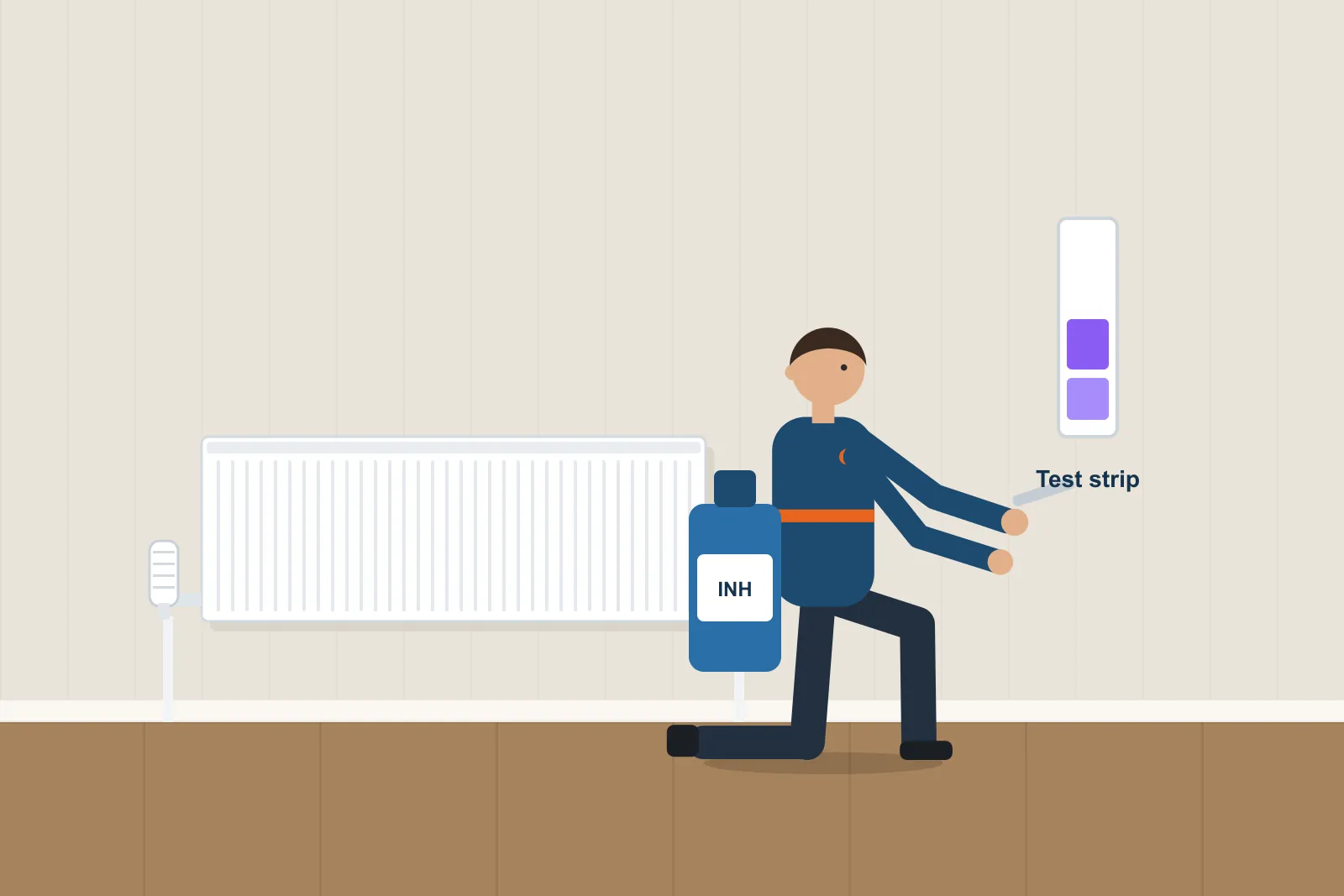
What inhibitor does
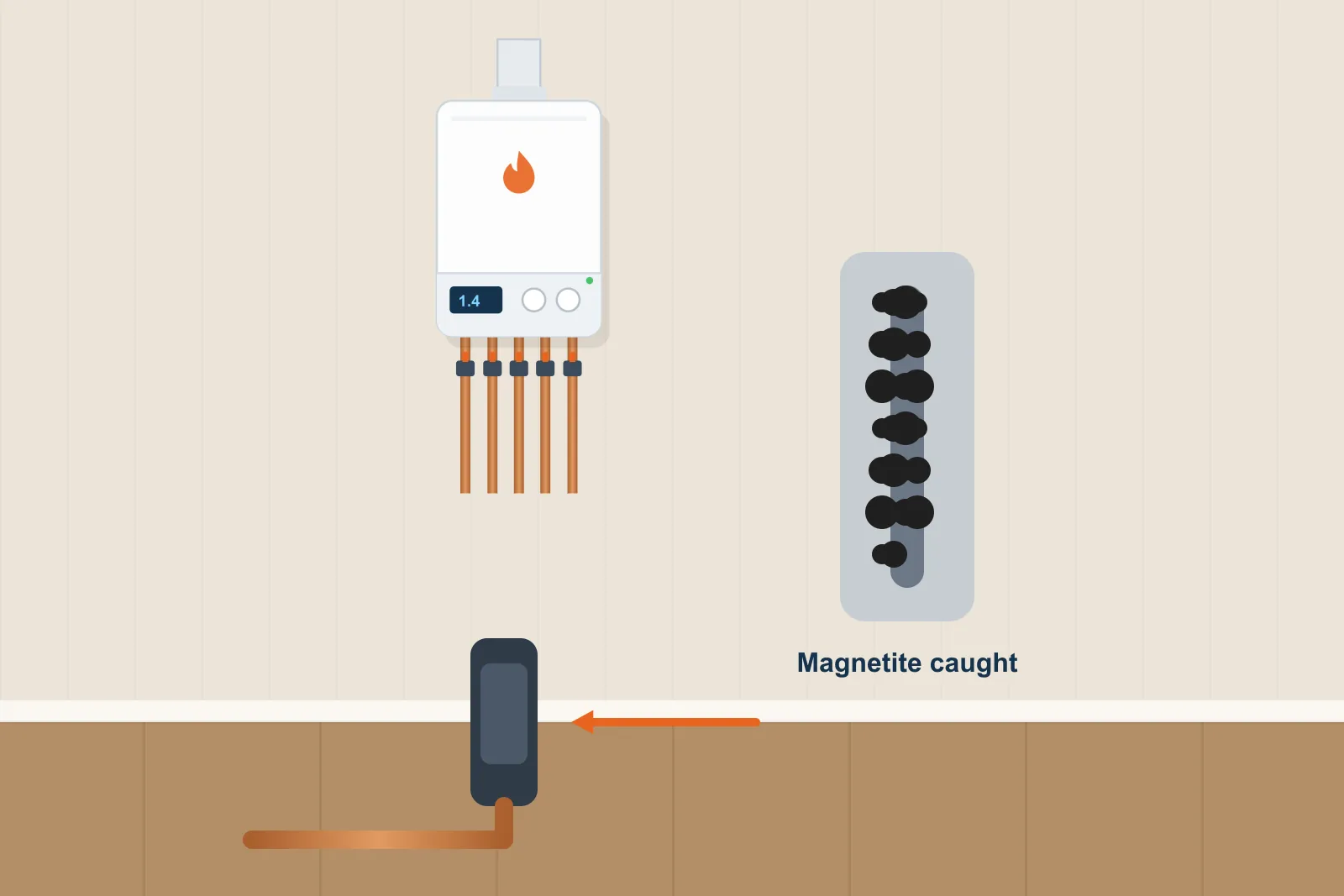
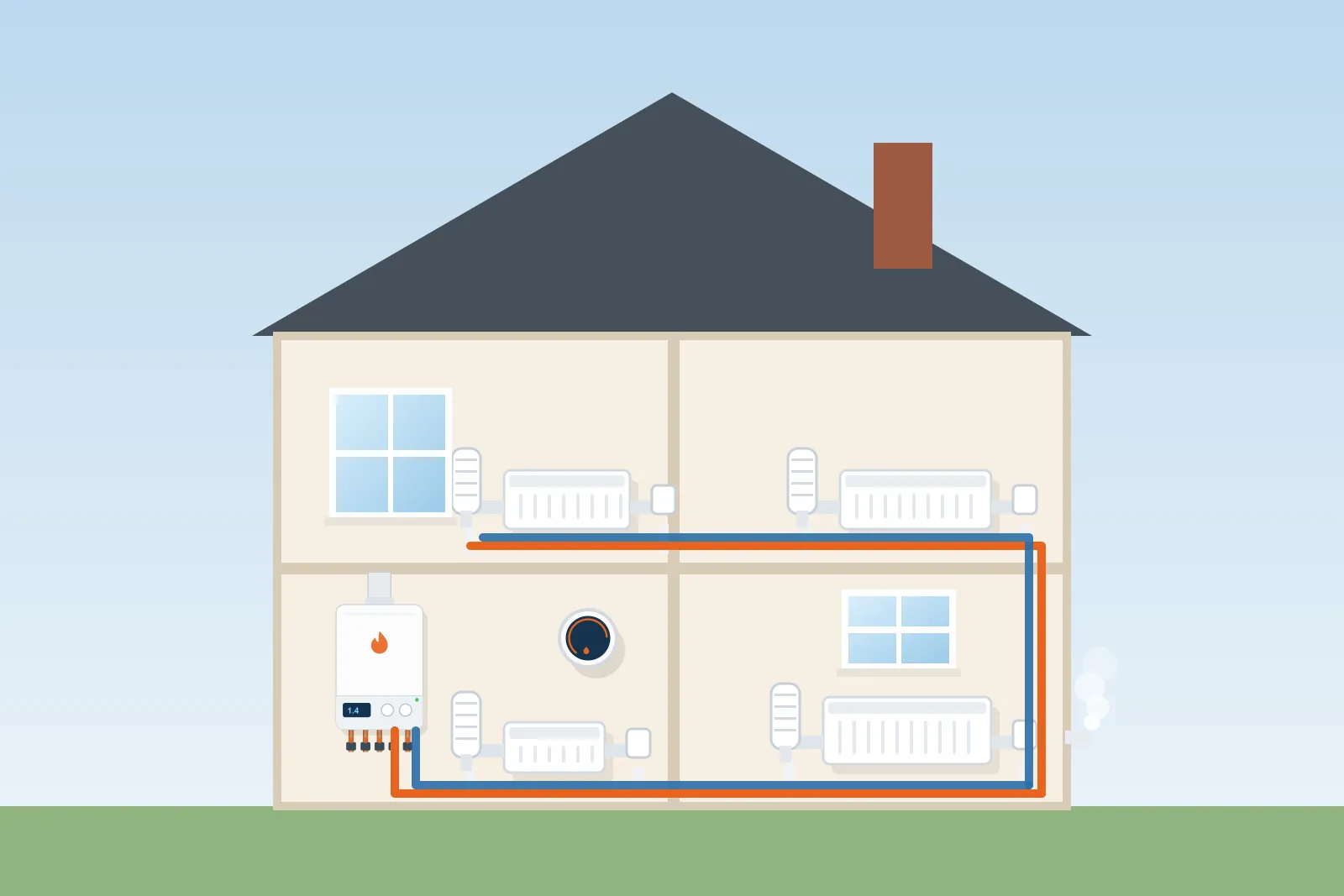
A wet central heating system is a closed loop of water running through metal. Without protection, the water slowly corrodes steel radiators and other parts, forming black sludge (magnetite) and hydrogen gas. Different metals in the system – copper, steel, aluminium, brass – can also react with each other. The results are cold radiators, pinhole leaks, noisy boilers and failed pumps.
Inhibitor forms a protective layer on metal surfaces, slowing corrosion dramatically. It also helps prevent limescale build-up in hard water areas. Most also contain biocide-like additives that help control bacteria in the system.
Signs your inhibitor may be low
Any of these suggests sludge or corrosion. See radiator cold at the bottom, how to bleed a radiator and noisy central heating.
- Radiators need bleeding often, and the air smells of rotten eggs or ignites (hydrogen)
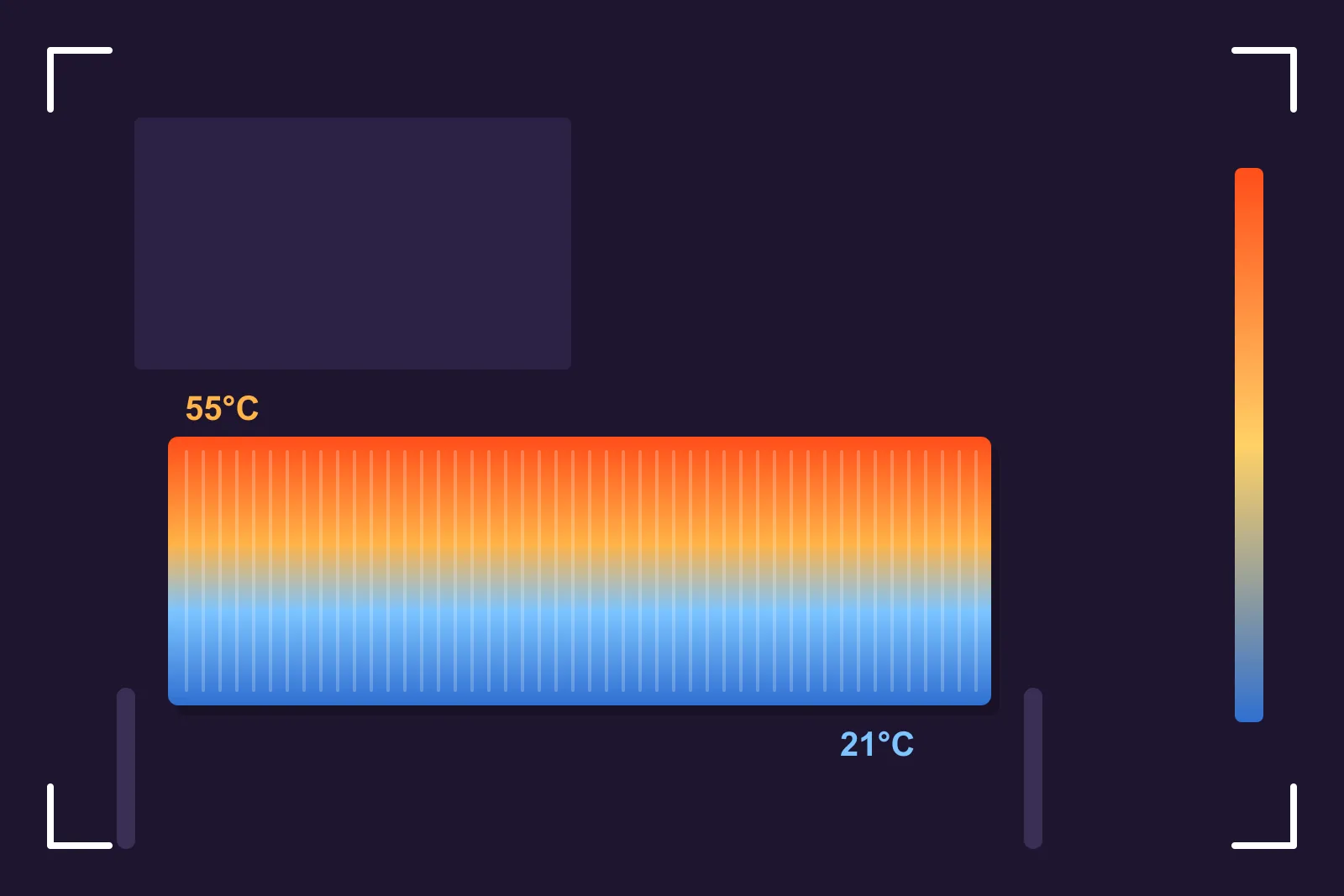
- Radiators are cold at the bottom
- Black water when bleeding a radiator
- Pinhole leaks in radiators
- Boiler or pump noise, or frequent breakdowns
How often to add it
Inhibitor should be added whenever a system is filled or refilled – after installing a new boiler, after a power flush, or after radiators are drained and replaced. The concentration should then be tested at each annual service, often with a simple test kit, and topped up if it's low. Many manufacturers suggest topping up every few years or whenever water has been lost from the system.
On sealed systems (common with combi and system boilers), inhibitor is usually injected through a radiator valve or a filter dosing point. On open-vented systems, it can be added via the feed and expansion tank in the loft. See open-vented vs sealed heating systems.
Need a heating engineer?
Describe the job and compare free quotes from local heating engineers near you.
Free and no obligation. Quote requests are handled by our partner, Bark.
Inhibitor and boiler warranties
Most boiler manufacturers require the system to be cleaned and treated with inhibitor when a new boiler is fitted, and some ask for evidence at service visits. Fitting a magnetic system filter alongside inhibitor gives the best protection.
Costs
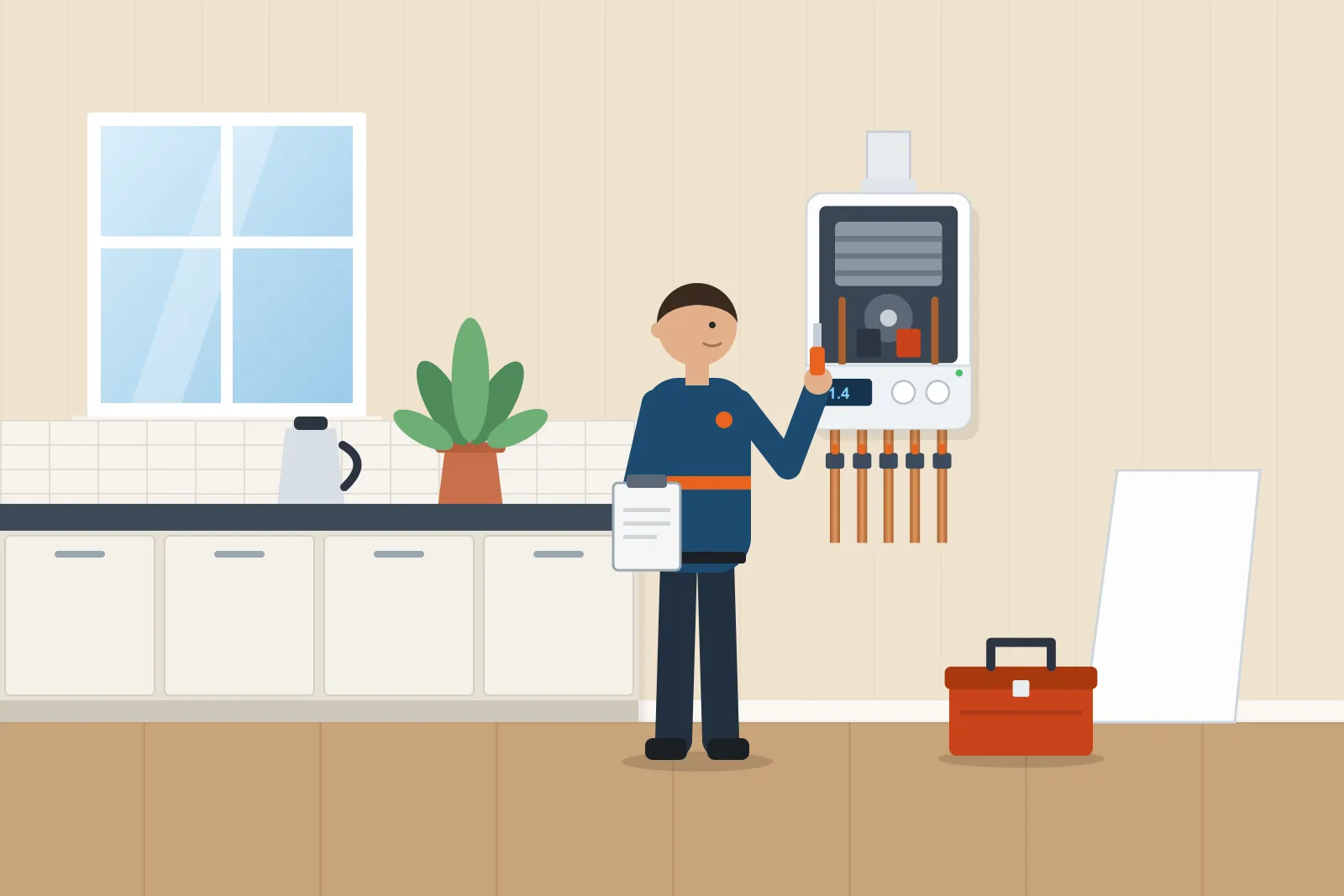
Ask your heating engineer to test the inhibitor level at your next service. If the system is already badly sludged, read power flushing explained.
| Job | Typical cost |
|---|---|
| Bottle of inhibitor (typical home) | £15 – £30 |
| Inhibitor test kit | £10 – £25 |
| Testing and topping up at a boiler service | Often included or £20 – £50 extra |
| System drain, clean and refill with inhibitor | £250 – £500 |
Indicative inhibitor costs (2026)