Where sludge comes from
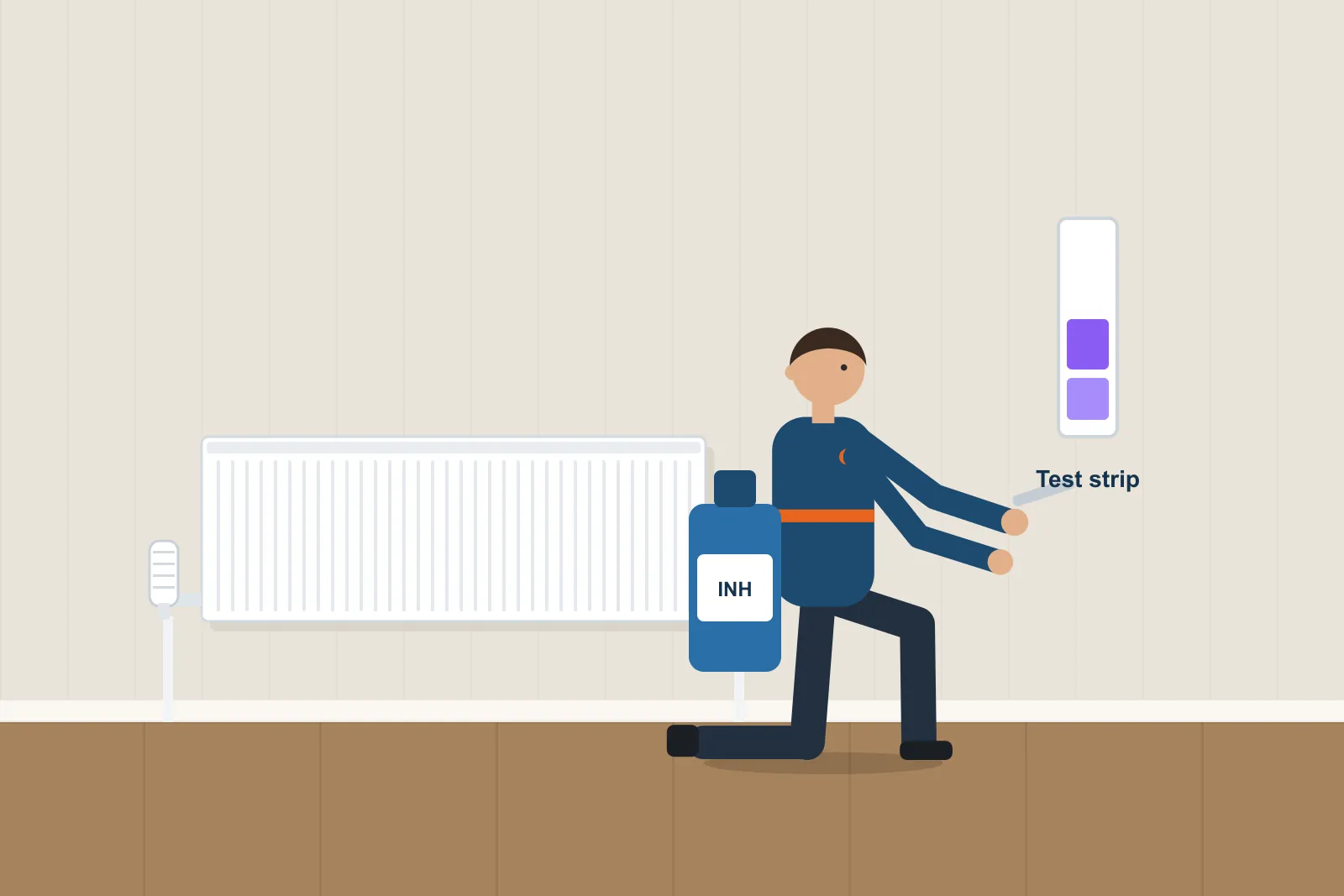
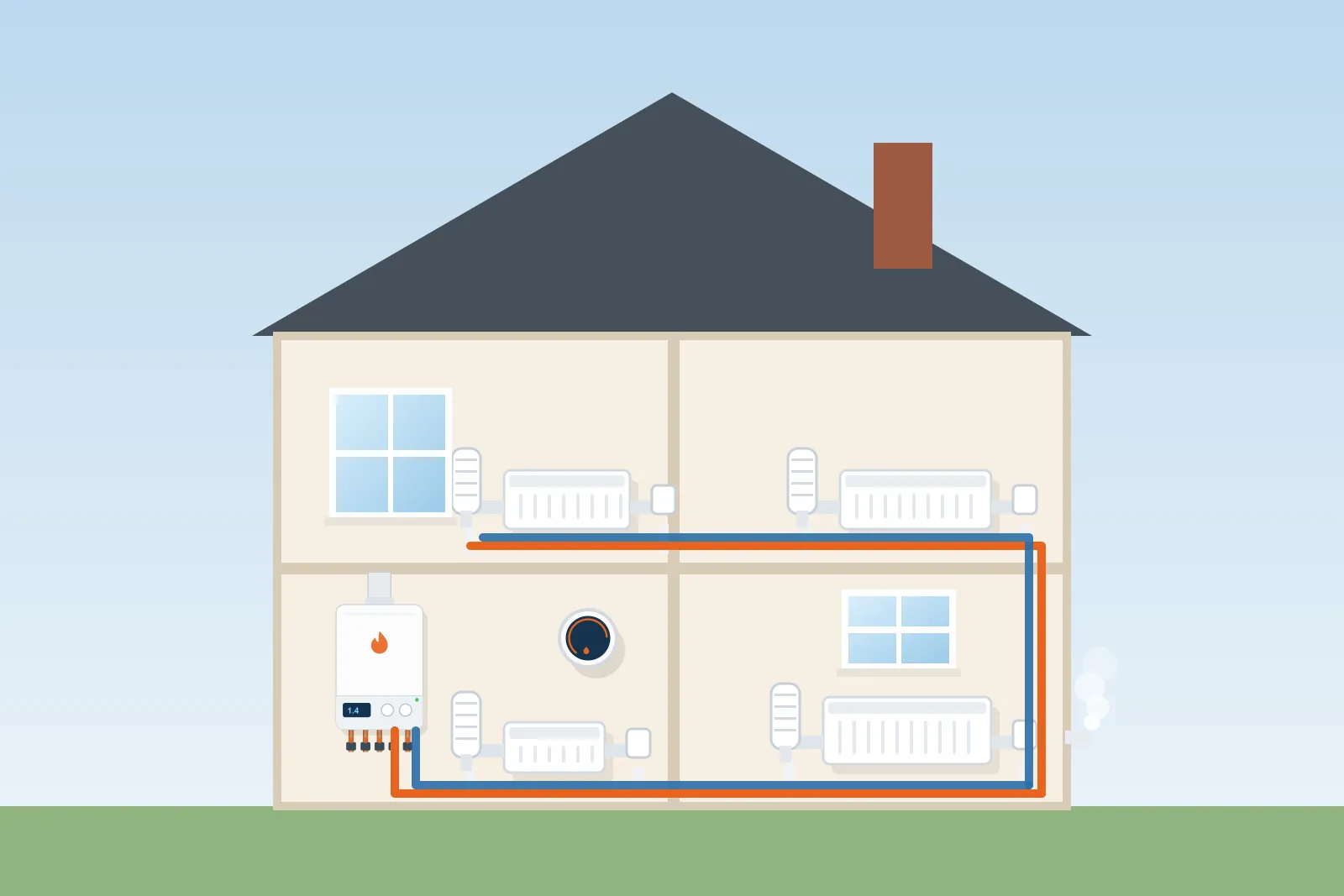
Most central heating systems contain steel radiators and iron or steel components. Over time, the water inside reacts with the metal, producing black iron oxide – magnetite. It builds up as sludge at the bottom of radiators, causing cold spots, and circulates through the system to the boiler's heat exchanger and pump, which are expensive to replace.
Sludge is one of the most common reasons for boiler breakdowns and poor heating performance. See radiator cold at the bottom and power flushing explained.
How a magnetic filter works
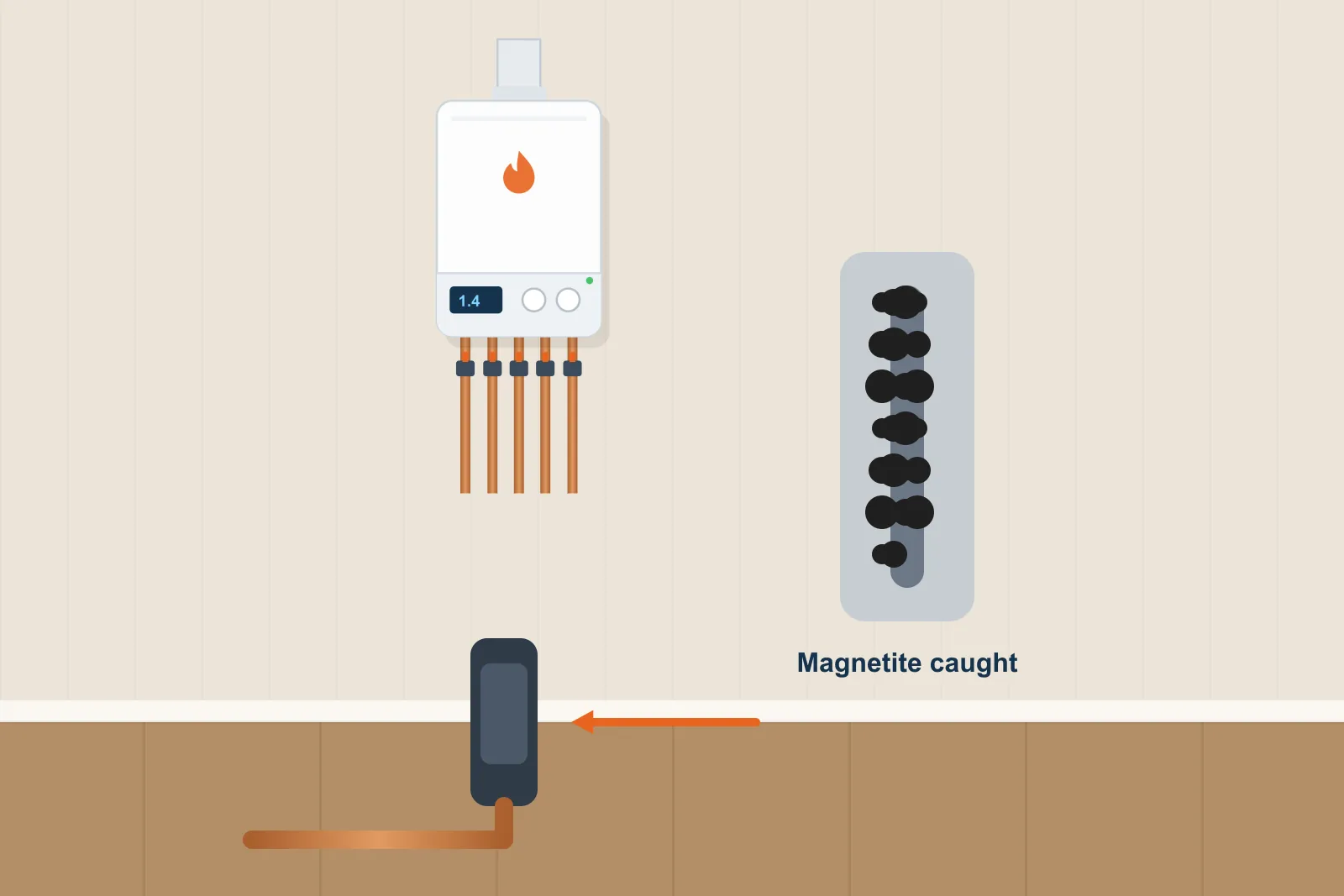
The filter is fitted on the return pipe just before the boiler, so all the water going back into the boiler passes through it. Inside is a powerful magnet that attracts and holds magnetic particles, and many models also have a mesh or cyclonic chamber to catch non-magnetic debris. The trapped dirt stays in the filter until it's cleaned out.
At each annual service, the engineer isolates the filter, removes the magnet, flushes out the collected sludge and refits it. It usually takes a few minutes. The amount of sludge removed gives a good indication of how healthy the system is.
Why it matters for warranties
Most boiler manufacturers require a system filter to be fitted, along with a cleanse and inhibitor, to validate a long warranty. The Building Regulations guidance for England (the Domestic Building Services Compliance Guide) also expects systems to be cleaned and protected when a new boiler is installed. If a heat exchanger fails because of sludge and there's no filter, a warranty claim may be refused.
See boiler warranties explained and central heating inhibitor.
Need a heating engineer?
Describe the job and compare free quotes from local heating engineers near you.
Free and no obligation. Quote requests are handled by our partner, Bark.
Do you need one on an existing boiler?
If your boiler doesn't have a filter, fitting one is a cheap way to protect it, especially if the system is old or has had problems with cold radiators. It's often done alongside a chemical clean or power flush, so the filter isn't immediately overwhelmed. On very dirty systems, the filter may need cleaning several times in the first weeks.
- Recommended with every new boiler – usually required for warranty
- Worthwhile on existing systems with sludge or cold spots
- Should be cleaned at every annual service
- Works best with clean, inhibited system water
Costs
Book a heating engineer or include it in your next boiler service.
| Job | Typical cost |
|---|---|
| Magnetic filter (part only) | £60 – £150 |
| Supply and fit to an existing system | £150 – £300 |
| Chemical system clean with filter fitted | £250 – £500 |
| Power flush (typical three-bed home) | £400 – £700 |
| Filter cleaned during annual service | Usually included |
Indicative magnetic filter costs (2026)