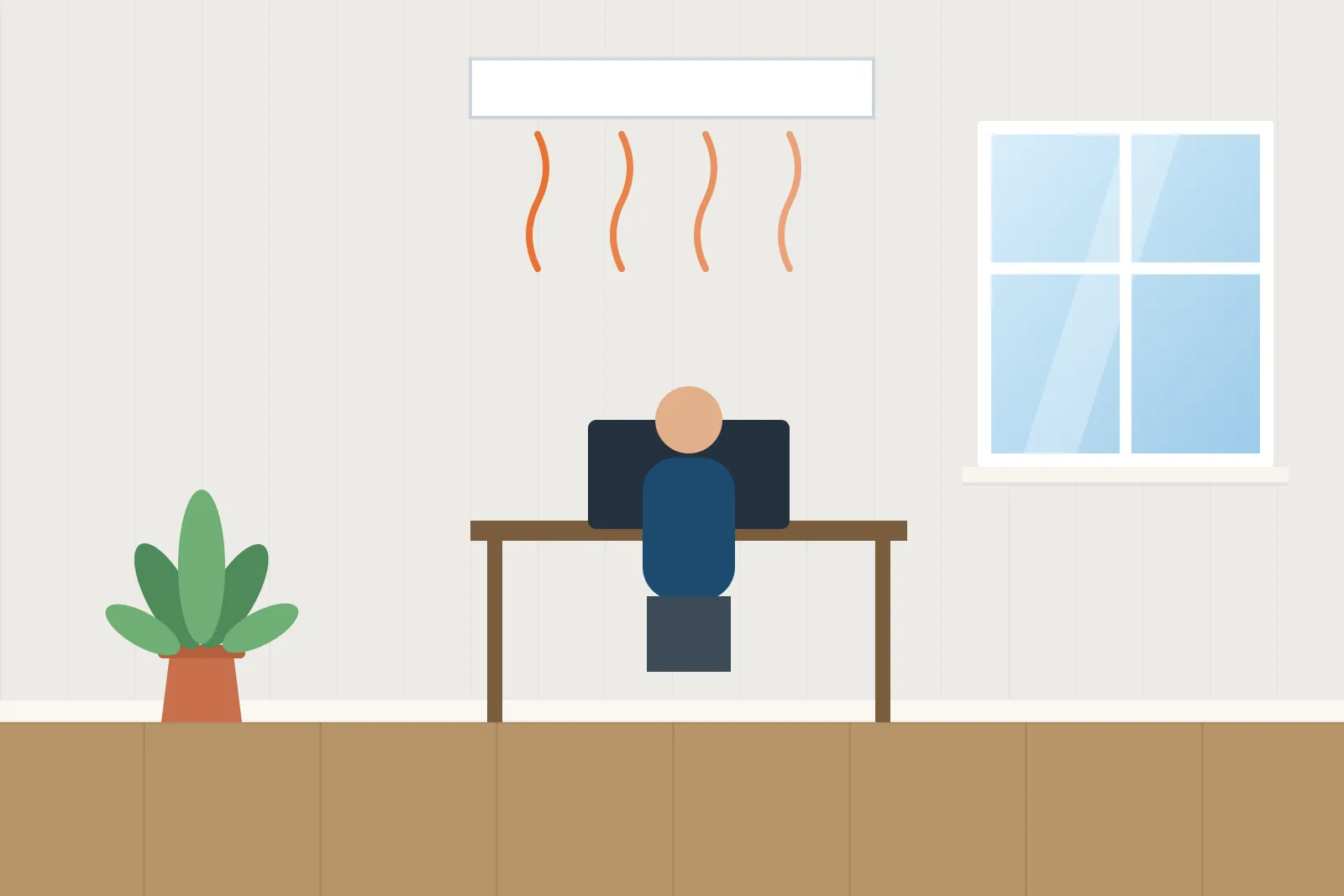
How infrared heating works
Most radiators and heaters heat the air in a room, which then circulates and warms you – that's convection. Infrared panels emit radiant heat, like sunshine, which warms people, furniture and walls directly. The room surfaces then release some of that heat back. Because you feel warm sooner, some people are comfortable at a slightly lower air temperature.
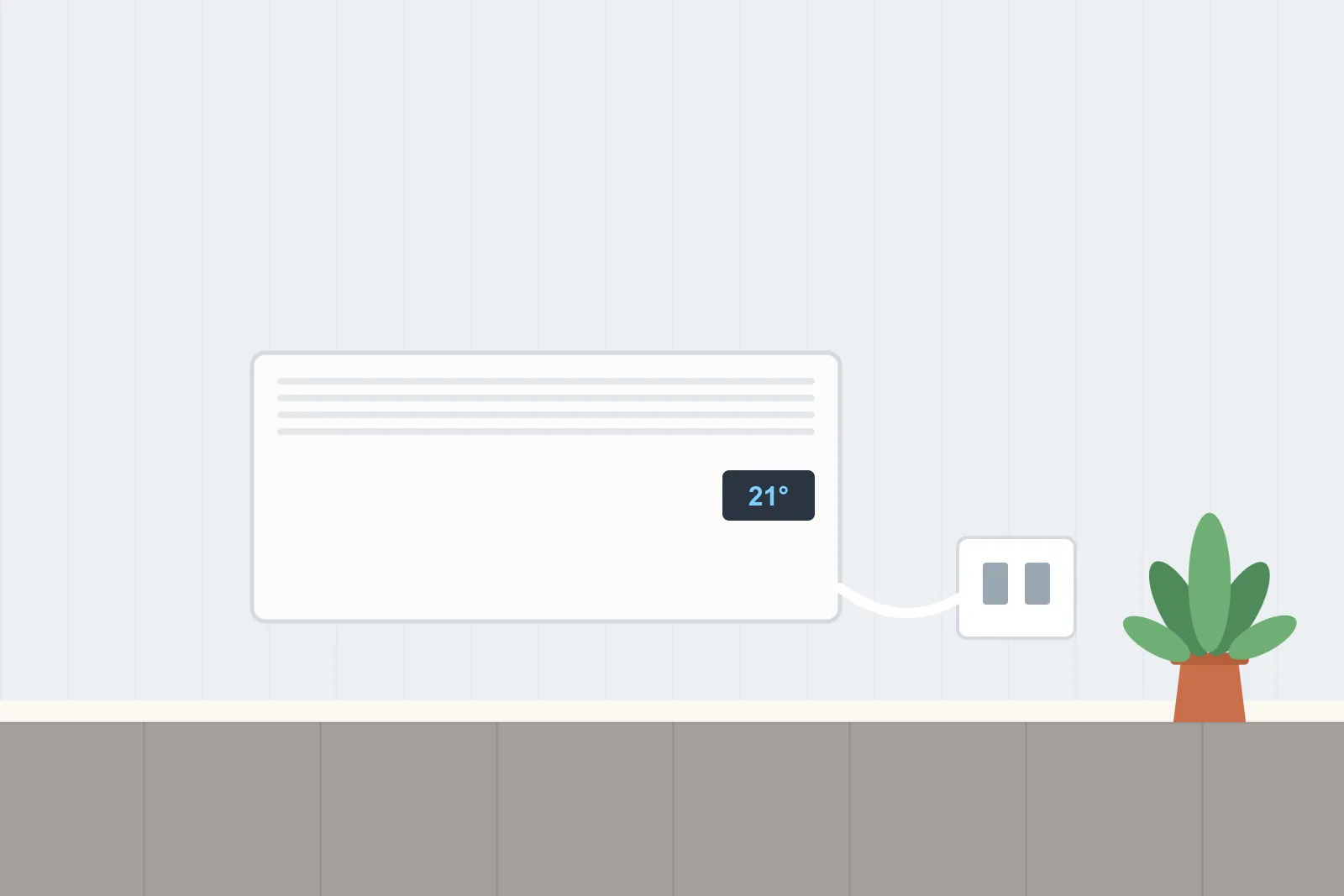
Panels are usually slim flat units mounted on walls or ceilings, and can be white, glass, mirror or printed with an image. They're electric, so they're 100% efficient at the point of use – every unit of electricity becomes heat – but that doesn't make them cheap to run.
Where they make sense
They're less suited to heating a whole house as the main system, because electricity costs much more per unit than gas, and a heat pump delivers several units of heat for every unit of electricity.
- Rooms used occasionally – home offices, guest rooms, garden rooms
- Spaces where you want quick, targeted warmth
- Bathrooms (with suitably rated panels) and conservatories
- Rooms where wall space is limited – ceiling panels free up walls
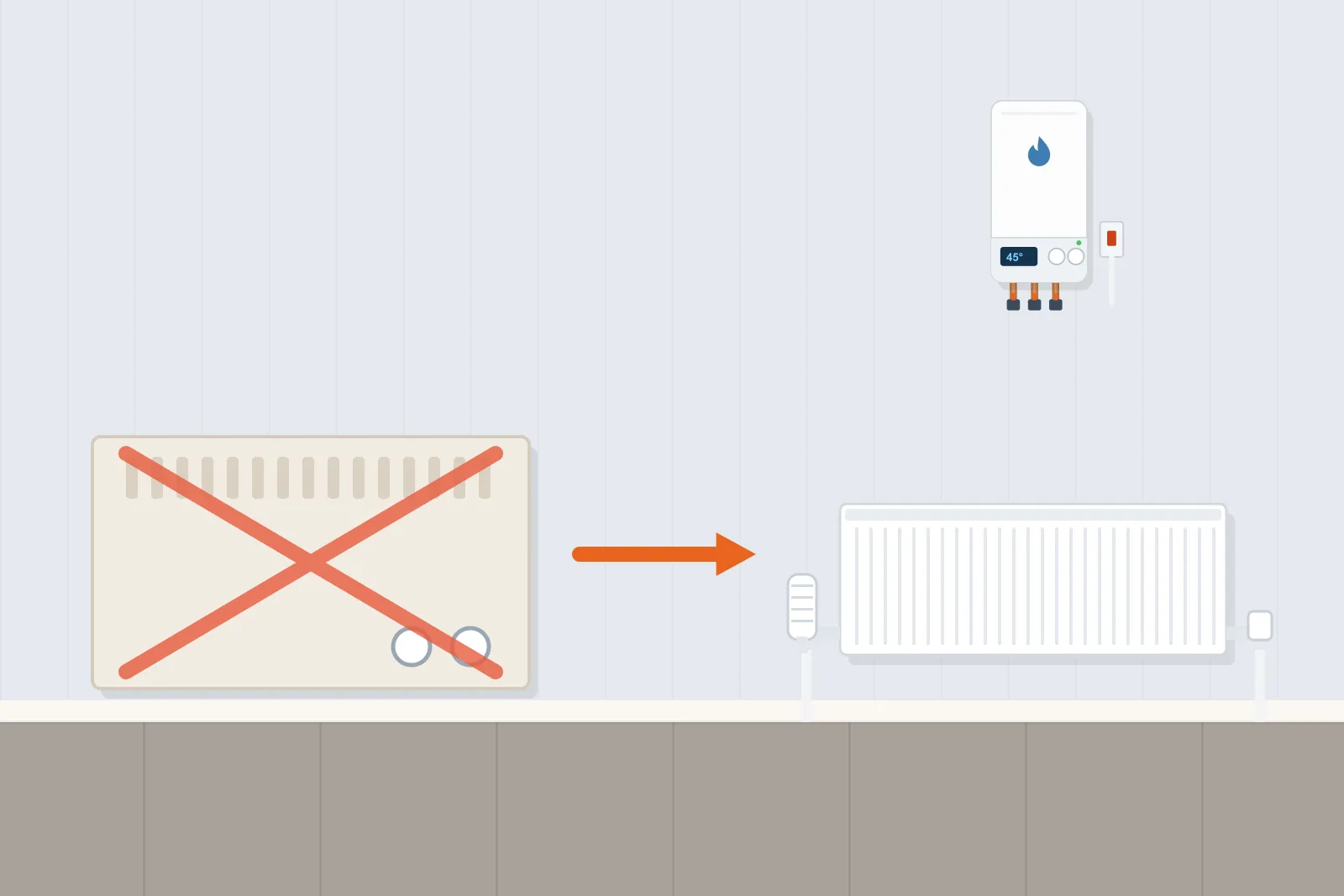
- Properties without gas where a full wet system isn't practical
Running costs compared
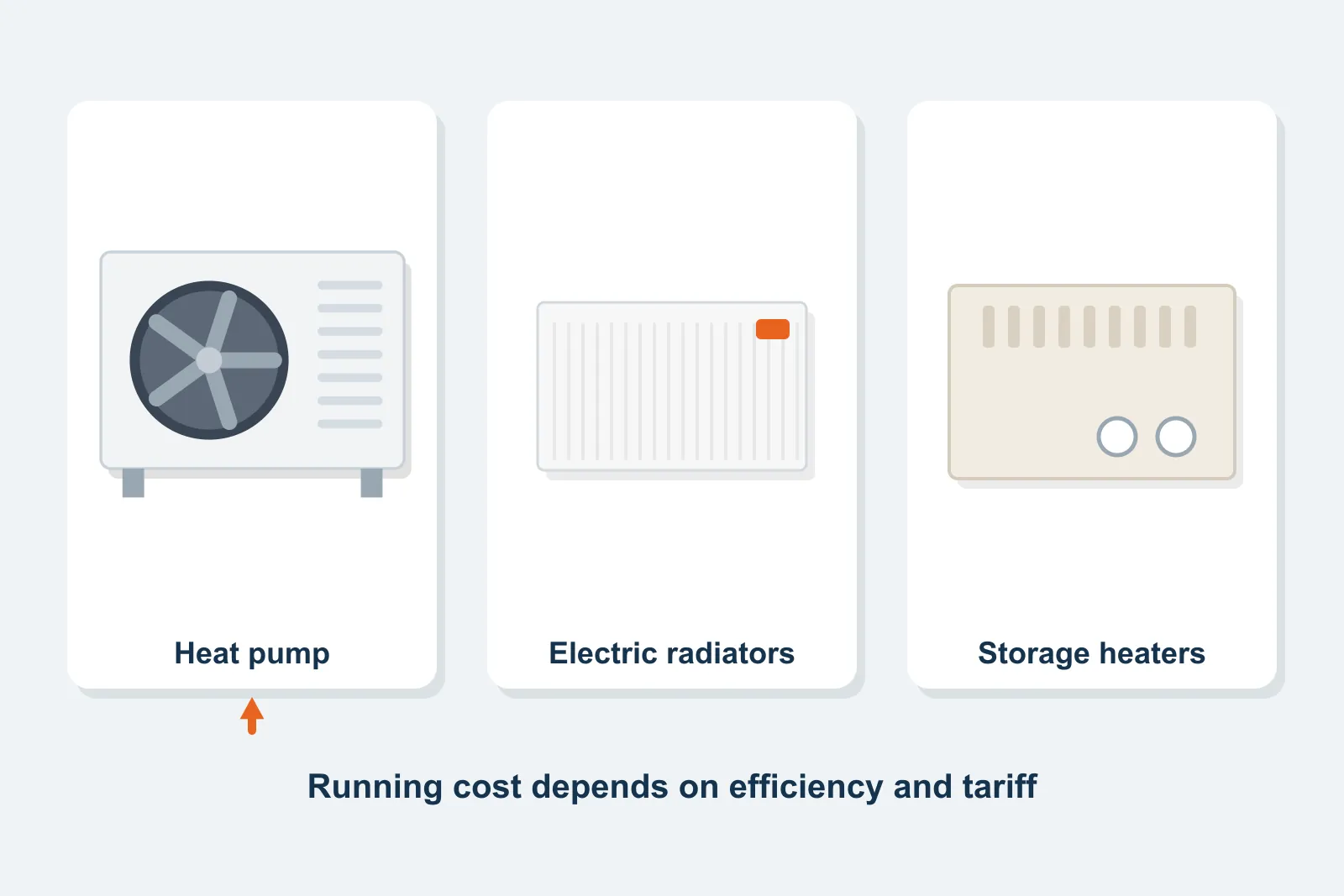
In practice, infrared can be cost-effective in small rooms used for short periods, because the panel only runs when needed and heats you quickly. See cheapest way to heat without gas and electric radiators vs central heating.
| System | Efficiency | Relative running cost |
|---|---|---|
| Infrared panels (standard electricity) | 100% | High |
| Electric panel heaters | 100% | High |
| Modern storage heaters (off-peak) | 100%, cheaper tariff | Medium |
| Gas condensing boiler | ~85–92% | Low–medium |
| Air source heat pump | ~300% or more | Low |
Approximate cost per useful kWh of heat (2026, typical tariffs)
Need a heating engineer?
Describe the job and compare free quotes from local heating engineers near you.
Free and no obligation. Quote requests are handled by our partner, Bark.
Sizing and placement
A rough rule of thumb is around 60–100 watts per m² of floor area, depending on insulation and ceiling height. Panels work best when they have a clear line of sight to where people sit or stand – on the ceiling above a desk, or on the wall facing a sofa. Furniture in front of a panel blocks the heat. Each panel should be controlled by a thermostat, ideally with a timer or smart control.
Installation and costs
Panels can often plug into a socket, but fixed wiring to a fused spur is neater and safer. Bathroom installations must meet the zone rules. For advice on the right heating mix, speak to a local heating engineer or see our radiators page.
| Item | Typical cost |
|---|---|
| 350–600W panel | £150 – £400 |
| Larger 800–1200W panel | £300 – £700 |
| Wireless thermostat per room | £40 – £120 |
| Electrician to install and wire (per panel) | £80 – £250 |
| Whole small flat (4–6 panels) installed | £1,500 – £4,000 |
Indicative infrared panel prices (2026)