What microbore pipework is
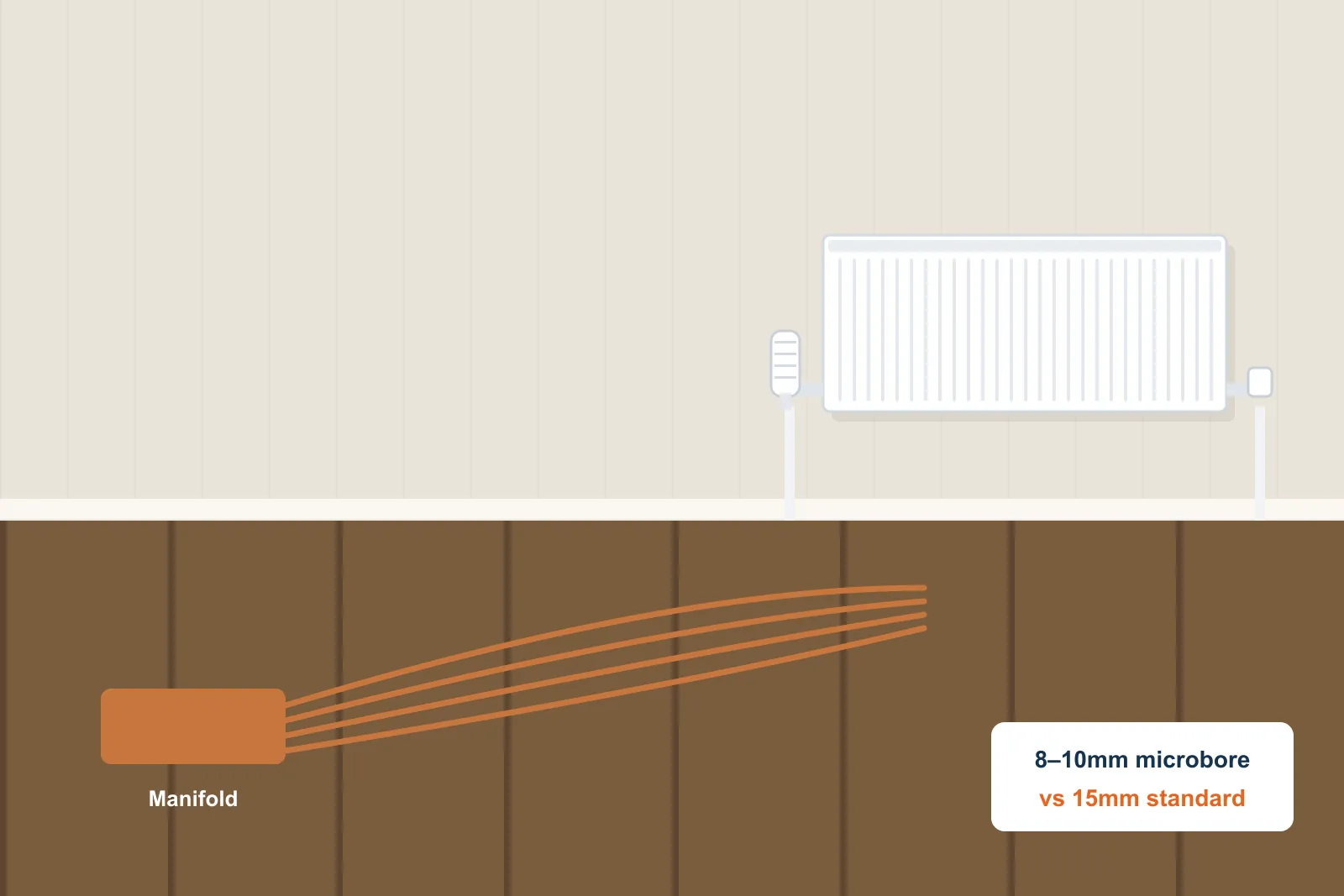
Standard central heating pipework uses 15mm and 22mm copper or plastic pipe. Microbore systems use much thinner pipe – usually 8mm or 10mm, sometimes 6mm – run from a manifold to each radiator. The thin pipe is flexible, easy to hide under floors and quick to install, which made it popular in the 1970s and 1980s.
You can usually spot microbore by looking at the pipes coming up to your radiators. If they're noticeably thinner than a pencil-width 15mm pipe, you probably have microbore.
Common problems
If one or two radiators won't heat up despite bleeding and balancing, a blocked microbore pipe is a likely cause. See one radiator not working.
- Blockages from sludge, because the narrow bore clogs easily
- Individual radiators that stay cold or warm slowly
- Higher resistance to flow, so the pump works harder
- Noise from water rushing through narrow pipes
- Limited flow for heat pumps, which need more water flow at lower temperatures
- Pipes kinked or crushed under floors during later work
Can microbore be cleaned?
Yes, to a point. A chemical clean with a good cleaner, followed by fresh inhibitor and a magnetic system filter, can restore flow on many systems. Power flushing is possible but must be done carefully, because narrow pipes are easily blocked by dislodged sludge, and individual runs may need to be flushed one at a time. Badly blocked or kinked runs may need replacing.
Need a heating engineer?
Describe the job and compare free quotes from local heating engineers near you.
Free and no obligation. Quote requests are handled by our partner, Bark.
Microbore and heat pumps
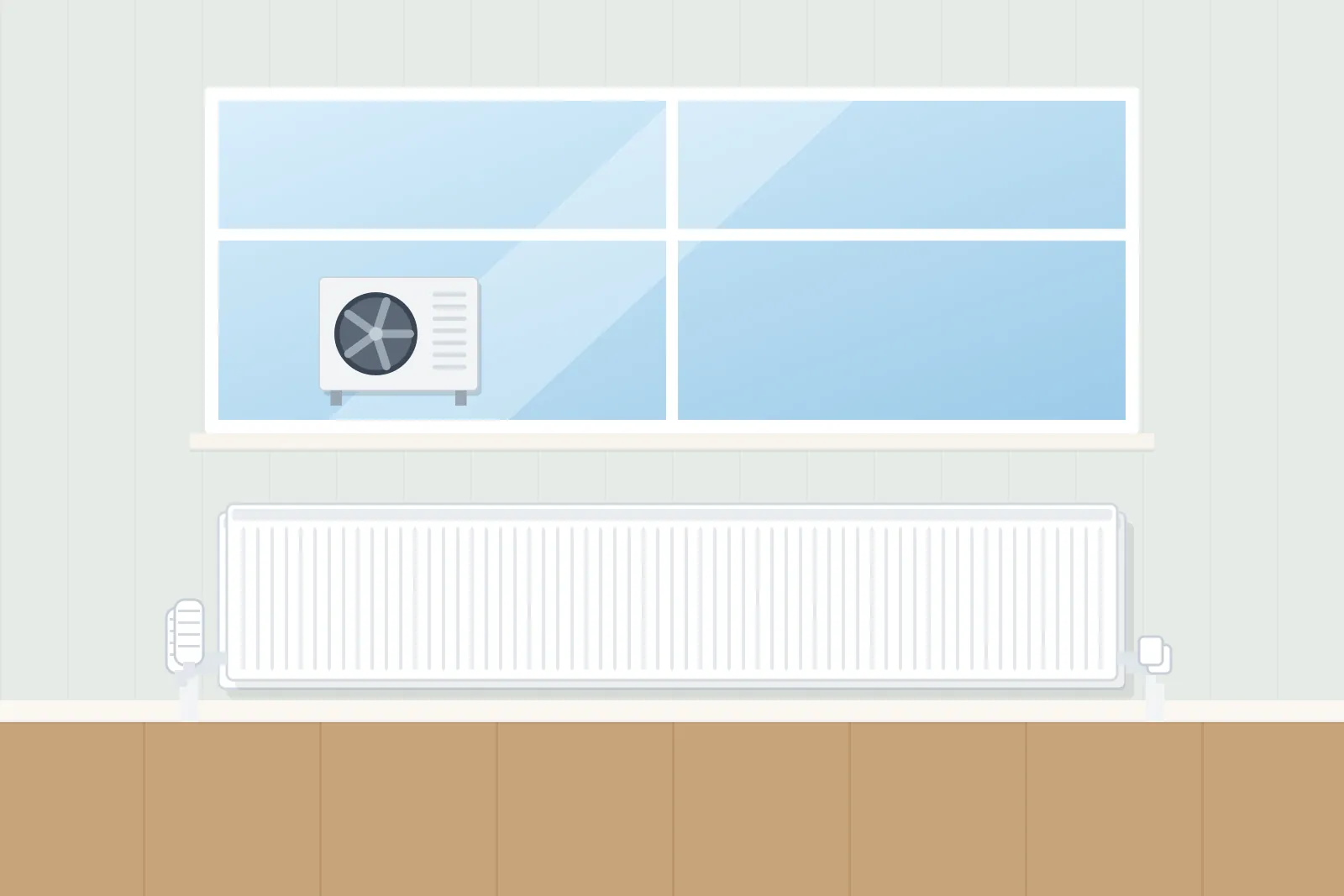
Heat pumps run at lower flow temperatures and need higher water flow rates to deliver the same heat. Microbore pipes often can't carry enough water, so many heat pump installations involve replacing some or all of the microbore runs, at least on the main circuits. A proper design will calculate flow rates for each radiator. See radiators for heat pumps.
Replacing microbore
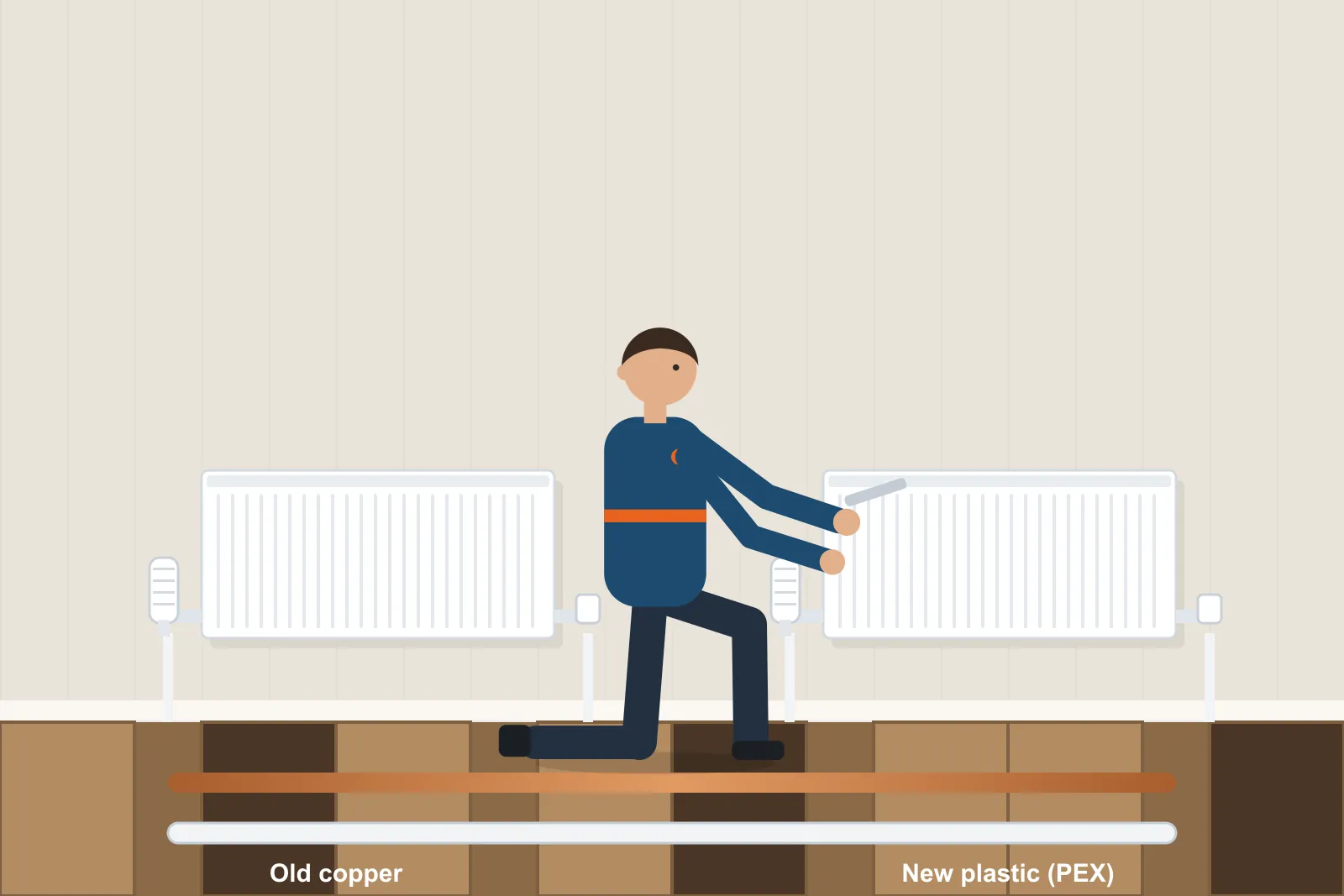
Replacement usually means running new 15mm pipe from the main flow and return to each radiator. Floors may need lifting, or pipes may be run along skirtings or through walls. Plastic (PEX) pipe is often used because it's flexible and quick to install.
| Job | Typical cost |
|---|---|
| Unblock or replace one microbore run | £150 – £400 |
| Chemical clean and inhibitor | £250 – £500 |
| Replace microbore in a two- or three-bed house | £2,000 – £4,500 |
| Add manifold upgrade or rebalance system | £150 – £400 |
Indicative microbore costs (2026)
Getting advice
A good heating engineer can test flow rates, check for blockages and tell you whether cleaning will do or replacement is needed. For whole-system pipework, see the cost to replace central heating pipes.