Why your heating and your fence need to get along
Walk round the side of a typical British semi or terrace and you'll usually find the same things squeezed into a narrow passage: a white boiler flue poking out of the wall, a thin plastic condensate pipe heading for the drain, perhaps the gas meter box – and, a metre or so away, the boundary fence. In detached and rural homes you might add an oil tank, an LPG tank or, increasingly, an air source heat pump.
None of that is a problem in itself. Problems start when one is installed without thinking about the other: a new boiler flue that blows warm, wet exhaust straight onto a neighbour's timber boards, a heat pump boxed in so tightly by a new fence that it starves itself of air, or a fencing contractor driving a post straight through a buried pipe. With a bit of planning, all of these are easy to avoid.
This guide walks through each piece of outdoor heating kit in turn, explains what it needs from the space around it and suggests the right order of work if you're replacing your heating and your fence in the same year – which, after a stormy winter, plenty of people are.
Boiler flues that face a fence
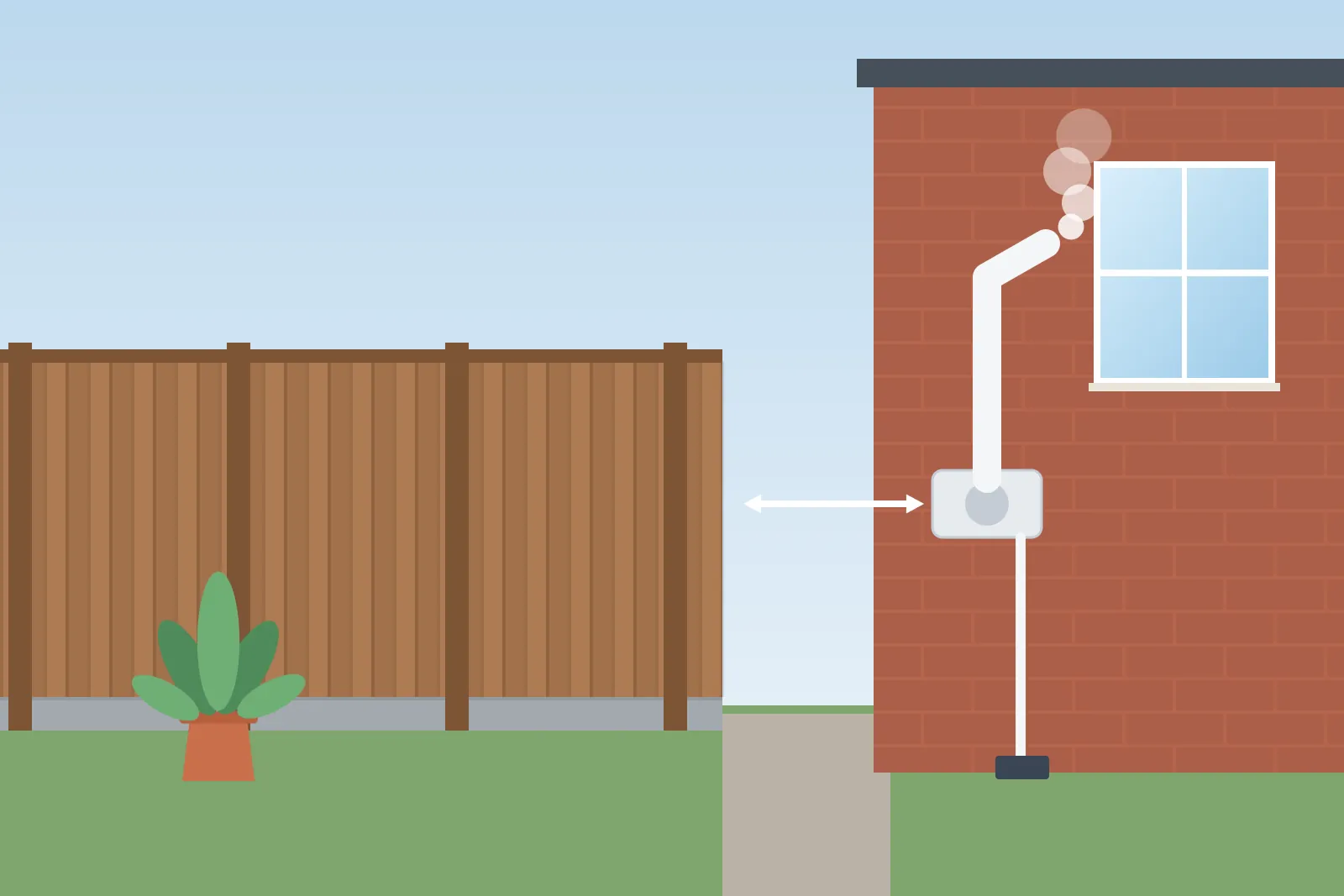
A modern condensing boiler pushes its exhaust out through a fanned flue. Because the boiler squeezes so much heat out of the gases, what comes out of the terminal is cool and full of water vapour – the white 'plume' you see on a cold morning. That plume is harmless to breathe at a distance, but it's slightly acidic and very wet. Aim it at a timber fence a short distance away, day after day through the winter, and you can expect green staining, algae, flaking wood treatment and boards that stay damp long enough to rot early.
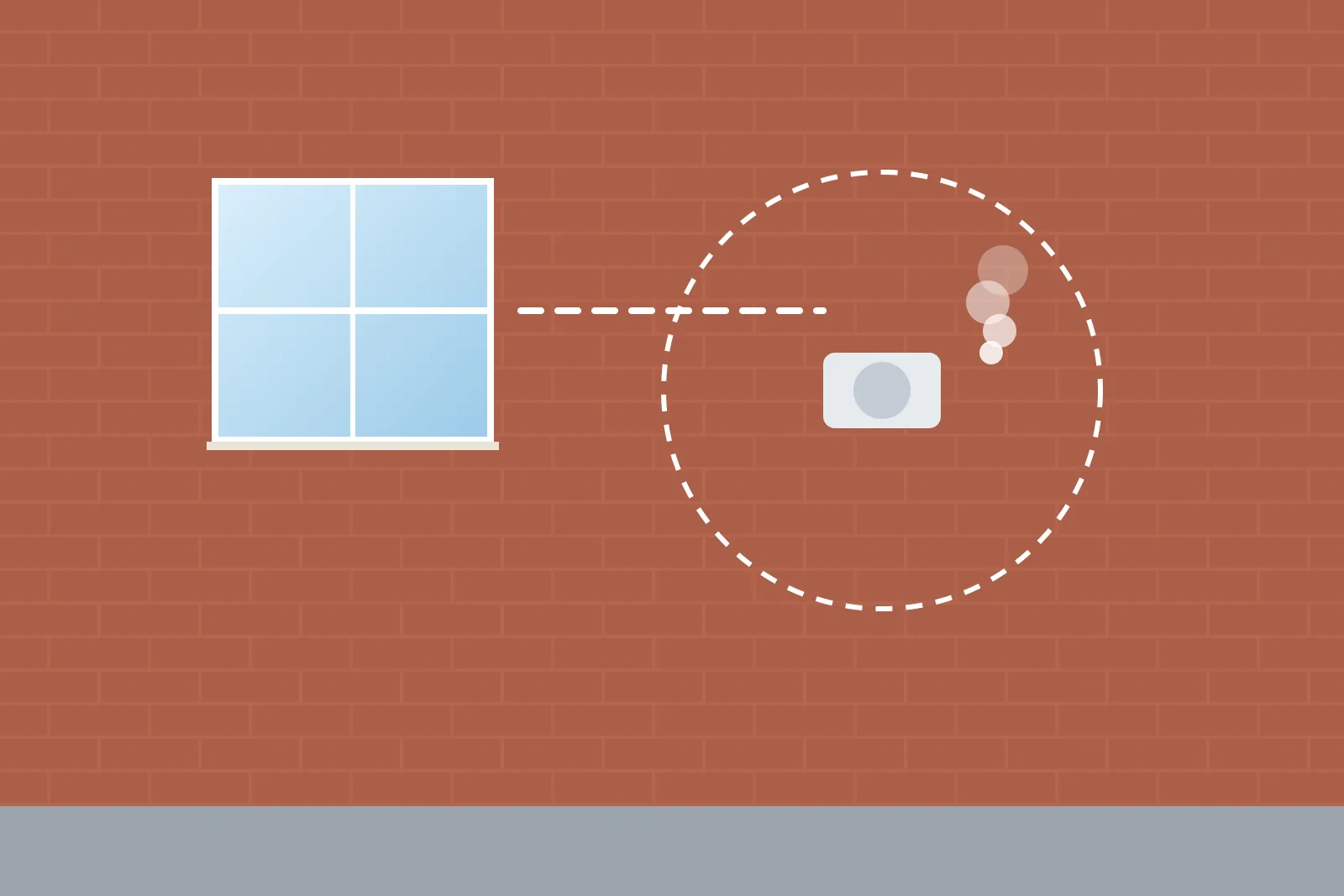
That's one reason the regulations and every boiler manufacturer set minimum distances between a flue terminal and anything it faces, including a fence or boundary. A commonly quoted figure for a fanned flue facing a surface or boundary is around 600 mm, but the exact distances for your boiler come from the manufacturer's installation instructions and the relevant British Standards, and your Gas Safe registered engineer has to follow them. There are separate rules for distances from windows, doors, gutters and the ground.
Where a flue would otherwise point at a fence – your own or a neighbour's – the usual answer is a plume management kit. This is an extra length of flue that takes the exhaust up and away from the terminal and releases it higher on the wall or round a corner, where it can disperse without soaking anything. Kits are inexpensive compared with the cost of the boiler and are often added on the day of installation. A good engineer will spot the need during the survey; if they don't mention it and your side passage is narrow, ask.
If you're having a new fence put up and your existing boiler flue is close to the line of it, tell the fencing contractor before they quote. Leaving a gap in a closeboard run is not practical, but choosing a slightly lower fence on that stretch, moving the line a little or asking a heating engineer about a plume kit before the fence goes in may all be options.
Condensate pipes, frost and fence posts
Every condensing boiler produces water – often several litres a day in winter – which runs out through a plastic condensate pipe to a drain or soakaway. When that pipe runs outside, it's vulnerable to freezing. A frozen condensate pipe is one of the most common reasons boilers lock out on the coldest morning of the year, and it's covered in our guide to common boiler problems.
Good practice is to keep any outdoor run as short as possible, use a wider pipe (at least 32 mm) and insulate it. What's less often mentioned is how easily an outdoor condensate pipe is damaged during garden work. It tends to run along the ground at the base of the wall, exactly where a fencing team will stack panels, dig a post hole or kneel to fit a gravel board.
A couple of simple habits help. Before any outdoor work, point out the condensate pipe and anything else that runs along the side of the house. Don't let anyone clip the pipe to the fence to tidy it up, especially if the fence belongs to the neighbour – fences move in the wind and the joints can pull apart. And if the pipe has to cross the garden to reach a soakaway, mark its route so nobody digs through it later.
- Keep the external run short, wide and insulated
- Fix the pipe to the house wall, not to a fence
- Show contractors where it runs before they start digging
- Mark the route of any pipe crossing the garden to a soakaway
Air source heat pumps beside a fence
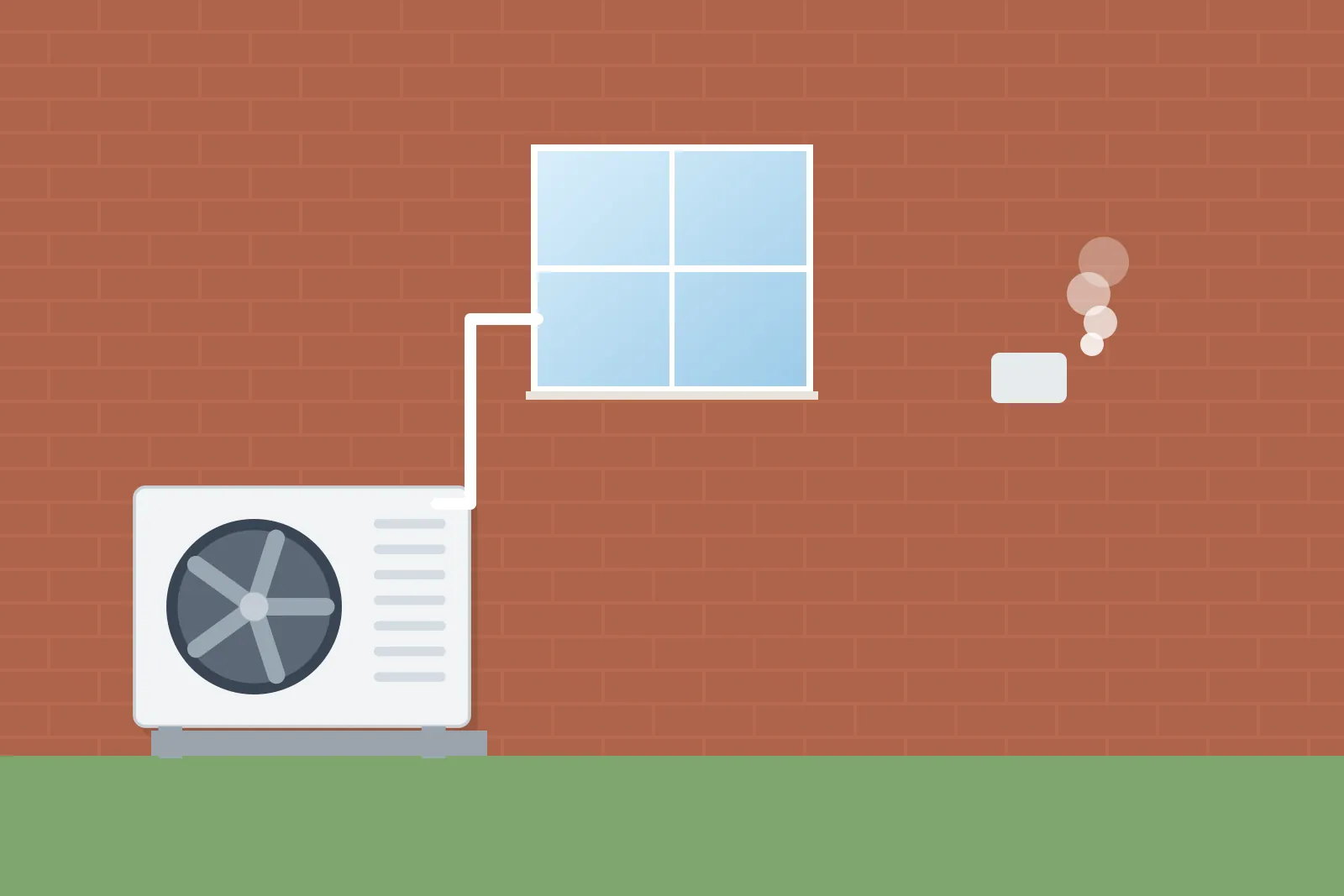
A heat pump's outdoor unit works by drawing in large volumes of outside air, taking heat from it and blowing the cooled air back out. To do that well it needs space. Push it hard against a fence, or enclose it on three sides, and it can end up breathing its own cold exhaust. Efficiency drops, the unit defrosts more often and running costs go up. The manufacturer's manual will give minimum clearances behind, beside and in front of the unit – usually a modest gap at the back and a generous clear zone in front of the fan.
A fence can actually help a heat pump if it's placed thoughtfully. A solid timber fence a sensible distance away can shelter the unit from driving wind and reduce the sound that reaches the neighbours. A slatted or hit-and-miss screen can hide the unit without blocking airflow. What you want to avoid is building a cosy wooden box around it.
Planning rules matter here too. In England, the permitted development rules for air source heat pumps were relaxed in 2025, including dropping the old requirement to keep the unit at least a metre from the boundary, but noise standards still apply. The rules are different in Wales, Scotland and Northern Ireland and can change, so check the current position for your nation or ask your installer to confirm it as part of the quote. Our guide to heat pumps and gas boilers covers the bigger decision of whether a heat pump suits your home.
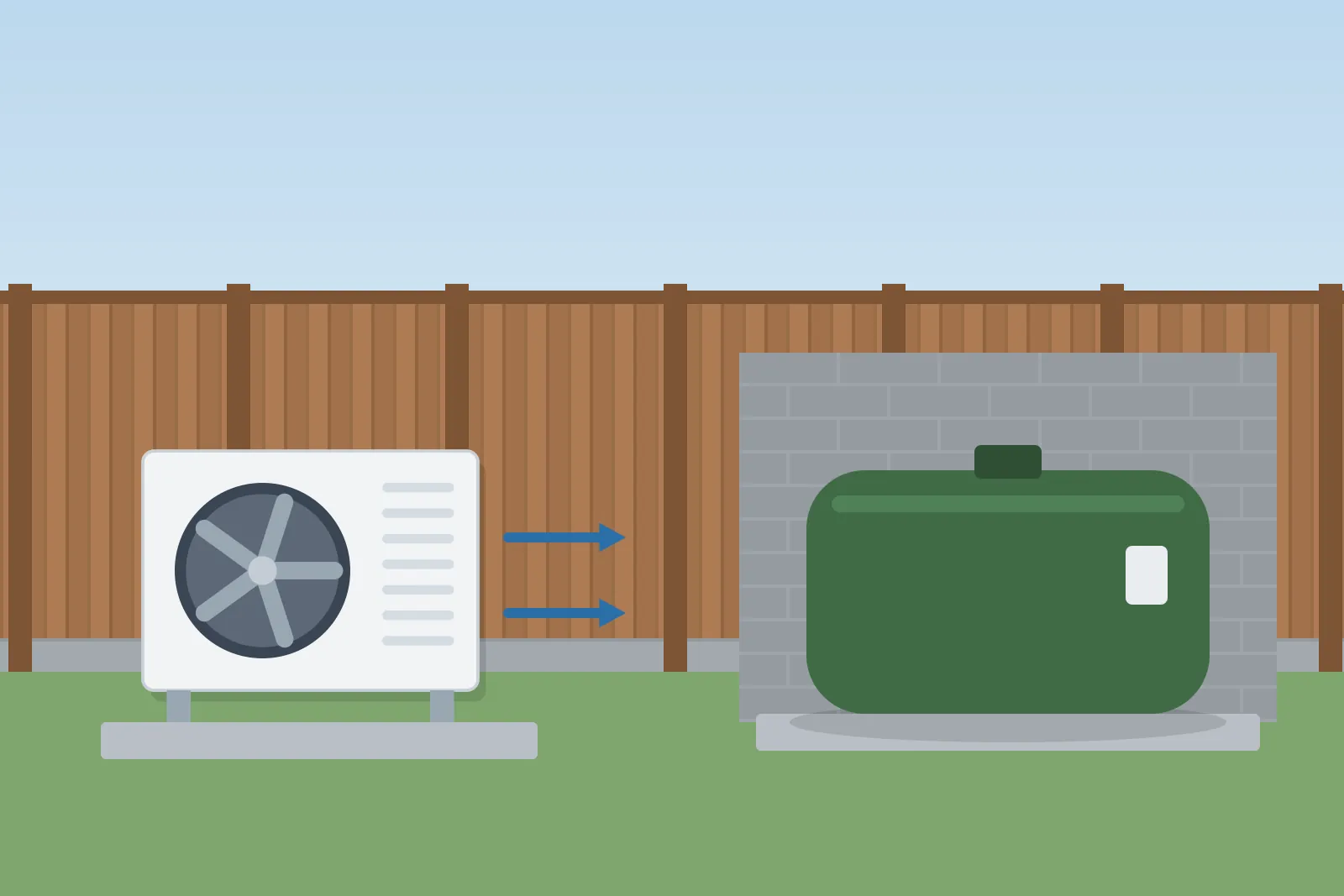
Oil and LPG tanks next to timber fencing
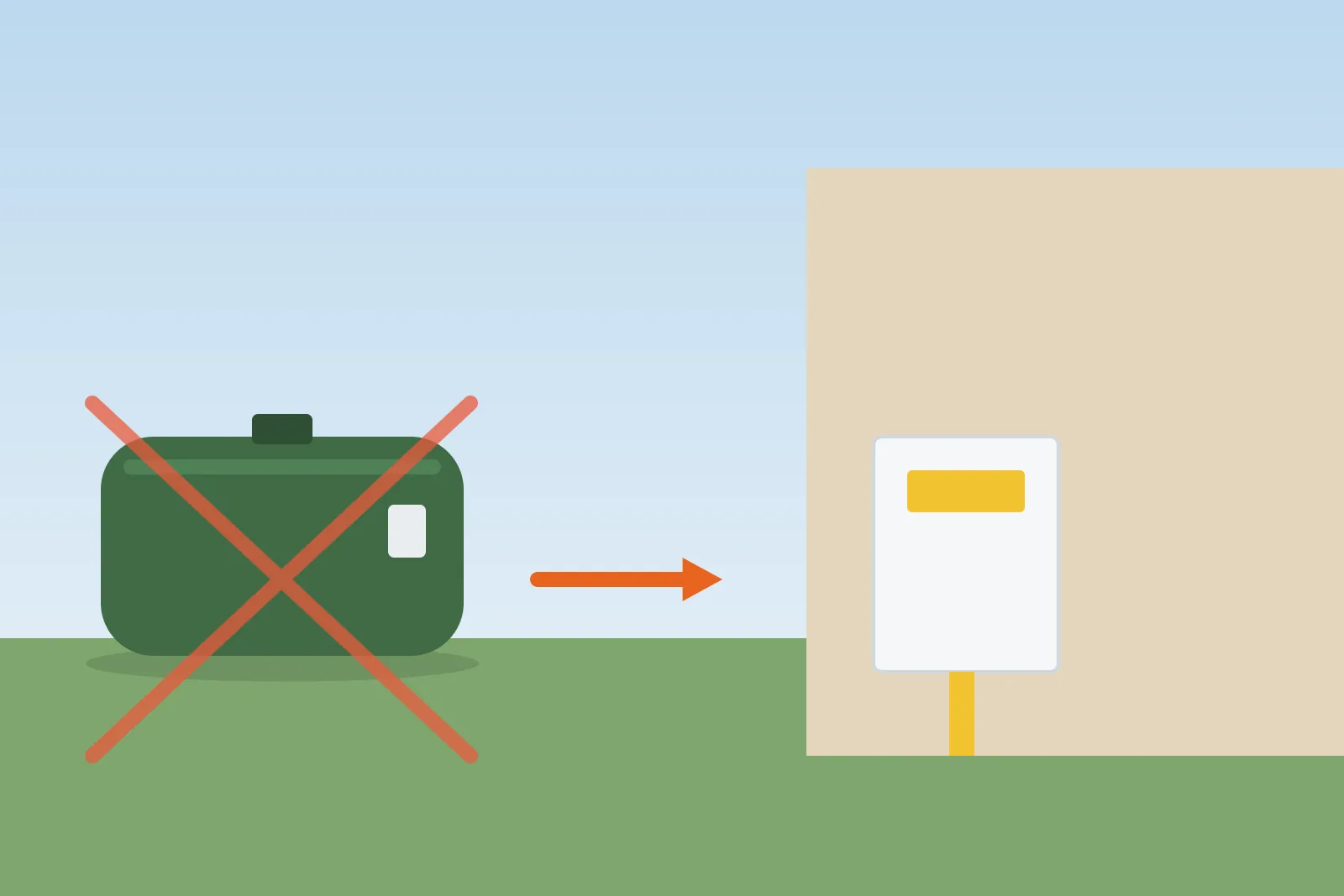
If your home is off the gas grid, the biggest piece of heating kit you own may be the fuel tank in the garden. Because a timber fence will burn, the Building Regulations in England and Wales treat it as a 'non-fire-rated boundary'. As a general rule, a domestic oil tank should sit at least 760 mm from a boundary like a wooden fence. If it can't, a fire-protection barrier – typically a masonry wall or a purpose-made fire-rated screen that is taller and wider than the tank – goes between the two. There are further distances from the house, its eaves and any flue terminal.
Oil tanks are normally installed and checked by an OFTEC registered technician, who will know the rules for your area. If you're replacing a fence that runs close to an existing tank, it's worth asking the technician or your oil supplier whether the new fence changes anything – a solid timber fence where there used to be a brick wall, for example, may mean the tank now needs a barrier.
LPG tanks have their own separation distances, set by industry codes of practice and enforced by the gas supplier, which usually owns the tank. They depend on the size of the tank and what's around it. Keep the area clear of overhanging plants, garden waste and stacked timber, and check with the supplier before moving a fence line near the tank. Our guide to LPG boilers explains how these systems work.
| Outdoor heating kit | What it needs from a nearby fence | Who to ask |
|---|---|---|
| Boiler flue terminal | Minimum clearance from a facing fence; plume kit where it's too close | Gas Safe registered engineer |
| Condensate pipe | Short, insulated run fixed to the house, not the fence | Gas Safe registered engineer |
| Air source heat pump | Clear airflow behind and in front; shelter without enclosure | Heat pump installer |
| Oil tank | Separation from a timber boundary, or a fire-protection barrier | OFTEC registered technician |
| LPG tank | Separation distances set by the supplier for the tank size | Your LPG supplier |
General guide only. Always follow the installer's and manufacturer's instructions and the current regulations for your nation.
Need a heating engineer?
Describe the job and compare free quotes from local heating engineers near you.
Free and no obligation. Quote requests are handled by our partner, Bark.
Getting the order of work right
If you're planning both a new heating system and a new fence, the order matters. As a rule of thumb, decide where the heating kit is going first, then design the fence around it. A heat pump base, an oil tank pad or a re-routed condensate pipe is much harder to move than a fence panel, and a fencing contractor can only plan post positions properly once they know what's going where.
Digging is where the real risk lies. Fence posts typically go in holes around 600 mm deep, and that's plenty to reach a gas service pipe, a water supply, an electricity cable or the pipe to a soakaway. Before any digging, find out what's under the ground: your own plans and the previous installer's paperwork are a start, and utility companies can provide records. Free services such as LinesearchbeforeUdig let contractors check for buried networks. If anyone ever damages a gas pipe or smells gas while digging, they should stop, move away and ring the National Gas Emergency number on 0800 111 999 – see our guide on what to do if you smell gas.
Finally, think about access. Heating engineers need to reach the flue, the condensate pipe and the gas meter, and heat pumps and oil tanks need regular servicing. A new fence or gate that blocks the side passage can turn a 40-minute service into an awkward afternoon. A side gate wide enough to wheel a toolbox or a replacement boiler through is a small detail that pays off for years.
Who owns the fence – and why it matters
It's easy to assume the fence along the side passage is yours, but boundaries are often shared or belong to the house next door. Your title deeds or the Land Registry plan may show who is responsible for which side, sometimes with small 'T' marks along the boundary line, although many older plans don't say.
Ownership matters for heating work in a few ways. You shouldn't fix anything – a condensate pipe, a cable, a heat pump bracket – to a fence that isn't yours without the owner's agreement. A boiler flue that would discharge over or onto next door's fence is something a good engineer will design out, and it's courteous to mention the work to your neighbour before it starts. And if a storm brings down a shared fence, agreeing the replacement together is far easier when you already know whose it is.
If you're replacing a fence yourself, remember that in most cases you can put up a garden fence up to 2 metres high without planning permission, or up to 1 metre next to a road used by vehicles – but conservation areas, listed buildings and planning conditions on newer estates can change that.
Comparing fencing quotes with our sister site
Heating Quotes is all about boilers, radiators and central heating, so we leave the garden boundary to the specialists. Our sister site, Fencing Quotes, works the same way we do: you describe the job once, with your postcode, and local fencing contractors get in touch with quotes for you to compare. It's free to use and there's no obligation to go ahead with any of them.
Fencing Quotes covers the jobs most homeowners need, from new closeboard fencing and fence panels to fence repairs and replacement after storm damage, plus garden gates for side passages and driveways. Like this site, it's written in plain British English, with guides that explain what affects the price and what to ask before you choose a contractor.
If you're planning a new boiler or heat pump and the fence by the side of the house has seen better days, it makes sense to get both sets of quotes at around the same time. You can get heating engineer quotes here and garden fencing quotes from Fencing Quotes, then share the details of each job with the other trade so the flue, the pipework and the new fence line all work together.
A quick checklist before work starts
Whether the heating or the fence comes first, run through these points before anyone picks up a spade:
- Agree where the flue, condensate pipe and any heat pump or tank will go
- Check the flue won't discharge onto a fence – yours or a neighbour's – without a plume kit
- Leave the clearances a heat pump needs for airflow and servicing
- Confirm the separation or fire barrier needed between an oil or LPG tank and a timber fence
- Find out what's buried in the garden before posts are dug
- Keep a side gate wide enough for engineers and equipment
- Know who owns the boundary and talk to your neighbour about shared fences
- Compare more than one quote for each job, and share your plans with both trades